

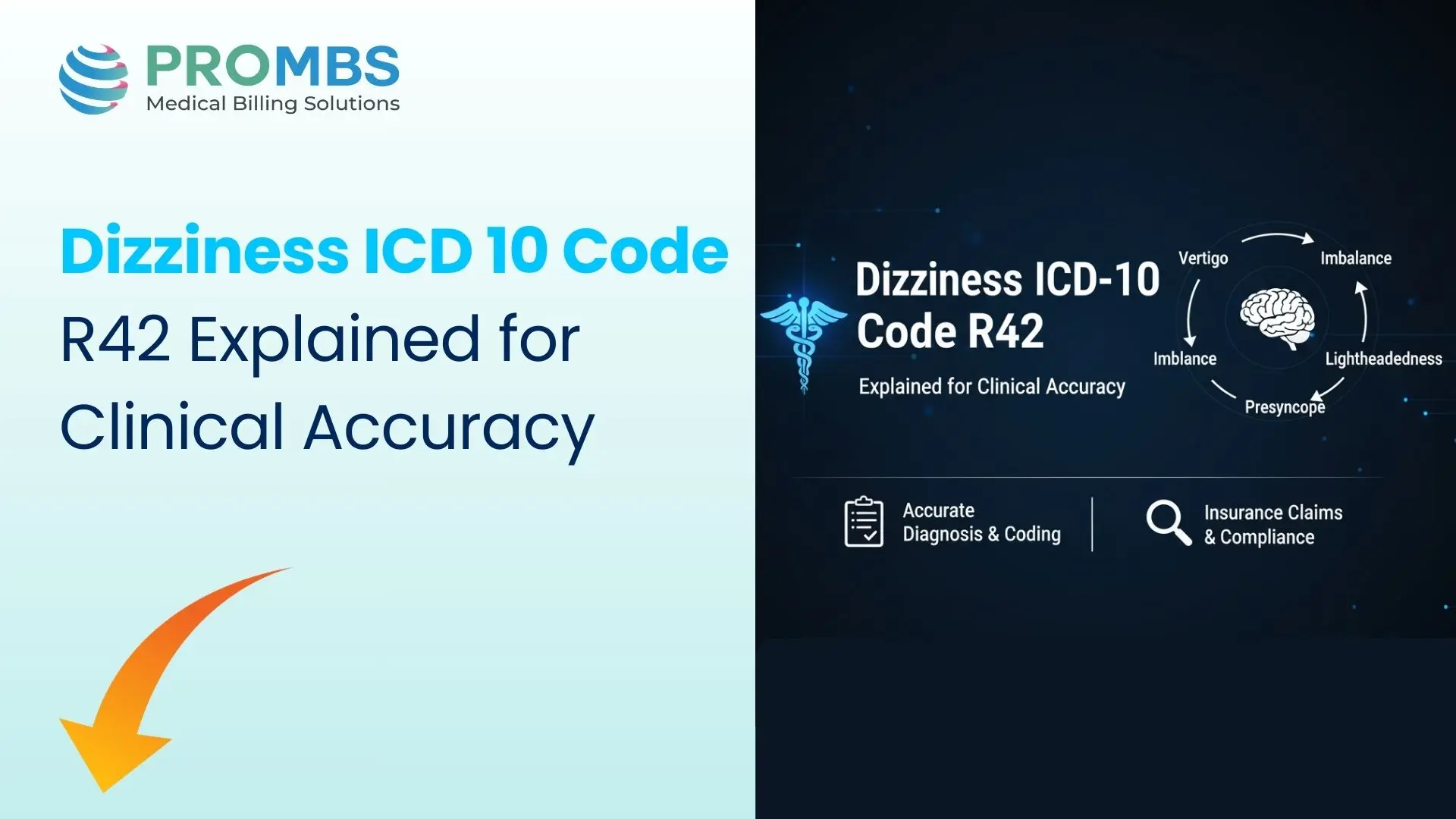
Dizziness ICD 10 Code R42 is used to report dizziness and giddiness when a patient feels lightheaded, unsteady, or faint, but the provider has not yet identified the cause. R42 is appropriate during early evaluation when symptoms are documented, testing is in progress, and no confirmed diagnosis explains the dizziness.
Dizziness ICD 10 coding is used when a patient feels dizzy, but the doctor has not yet found the cause. This is common. It happens every day.
In ICD 10-CM, dizziness is treated as a symptom, not a disease. That single rule explains why ICD 10 code R42 exists. It allows providers to report what the patient feels while testing and evaluation are still in progress.
Why does this matter so early in care? Because the medical record must reflect what is known at that moment, not what might be true later.
This article explains what dizziness means, when R42 should be used, and how to document it clearly. Nothing more than that.
What Is Dizziness in Medical Terms?
Dizziness sounds simple, but it can mean many things. Dizziness is a symptom where a person feels lightheaded, unsteady, or faint. It is not a final diagnosis. It is only the start.
How do patients usually describe dizziness in real visits? Most do not use medical words. They say things like “I feel off balance” or “I feel like I might pass out.” Some stop mid-sentence. Some look unsure. These words help the provider, but they do not explain the cause.
Because of this, the provider must ask questions, check vital signs, and perform an exam before deciding what is causing the dizziness. Sometimes the answer is clear. Sometimes it is not. That is normal.
The room may be noisy. The patient may be tired. The symptom is still documented the same way.
Where Dizziness Fits in the ICD 10 Classification System?
So, where does dizziness belong in ICD 10? Dizziness is listed under Chapter 18, which is used for symptoms when no diagnosis is confirmed yet.
Why does this chapter exist at all? Because doctors do not always know the cause at the first visit. Often, they cannot know. Chapter 18 covers signs and symptoms that bring patients in for care. It allows honest documentation while the provider gathers more information.
Symptom codes are not guesses. They describe what is happening right now.
What Does ICD 10 Code R42 Represent?
Dizziness ICD 10 Code R42 represents dizziness and giddiness when a patient feels lightheaded, unsteady, or off balance, but the provider has not yet confirmed the cause.
R42 is used when the symptom is clearly documented and testing or follow-up is still in progress. Once the cause is confirmed, the symptom code is replaced with the correct diagnosis.
When Is ICD 10 Code R42 Appropriate to Use?
So, when should ICD 10 code R42 be used? Use it during early visits when dizziness is present and the cause is not yet known.
This often happens at the first visit. It can also happen in urgent care or the emergency room. The provider may order tests or plan a follow-up. Until results are known, R42 matches what is written in the note.
There is no need to name a cause before it is confirmed.
When Dizziness Should Not Be Coded as R42?
Dizziness ICD 10 Code R42 should not be used once the provider confirms what is causing the dizziness.
If the medical note clearly names the cause, the symptom code is no longer correct for that visit. The diagnosis code must match what the provider has confirmed.
R42 is used only while the cause is unknown. When care moves forward and the answer is known, the documentation and coding should move forward as well.
Dizziness ICD 10 Code R42 vs Known Causes
Dizziness ICD 10 Code R42 is used when dizziness is what the patient feels, not the final answer.
If the provider finds the reason for the dizziness, the code should change to match that reason. R42 should not be used once the cause is known.
For example, if the visit shows what is causing the dizziness, the medical record should name that cause instead of R42. R42 is used only while the reason is still unknown.
Documentation Requirements for Accurate Dizziness Coding
Good documentation makes Dizziness ICD 10 Code R42 clear and easy to support.
The medical note should explain when the dizziness started, how long it lasts, and what the patient feels. It should also describe what the provider observed during the visit and what steps were taken next.
These details help confirm that dizziness is still a symptom and that R42 is the correct code for that visit. Short notes are fine, but the meaning must be clear.
Common Documentation and Coding Mistakes with Dizziness
Some mistakes happen often. Notes like “patient dizzy” without detail make coding unclear. Using R42 again and again without updates can also cause confusion.
These are learning points. Clear updates help everyone see what changed and what did not.
Small details can make a big difference.
Dizziness ICD 10 Across Different Care Settings
Dizziness can look different in different settings. In primary care, it may be followed over time. In urgent care or the emergency room, it may be checked quickly. In telehealth, the patient’s words matter even more because the exam is limited.
In every setting, coding should match what is known at that visit. No more. No less.
Why Should You Partner with Pro-MBS?
Clear documentation makes symptom coding easier. But in real life, notes can be short. Small details get missed.
Then the same dizziness code may be used again and again. The record may not clearly show what changed. That makes coding slower. It also makes follow-up work harder for the care team.
Pro-MBS helps close that gap with simple support. We help providers write clearer notes that match what happened in the visit. We also help teams keep symptom coding aligned as the workup moves forward.
Our medical billing and coding services support accurate ICD 10 use, clean claim flow, and smoother daily work. The focus stays on education, better workflows, and clean medical records. Nothing forced. Nothing overstated.
Frequently Asked Questions
What is Dizziness ICD 10 Code R42 used for?
Dizziness ICD 10 Code R42 is used when a patient feels dizzy, lightheaded, or unsteady, but the provider does not yet know the cause. It is used early in care while tests or follow-up are still pending.
Is dizziness a diagnosis in ICD 10?
No. Dizziness is a symptom, not a diagnosis. That is why Dizziness ICD 10 Code R42 is used only when the cause has not been confirmed.
When should ICD 10 code R42 be used?
R42 should be used during early visits when dizziness is present, and the reason is still unknown. This often happens at the first visit, in urgent care, or in the emergency room.
When should R42 no longer be used?
R42 should not be used once the provider finds what is causing the dizziness. When the cause is known, the code should match that cause instead.
Can R42 be used for follow-up visits?
R42 can be used for follow-up visits only if the cause of dizziness is still unknown. If the cause has been confirmed, R42 should be replaced.
What documentation supports Dizziness ICD 10 Code R42?
The medical note should explain when the dizziness started, how it feels, and what the provider saw during the visit. It should also show that the cause is still not known.
Why do claims get delayed when R42 is used incorrectly?
Claims can slow down when R42 is used even after the cause is known or when notes are unclear. Clear updates help show what changed and support correct coding.
