

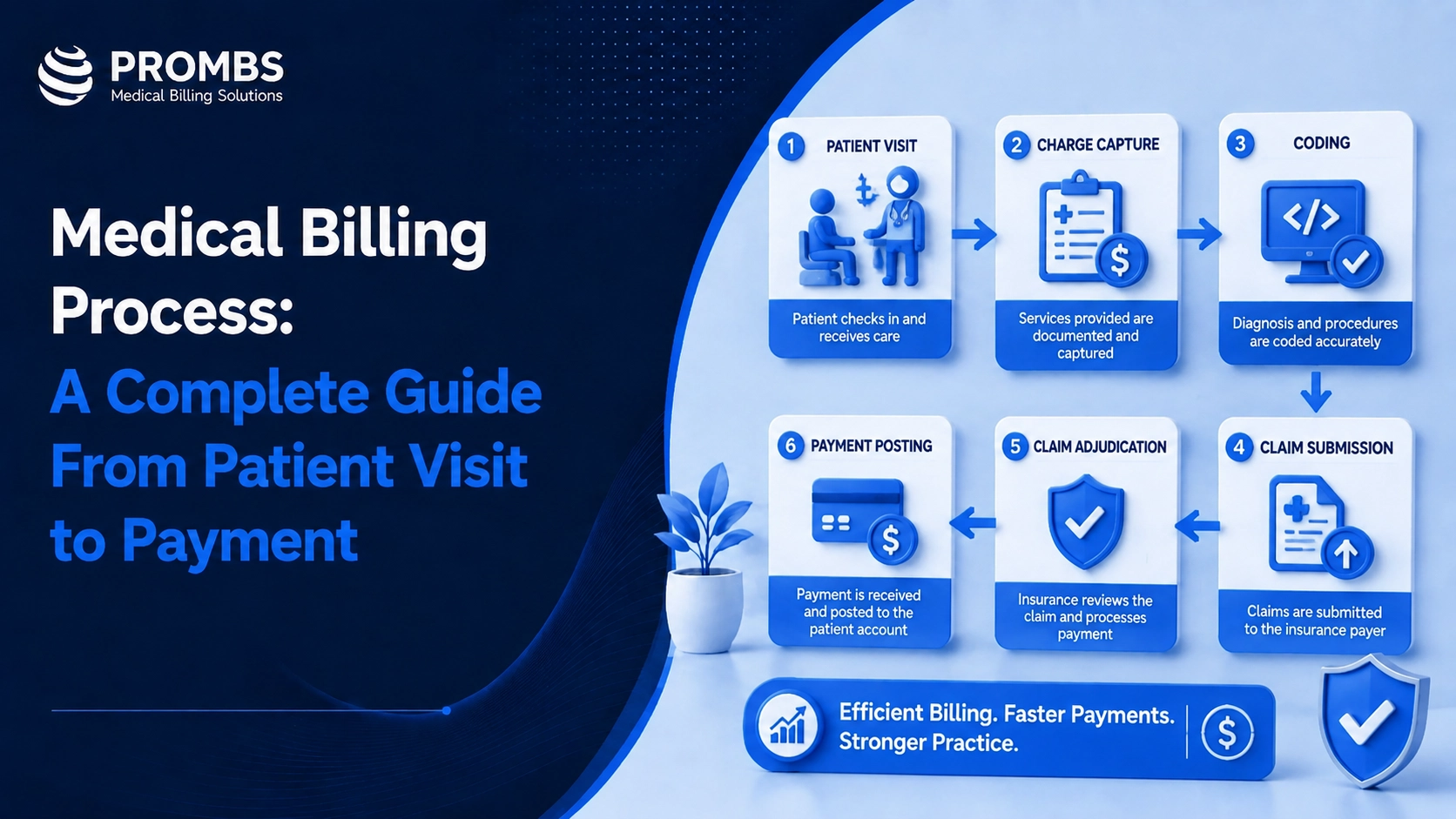
The medical billing process is the connection between healthcare services and practice revenue. Every time a patient receives medical care, a series of steps must happen behind the scenes to ensure the provider is accurately reimbursed.
From collecting patient information to submitting claims, posting payments, and managing denials, each stage of the billing process affects a healthcare organization’s financial performance.
A simple mistake early in the process can create problems later.
For example:
- Incorrect insurance information can lead to claim rejections
- Missing documentation can delay reimbursement
- Coding errors can result in underpayments or denials
- Poor follow-up can leave unpaid claims unresolved
A successful medical billing workflow requires coordination between:
- Front-office teams
- Healthcare providers
- Medical coders
- Billing specialists
- Insurance companies
- Patients
Understanding how the medical billing process works helps healthcare providers identify where revenue problems occur and improve their overall revenue cycle management (RCM).
This guide explains every step of the medical billing process, from the patient’s first appointment to the final payment collection.
What Is the Medical Billing Process?
The medical billing process is the series of steps healthcare organizations follow to convert patient care into reimbursement.
It begins when a patient schedules an appointment and ends when the healthcare provider receives payment from:
- Insurance companies
- Government healthcare programs
- Patients
The process includes:
- Patient registration
- Insurance verification
- Medical documentation
- Coding
- Charge entry
- Claim submission
- Insurance processing
- Payment posting
- Denial management
- Accounts receivable follow-up
The purpose of medical billing is not only to submit claims.
A well-managed billing process helps practices:
- Receive accurate reimbursement
- Reduce payment delays
- Prevent avoidable denials
- Improve cash flow
- Maintain financial stability
Medical Billing vs Medical Coding: Understanding the Difference
Medical billing and medical coding are closely connected, but they are different parts of the healthcare revenue cycle.
Medical Coding
Medical coding converts healthcare services into standardized codes.
Coders review medical documentation and assign codes such as:
- CPT codes for procedures and services
- ICD-10 codes for diagnoses
- HCPCS codes for certain healthcare services
These codes communicate what care was provided and why it was medically necessary.
Medical Billing
Medical billing uses those codes to create and manage claims submitted to insurance companies.
Medical billers handle:
- Claim preparation
- Claim submission
- Insurance communication
- Payment posting
- Denial follow-up
- Patient billing
In simple terms:
Coding explains the service. Billing helps get it paid.
Both functions must work together to create an efficient medical billing process.
The Complete Medical Billing Process Step-by-Step
The medical billing workflow includes several important stages.
Each step plays a role in ensuring healthcare providers receive accurate reimbursement.
Step 1: Patient Registration
The medical billing process begins when a patient schedules an appointment.
During registration, healthcare organizations collect important information, including:
- Patient name
- Date of birth
- Contact information
- Insurance details
- Medical history information
- Responsible party information
Accurate registration is essential because incorrect patient information can create problems later in the billing cycle.
Common registration errors include:
- Incorrect insurance details
- Missing demographic information
- Incorrect subscriber information
- Duplicate patient records
These mistakes can lead to:
- Claim rejection
- Payment delays
- Additional administrative work
A strong registration process creates the foundation for accurate billing.
Step 2: Insurance Verification and Eligibility Check
After registration, the next step is verifying the patient’s insurance coverage.
Insurance verification confirms:
- Whether coverage is active
- Patient benefits
- Copayment requirements
- Deductible information
- Covered services
- Authorization requirements
This step helps providers understand whether services are likely to be reimbursed.
For example, a patient may have active insurance coverage but still have:
- Limited benefits
- Visit restrictions
- Prior authorization requirements
Without proper verification, practices may provide services that later result in denied claims or unexpected patient balances.
Step 3: Medical Documentation Review
Medical documentation is one of the most important parts of the billing process.
Providers must create records that accurately describe:
- Patient condition
- Services provided
- Diagnosis
- Treatment plan
- Medical necessity
Documentation supports the codes submitted on a claim.
For example, if a provider performs a complex evaluation, the documentation should support the level of service billed.
Poor documentation can result in:
- Coding errors
- Reduced reimbursement
- Claim denials
- Compliance concerns
A strong medical billing workflow includes reviewing documentation before claims are submitted.
Step 4: Medical Coding
After the patient visit is completed and documentation is available, medical coding begins.
Medical coders review provider documentation and translate healthcare services into standardized codes.
The three major coding categories include:
CPT Codes
Current Procedural Terminology (CPT) codes describe medical procedures and services.
Examples include:
- Office visits
- Diagnostic procedures
- Surgical services
- Therapy services
ICD-10 Diagnosis Codes
ICD-10 codes explain the patient’s condition or reason for treatment.
Examples include:
- Symptoms
- Diseases
- Injuries
- Chronic conditions
Diagnosis coding helps demonstrate medical necessity.
HCPCS Codes
HCPCS codes are used for certain healthcare services and supplies that are not fully represented by CPT codes.
They may include:
- Medical equipment
- Certain medications
- Specialized services
Why Accurate Medical Coding Matters
Coding accuracy directly affects reimbursement.
Incorrect coding can cause:
- Claim denials
- Delayed payments
- Incorrect reimbursement
- Compliance risks
Common coding issues include:
- Incorrect CPT code selection
- Diagnosis codes not supporting the service
- Missing modifiers
- Documentation mismatch
This is why medical coding reviews are an important part of an effective medical billing process.
Medical Billing Process Overview
| Step | Purpose |
|---|---|
| Patient Registration | Collects accurate patient and insurance information before services are provided. |
| Insurance Verification | Confirms coverage, benefits, and payer requirements. |
| Documentation Review | Ensures medical records support services provided. |
| Medical Coding | Converts healthcare services into standardized billing codes. |
| Charge Entry | Records billable services and prepares claims. |
| Claim Submission | Sends accurate claims to insurance companies for processing. |
| Payment Posting | Records payments and adjustments received. |
| Denial Management | Identifies and resolves rejected claims. |
Step 5: Charge Entry
After medical coding is completed, the next step in the medical billing process is charge entry.
Charge entry involves recording the services provided during a patient encounter and preparing the information needed for claim submission.
During this stage, billing teams verify:
- Patient information
- Provider details
- Procedure codes
- Diagnosis codes
- Service dates
- Insurance information
- Charges associated with services
Accurate charge entry is important because errors at this stage can affect the entire claim process.
Common charge entry mistakes include:
- Missing billable services
- Incorrect charges
- Wrong procedure codes
- Duplicate entries
- Incorrect patient information
These errors can lead to:
- Claim rejections
- Underpayments
- Payment delays
A strong medical billing workflow includes quality checks before claims are submitted to insurance companies.
Step 6: Claim Submission
Once charges are entered and reviewed, the claim is submitted to the insurance payer.
A medical claim contains important information such as:
- Patient details
- Provider information
- Diagnosis codes
- Procedure codes
- Service dates
- Charges
- Supporting documentation when required
Claims are typically submitted electronically through a clearinghouse that reviews and transfers information between healthcare providers and insurance companies.
Before submission, billing teams review claims for accuracy.
This process helps identify:
- Missing information
- Coding errors
- Invalid patient details
- Payer-specific requirements
A clean claim has a better chance of being processed without delays.
What Is a Clean Claim?
A clean claim is a claim that is submitted correctly the first time without errors or missing information.
A clean claim usually includes:
- Accurate patient information
- Correct insurance details
- Proper coding
- Complete documentation
- Correct provider information
Improving clean claim rates helps practices:
- Receive payments faster
- Reduce administrative work
- Minimize claim rework
Many revenue cycle problems begin when claims are submitted without proper review.
Step 7: Insurance Claim Adjudication
After a claim is submitted, the insurance company reviews and processes it.
This process is called claim adjudication.
During adjudication, the payer evaluates:
- Patient eligibility
- Coverage benefits
- Medical necessity
- Coding accuracy
- Contract requirements
- Claim information
The insurance company may:
Approve the Claim
The payer processes payment according to the patient’s benefits and provider agreement.
Reject the Claim
A rejected claim usually contains errors that must be corrected before resubmission.
Common rejection reasons:
- Incorrect patient information
- Missing claim details
- Invalid codes
- Incorrect payer information
Deny the Claim
A denied claim means the payer processed the claim but decided not to pay.
Common denial reasons include:
- Lack of authorization
- Medical necessity concerns
- Coding errors
- Documentation issues
- Coverage limitations
Understanding the difference between rejected and denied claims is important because they require different solutions.
Step 8: Payment Posting
After insurance processes a claim, payments are recorded through payment posting.
During this stage, billing teams record:
- Insurance payments
- Patient payments
- Adjustments
- Contractual reductions
- Remaining balances
Accurate payment posting helps practices understand their financial position.
It allows organizations to track:
- How much was collected
- How much remains unpaid
- Which claims require follow-up
- Whether payments match expectations
Incorrect payment posting can create inaccurate financial reports and make revenue tracking difficult.
Step 9: Denial Management
Denial management is one of the most important parts of the medical billing process.
Even well-managed practices experience denied claims. The difference is how effectively those denials are analyzed and resolved.
Effective denial management includes:
- Identifying denial reasons
- Reviewing claim details
- Correcting errors
- Submitting appeals when appropriate
- Preventing similar issues in the future
Common denial categories include:
- Eligibility denials
- Coding denials
- Authorization denials
- Documentation denials
- Medical necessity denials
- Timely filing denials
A proactive denial management strategy focuses on prevention, not just recovery.
Common Medical Billing Denials and Prevention Strategies
| Denial Reason | Why It Happens | Prevention Strategy |
|---|---|---|
| Eligibility Denial | Insurance coverage information is incorrect or inactive. | Verify patient insurance details before services are provided. |
| Coding Errors | Procedure or diagnosis codes do not match documentation. | Perform coding reviews and maintain accurate documentation. |
| Authorization Issues | Required approval was not obtained before treatment. | Track payer requirements and verify authorization status. |
| Medical Necessity Denial | Documentation does not support the billed service. | Improve documentation quality and coding accuracy. |
| Duplicate Claims | The same service was submitted more than once. | Review claims before submission. |
| Timely Filing Issues | Claims were submitted after payer deadlines. | Monitor claim submission timelines. |
Step 10: Accounts Receivable Follow-Up
The final stages of the medical billing process involve managing unpaid claims and outstanding balances.
Accounts receivable (AR) management focuses on recovering revenue that has not yet been collected.
Billing teams monitor:
- Outstanding claims
- Aging balances
- Insurance follow-ups
- Patient balances
- Payment delays
AR is commonly divided into aging categories:
- 0–30 days
- 31–60 days
- 61–90 days
- 90+ days
Older claims often become more difficult to collect, which is why timely follow-up is essential.
Effective AR management helps practices:
- Improve cash flow
- Reduce unpaid balances
- Identify payer issues
- Recover lost revenue
Medical Billing Process vs Revenue Cycle Management (RCM)
Many people use medical billing and revenue cycle management interchangeably, but they are not exactly the same.
Medical Billing
Medical billing focuses on:
- Claim creation
- Claim submission
- Payment posting
- Denial follow-up
- Patient billing
Revenue Cycle Management
Revenue cycle management covers the complete financial lifecycle of healthcare services.
It includes:
- Patient scheduling
- Registration
- Insurance verification
- Coding
- Billing
- Collections
- Reporting
- Financial analysis
In simple terms:
Medical billing is one part of revenue cycle management.
RCM provides a broader view of how healthcare organizations manage revenue from the first patient interaction to final payment.
Common Medical Billing Problems That Affect Practice Revenue
Even small workflow issues can create significant financial challenges.
Some common problems include:
1. Inaccurate Patient Information
Incorrect demographic or insurance information can cause claim rejections.
Solution:
- Verify information before appointments
- Update patient records regularly
- Confirm insurance details
2. Coding Errors
Incorrect coding can result in:
- Denied claims
- Reduced reimbursement
- Compliance concerns
Solution:
- Conduct regular coding reviews
- Maintain updated coding knowledge
- Ensure documentation supports billed services
3. Poor Documentation
Incomplete documentation can prevent providers from receiving appropriate reimbursement.
Solution:
- Improve provider documentation habits
- Review records before claim submission
- Ensure medical necessity is supported
4. Weak Denial Management
Many practices focus only on fixing denied claims instead of preventing them.
Solution:
- Track denial trends
- Identify root causes
- Improve billing workflows
5. Lack of Revenue Visibility
Without proper reporting, practices may not understand:
- Where revenue is delayed
- Which payers create issues
- Why collections are declining
Solution:
- Use revenue cycle reports
- Monitor key performance indicators
- Review financial trends regularly
Medical Billing Process Improvement Checklist
| Area | Questions Practices Should Ask |
|---|---|
| Registration | Is patient and insurance information accurate before services are provided? |
| Coding | Do codes accurately represent the services documented? |
| Claims | Are claims reviewed before submission? |
| Denials | Are denial patterns analyzed and prevented? |
| AR Management | Are unpaid claims actively followed up? |
| Reporting | Does the practice have visibility into revenue performance? |
In-House vs Outsourced Medical Billing Process
Many healthcare practices eventually reach a point where they need to decide whether managing billing internally is still the most effective approach.
While in-house billing provides direct control over daily operations, it also requires continuous investment in:
- Skilled billing staff
- Coding expertise
- Training and compliance updates
- Billing technology
- Denial management processes
- Revenue cycle reporting
As practices grow, billing becomes more complex. Increasing claim volume, changing payer requirements, and administrative responsibilities can place additional pressure on internal teams.
Outsourcing the medical billing process allows practices to work with experienced revenue cycle professionals while reducing administrative workload.
The right choice depends on practice size, specialty, resources, and long-term goals.
| Area | In-House Medical Billing | Outsourced Medical Billing |
|---|---|---|
| Staff Management | Practice manages hiring, training, retention, and daily billing operations. | Provides access to experienced billing professionals without managing additional staff. |
| Coding Expertise | Depends on internal staff knowledge and ongoing training. | Provides access to specialized coding expertise and quality reviews. |
| Denial Management | May receive limited attention due to competing administrative priorities. | Uses structured workflows to identify and prevent recurring denials. |
| Technology & Reporting | Practice manages billing systems and financial reporting internally. | Provides revenue cycle visibility through reporting and analytics. |
| Scalability | Growth may require additional employees and resources. | Can adapt as patient volume and billing needs increase. |
| Administrative Workload | Internal teams manage billing alongside daily practice responsibilities. | Reduces administrative pressure and allows teams to focus on patient care. |
Benefits of Outsourcing the Medical Billing Process
Outsourcing medical billing is not only about transferring tasks to another company. The right billing partner can help practices create a more efficient revenue cycle with stronger processes and better financial visibility.
Access to Experienced Billing Professionals
Medical billing requires continuous knowledge of:
- Coding updates
- Insurance requirements
- Claim regulations
- Denial prevention strategies
- Revenue cycle best practices
A specialized billing team stays focused on these areas and helps practices maintain accurate billing workflows.
Improved Claim Accuracy
Claim errors are one of the biggest causes of delayed reimbursement.
A professional billing team can help review:
- Patient information
- Coding accuracy
- Documentation support
- Claim details
- Payer requirements
Improved claim accuracy helps reduce avoidable delays and increases the chance of successful reimbursement.
Better Denial Prevention
Many practices handle denials after revenue has already been lost.
A stronger approach focuses on prevention.
This includes:
- Identifying recurring denial patterns
- Reviewing coding issues
- Improving documentation workflows
- Monitoring payer trends
- Correcting process gaps
The goal is not just to recover denied claims but to reduce future denials.
Reduced Administrative Burden
Healthcare providers and office teams already manage many responsibilities, including:
- Patient care
- Scheduling
- Documentation
- Compliance requirements
- Insurance communication
Managing the complete billing process internally adds another layer of complexity.
Outsourcing allows practices to reduce administrative workload while maintaining better control over revenue performance.
Better Revenue Cycle Visibility
Many practices understand their total collections but lack insight into why revenue problems occur.
A structured billing process provides visibility into:
- Claim status
- Payment trends
- Denial reasons
- Accounts receivable aging
- Payer performance
This information helps practice leaders make informed financial decisions.
How Pro Medical Billing Solutions Improves the Medical Billing Process
A successful medical billing process requires more than submitting claims. It requires accurate workflows, experienced professionals, and continuous improvement.
Pro Medical Billing Solutions helps healthcare practices manage their complete revenue cycle through:
- Insurance verification
- Medical coding support
- Claims management
- Payment posting
- Denial management
- Accounts receivable follow-up
- Revenue cycle reporting
Our approach focuses on identifying where revenue delays occur and improving the processes responsible for claim accuracy and reimbursement.
Instead of treating billing as a single transaction, PROMBS helps practices manage the complete journey from patient visit to payment.
Practices can also explore our dedicated Medical Billing Services to understand how specialized support can improve revenue cycle performance.
Frequently Asked Questions
What are the steps in the medical billing process?
The medical billing process includes:
- Patient registration
- Insurance verification
- Documentation review
- Medical coding
- Charge entry
- Claim submission
- Insurance adjudication
- Payment posting
- Denial management
- Accounts receivable follow-up
Each step plays an important role in ensuring accurate reimbursement.
How long does the medical billing process take?
The timeline depends on factors such as:
- Insurance payer
- Claim accuracy
- Documentation quality
- Whether the claim requires additional review
Clean claims are typically processed faster than claims requiring corrections or appeals.
What causes delays in the medical billing process?
Common causes include:
- Incorrect patient information
- Coding errors
- Missing documentation
- Authorization issues
- Insurance processing delays
- Unresolved denials
Improving workflow accuracy can help reduce these delays.
What is the difference between medical billing and medical coding?
Medical coding converts healthcare services into standardized codes, while medical billing uses those codes to create claims, communicate with payers, post payments, and manage reimbursement.
Both processes work together to support successful revenue cycle management.
Why do practices outsource medical billing?
Practices often outsource medical billing to:
- Reduce administrative workload
- Improve claim accuracy
- Access billing expertise
- Reduce denials
- Improve revenue visibility
A specialized billing partner can help practices create a more efficient and predictable revenue cycle.
Final Thoughts: Creating an Efficient Medical Billing Process
The medical billing process is the foundation of healthcare revenue management.
From the first patient interaction to the final payment collection, every step impacts financial performance.
A successful billing workflow helps practices:
- Submit cleaner claims
- Reduce avoidable denials
- Improve reimbursement speed
- Manage accounts receivable
- Gain better revenue visibility
However, medical billing is becoming increasingly complex due to changing payer requirements, coding updates, and administrative demands.
Healthcare organizations that invest in structured billing processes are better positioned to maintain financial stability while focusing more on patient care.
Whether a practice is struggling with denied claims, delayed payments, or administrative workload, improving the medical billing process can create a more efficient and predictable revenue cycle.
Ready to improve your practice revenue cycle? Contact Pro Medical Billing Solutions and discover opportunities to strengthen your billing workflow.