

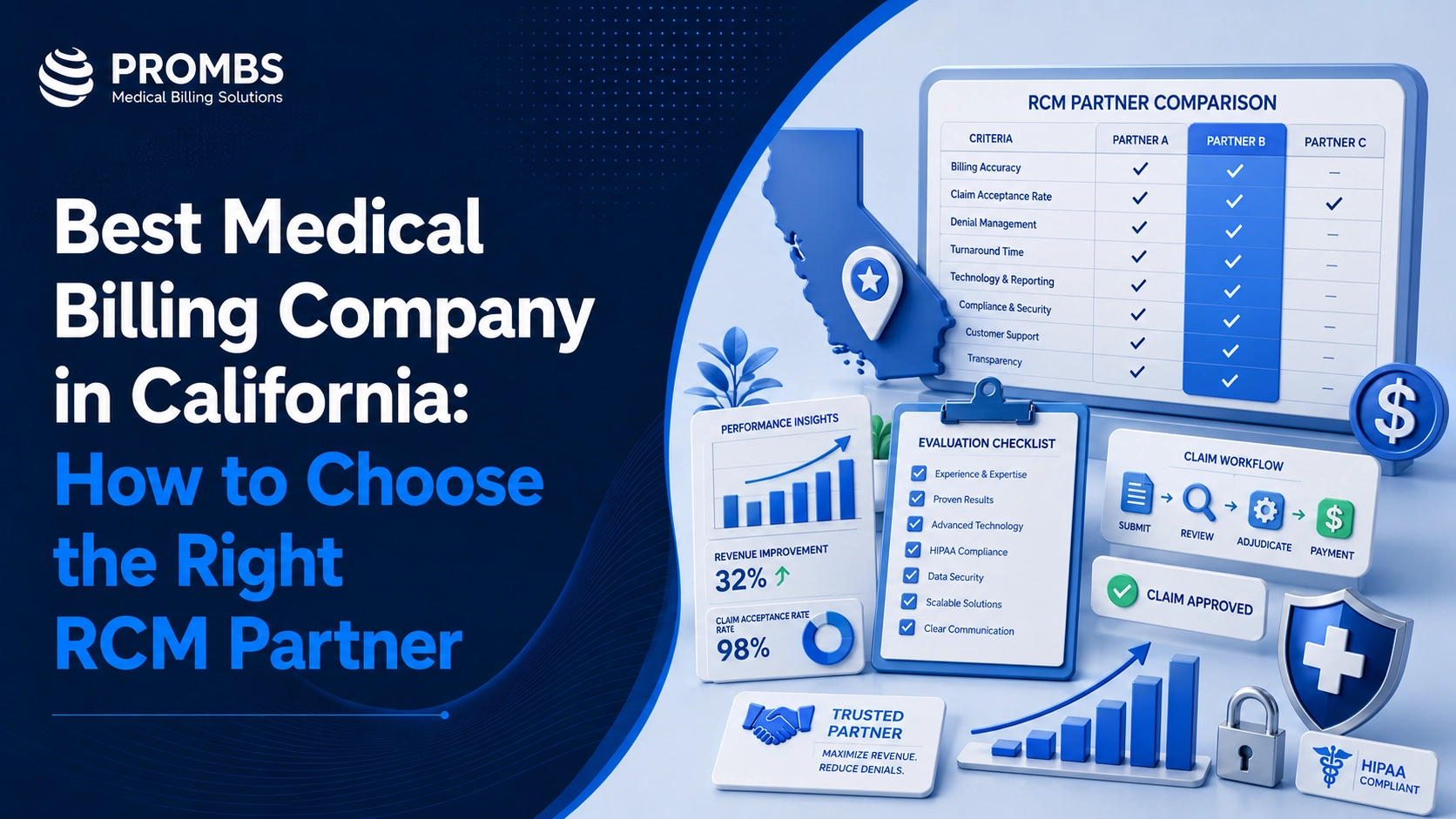
Finding the best medical billing company in California is about more than finding someone who can submit insurance claims. For healthcare practices, the right billing partner can directly impact cash flow, administrative efficiency, and long-term financial performance.
California has one of the largest and most complex healthcare markets in the United States. Practices must navigate a wide range of commercial insurance plans, Medicare, Medi-Cal, managed care organizations, and changing reimbursement requirements.
For many providers, billing challenges do not happen because of a lack of patient volume. They happen because revenue gets delayed somewhere in the process:
- Claims are submitted incorrectly
- Documentation does not support reimbursement
- Authorizations are missed
- Denials are not followed up properly
- Accounts receivable continues aging
A reliable medical billing company helps practices identify these issues, improve revenue cycle workflows, and create a more predictable payment process.
This guide explains what California healthcare providers should look for when choosing a medical billing partner, the services that matter most, and how the right revenue cycle management (RCM) solution can help practices operate more efficiently.
Understanding California's Medical Billing Environment
California’s healthcare system is unique because of its size, payer diversity, and regulatory complexity.
The state serves millions of patients through a combination of:
- Commercial insurance plans
- Medicare
- Medi-Cal
- Managed care organizations
- Employer-sponsored health plans
- Specialty-specific healthcare networks
For medical practices, this creates a billing environment where accuracy and process consistency are critical.
A claim that is accepted by one payer may require additional documentation or different workflows with another. Practices must stay updated on:
- Insurance requirements
- Coding guidelines
- Authorization rules
- Documentation standards
- Timely filing limits
- Payment policies
California’s Medi-Cal program also has specific provider requirements, claim submission procedures, and billing guidelines that practices must follow to receive timely reimbursement.
A medical billing partner familiar with these complexities can help reduce avoidable errors and improve the overall revenue cycle.
Why California Practices Need Specialized Medical Billing Support
Healthcare providers across California face many of the same revenue challenges seen nationwide, but the state’s competitive and complex healthcare environment can make these issues more noticeable.
1. Managing Multiple Payer Requirements
A California practice may work with several insurance networks simultaneously.
Each payer can have different expectations regarding:
- Claim formatting
- Prior authorization
- Medical necessity documentation
- Coding requirements
- Payment policies
Without proper workflows, billing teams can spend significant time correcting preventable issues.
A strong billing partner helps organize payer-specific processes and ensures claims are handled according to current requirements.
2. Reducing Claim Denials and Payment Delays
Denied claims are one of the biggest obstacles affecting practice revenue.
Common causes include:
- Incorrect patient information
- Missing authorization
- Coding mistakes
- Incomplete documentation
- Eligibility issues
- Filing deadline errors
However, denial management is not only about appealing rejected claims.
The best medical billing companies analyze why denials happen and create improvements to prevent the same problems from repeating.
3. Supporting Growing Healthcare Practices
Many California practices are expanding through:
- Additional providers
- New locations
- Increased patient volume
- New specialties
- More complex procedures
As a practice grows, billing operations become more difficult to manage internally.
What worked for a small practice may not work when claim volume increases.
An experienced RCM partner provides scalable processes that support growth without creating additional administrative pressure.
What Makes the Best Medical Billing Company in California?
The right billing partner should function as an extension of your practice, not just a claims processing vendor.
Before choosing a medical billing company, providers should evaluate several important areas.
1. Complete Revenue Cycle Management Services
A strong billing partner should support the complete revenue cycle, including:
- Patient eligibility verification
- Insurance verification
- Prior authorization support
- Medical coding
- Charge entry
- Claims submission
- Payment posting
- Denial management
- Accounts receivable follow-up
- Reporting and analytics
A company that only handles claim submission may leave other revenue problems unresolved.
2. Experience With Healthcare Specialties
Every specialty has different billing requirements.
For example:
- Orthopedic practices may deal with complex procedures, implants, and surgical coding.
- Cardiology practices often manage high-value procedures and testing services.
- Behavioral health providers must follow specific documentation and payer requirements.
- Gastroenterology practices may handle procedures requiring detailed authorization workflows.
A billing partner that understands specialty-specific challenges can build more effective workflows.
3. Transparent Reporting and Communication
California practice owners should have clear visibility into their revenue cycle.
A quality billing partner should provide reporting related to:
- Claims performance
- Payment trends
- Denial categories
- Accounts receivable aging
- Collection performance
Without reporting, practices cannot identify where revenue opportunities exist.
Key Factors to Evaluate Before Choosing a Medical Billing Partner
Before partnering with a billing company, practices should compare more than pricing.
The following factors help determine whether a company can support long-term revenue cycle improvement.
| Evaluation Factor | What California Practices Should Consider |
|---|---|
| Payer Knowledge | Understanding of commercial insurance, Medicare, Medi-Cal, and managed care requirements. |
| Specialty Experience | Ability to support specialty-specific coding, documentation, and billing workflows. |
| Denial Management | A structured process for identifying denial causes and improving claim outcomes. |
| Technology & Reporting | Clear visibility into claims, payments, AR performance, and revenue trends. |
| Communication | Consistent updates, dedicated support, and proactive revenue cycle discussions. |
| Scalability | The ability to support practice growth, additional providers, and increasing claim volume. |
Services the Best Medical Billing Company in California Should Provide
A complete medical billing solution should cover every stage of the revenue cycle, from the moment a patient schedules an appointment to the final payment being collected.
Many practices experience revenue problems because different parts of the billing process are disconnected. A claim may fail not because of one major mistake, but because small issues accumulate throughout the workflow.
The right medical billing partner creates a coordinated process that improves accuracy, reduces delays, and gives practices better control over their financial performance.
1. Patient Eligibility and Insurance Verification
Errors often begin before a claim is even created.
Incorrect insurance information, inactive coverage, or missing details can lead to:
- Claim rejections
- Patient billing issues
- Delayed reimbursement
- Increased administrative work
A reliable billing partner verifies coverage information early and helps practices identify potential issues before services are provided.
2. Medical Coding Accuracy
Accurate coding is essential for proper reimbursement.
Coding errors can result in:
- Underpayments
- Claim denials
- Compliance risks
- Delayed payments
A knowledgeable billing team understands how documentation connects with coding requirements and works to ensure claims accurately represent the services provided.
For California practices handling specialty care, procedures, and higher-value services, coding accuracy becomes even more important.
3. Claims Management
Submitting a claim is only one step in the revenue cycle.
Effective claims management includes:
- Reviewing claims before submission
- Identifying potential errors
- Monitoring claim status
- Following up on unpaid claims
- Resolving payer issues
A proactive process helps practices avoid unnecessary delays and improves payment consistency.
4. Denial Management and Appeals
Every practice experiences denied claims. The difference is how effectively those denials are handled.
A strong denial management process focuses on:
- Identifying common denial patterns
- Understanding payer-specific issues
- Correcting workflow problems
- Submitting accurate appeals
- Preventing repeated mistakes
The goal is not simply recovering lost revenue. It is improving the billing process so fewer claims are denied in the future.
5. Accounts Receivable Management
Aging accounts receivable can create serious financial challenges for healthcare practices.
Effective AR management involves:
- Monitoring unpaid claims
- Prioritizing high-value accounts
- Following up with payers
- Identifying payment delays
- Reducing aging balances
A medical billing partner should provide visibility into AR performance and help practices maintain healthier cash flow.
Complete Revenue Cycle Services Comparison
| Revenue Cycle Service | How It Helps California Practices |
|---|---|
| Eligibility Verification | Reduces coverage-related claim issues by confirming patient insurance information before treatment. |
| Prior Authorization Support | Helps prevent delays caused by missing approvals for procedures and services. |
| Medical Coding | Improves claim accuracy by aligning documentation with appropriate billing codes. |
| Claims Submission | Ensures claims are reviewed and submitted correctly to reduce avoidable rejections. |
| Payment Posting | Keeps financial records accurate by properly applying payments and adjustments. |
| Denial Management | Identifies denial trends and creates strategies to improve reimbursement. |
| AR Follow-Up | Focuses on outstanding balances and helps accelerate collections. |
| Reporting & Analytics | Provides insight into revenue performance, payer trends, and improvement opportunities. |
In-House Billing vs Outsourced Medical Billing in California
Many practices consider whether to continue managing billing internally or partner with an external revenue cycle company.
The right decision depends on factors such as practice size, claim volume, internal resources, and financial goals.
| Area | In-House Billing | Outsourced Medical Billing |
|---|---|---|
| Staff Management | Practice manages hiring, training, retention, and daily billing operations. | Billing partner manages experienced revenue cycle professionals. |
| Industry Expertise | Depends on internal staff knowledge and experience. | Access to specialized billing, coding, and denial management expertise. |
| Technology | Practice manages billing tools, updates, and reporting systems. | Often includes established workflows and reporting processes. |
| Scalability | Growth may require additional staff and resources. | Can adapt to increasing claim volume and changing practice needs. |
| Focus on Patient Care | Administrative responsibilities remain with internal teams. | Allows providers and staff to focus more on patient care. |
Why California Practices Choose Outsourced Revenue Cycle Management
California healthcare providers often operate in demanding environments where administrative responsibilities continue increasing.
Outsourcing medical billing can provide several advantages.
More Time for Patient Care
Physicians and practice teams should spend their time focused on healthcare delivery, not chasing unpaid claims or correcting billing errors.
A dedicated RCM partner handles time-consuming financial workflows while keeping the practice informed.
Better Financial Visibility
Many practices know how much they collect but do not always know:
- Where claims are getting delayed
- Which payers create problems
- Which services generate the most issues
- Where revenue opportunities exist
Detailed reporting helps practices make better operational decisions.
Access to Experienced Billing Professionals
Building an internal billing department requires:
- Hiring qualified staff
- Training employees
- Managing turnover
- Keeping up with payer changes
Outsourcing provides access to professionals who already understand revenue cycle processes.
Improved Revenue Cycle Efficiency
A structured billing workflow can help practices:
- Reduce administrative bottlenecks
- Improve claim accuracy
- Manage denials more effectively
- Track financial performance
The goal is creating a predictable and organized revenue cycle.
Why Pro Medical Billing Solutions Is a Trusted RCM Partner
Selecting a medical billing company is ultimately about finding a partner that understands your practice goals and provides reliable support.
Pro Medical Billing Solutions helps healthcare organizations manage revenue cycle challenges through a combination of experienced billing professionals, structured workflows, and transparent communication.
Our services support practices with:
- Medical billing management
- Medical coding support
- Insurance verification
- Denial management
- Accounts receivable follow-up
- Revenue cycle reporting
- Credentialing support
Instead of treating billing as a simple claims submission process, PROMBS focuses on improving the complete revenue cycle.
For California practices, the right billing partner should help identify revenue barriers, improve operational efficiency, and provide better visibility into financial performance.
Find Hidden Revenue Opportunities in Your Practice
Get a free billing audit and discover where your California practice may be losing revenue through denials, delays, or inefficient workflows.
Request Your Free AuditHow to Choose the Right Medical Billing Company in California
Selecting a medical billing company is a long-term business decision. The right partner can help improve reimbursement, reduce administrative workload, and create better financial visibility.
However, not every billing company provides the same level of support.
Before making a decision, California practices should evaluate a potential partner based on experience, processes, communication, and measurable results.
Here are the most important factors to consider.
1. Understand Their Healthcare Billing Experience
Medical billing requires more than knowing how to submit claims.
A reliable billing partner should understand:
- Healthcare payer requirements
- Specialty-specific workflows
- Coding guidelines
- Documentation requirements
- Denial prevention strategies
- Revenue cycle performance tracking
Ask potential partners about their experience with practices similar to yours.
A company that understands your specialty can identify problems faster and create workflows that match your practice needs.
2. Review Their Denial Management Approach
Denials are one of the biggest revenue challenges for healthcare practices.
A good billing company should have a clear process for:
- Tracking denial trends
- Categorizing denial reasons
- Prioritizing high-value claims
- Managing appeals
- Preventing recurring issues
Simply resubmitting denied claims is not enough.
The best revenue cycle partners focus on understanding why claims fail and improving processes to reduce future denials.
3. Ask About Reporting and Transparency
A medical billing company should provide clear visibility into your revenue cycle.
Before partnering, ask:
- What reports will we receive?
- How often will performance updates be provided?
- Can we track claim status?
- How are denial trends reported?
- Will we have access to AR performance data?
A transparent billing relationship allows practice owners to make informed financial decisions.
4. Evaluate Communication and Support
Communication plays a major role in a successful billing partnership.
A reliable company should have:
- Clear points of contact
- Defined communication processes
- Regular performance reviews
- Quick issue escalation
Your billing partner should feel like an extension of your practice team, not a separate vendor.
Questions to Ask Before Hiring a Medical Billing Company in California
Before signing an agreement, California practices should ask detailed questions to understand how a billing company operates.
| Question to Ask | Why It Matters |
|---|---|
| What specialties do you support? | Helps determine whether the company understands your practice workflow and billing requirements. |
| How do you manage denied claims? | Shows whether the company focuses on prevention or only reacts after revenue is lost. |
| What reporting will we receive? | Ensures your practice maintains visibility into billing performance. |
| How do you handle payer changes? | Important for staying compliant with evolving insurance requirements. |
| How will communication work? | Clarifies expectations around updates, support, and issue resolution. |
Frequently Asked Questions
What does a medical billing company do for California practices?
A medical billing company manages different parts of the revenue cycle, including claim submission, coding support, payment posting, denial management, insurance follow-up, and accounts receivable management.
The goal is to help practices improve billing accuracy, reduce payment delays, and maintain a healthier revenue cycle.
How do I choose the best medical billing company in California?
The best medical billing company depends on your practice needs, specialty, payer mix, and revenue cycle challenges.
Look for a partner with healthcare experience, transparent reporting, strong denial management processes, and reliable communication.
Is outsourcing medical billing a good option for California practices?
Outsourcing can be beneficial for practices that want access to experienced billing professionals, reduce administrative workload, and improve revenue cycle visibility.
The right partner allows providers and office teams to spend more time focusing on patient care.
How much does medical billing cost in California?
Medical billing costs vary depending on factors such as:
- Practice specialty
- Monthly claim volume
- Services included
- Billing complexity
- Revenue cycle requirements
Many billing companies use customized pricing models based on the specific needs of each practice.
Practices should evaluate overall value, not just the lowest cost option.
Final Thoughts: Finding the Best Medical Billing Company in California
Choosing the best medical billing company in California requires looking beyond basic claim processing.
A strong revenue cycle partner should help practices identify financial challenges, improve billing workflows, reduce unnecessary delays, and provide better visibility into performance.
California healthcare providers operate in a complex environment where payer requirements, documentation standards, and administrative responsibilities continue changing.
The right billing partner provides the expertise and support needed to navigate these challenges while allowing healthcare teams to focus on delivering quality patient care.
Whether your practice is experiencing increasing denials, growing administrative pressure, or difficulty managing accounts receivable, a dedicated medical billing partner can help create a more efficient and predictable revenue cycle.
Ready to understand where your practice revenue cycle can improve? Request a free billing audit from Pro Medical Billing Solutions and discover opportunities to strengthen your billing process.
Improve Your Practice Revenue Cycle Today
See how a dedicated medical billing partner can help your California practice reduce billing challenges, improve collections, and gain better financial visibility.
Get Started Today