Leukocytosis occurs when your immune system goes into overdrive, resulting in a white blood cell (WBC) count that exceeds the normal upper limit - typically 11,000 cells per microliter of blood in adults. While often a healthy sign that your body is fighting off an invader, a high count requires precise clinical documentation.
Doctors and health systems track this condition using the ICD 10 code for leukocytosis, which falls under the category of "diseases of the blood and blood-forming organs."
What Is Leukocytosis ICD 10?
In the world of medical billing and clinical documentation, precision is everything. The primary ICD 10 code for leukocytosis is D72.829, which specifically denotes "Leukocytosis, unspecified." This alphanumeric identifier is part of a standardized system used by healthcare providers to track disease prevalence and ensure accurate insurance reimbursement.
When a clinician notes a leukocytosis ICD 10 entry in a patient's chart, it serves as a formal marker that the white blood cell count has crossed the diagnostic threshold. However, because an elevated count is often a symptom rather than a standalone disease, doctors may use more specific codes if the cause is known - such as D72.821 for a "Leukemoid reaction" (an extreme rise often mistaken for leukemia) or D72.828 for other specified white blood cell disorders.
Accurate coding ensures that the diagnostic journey, from the initial blood draw to the final treatment plan, is meticulously documented for the medical record.
Common Symptoms of Leukocytosis
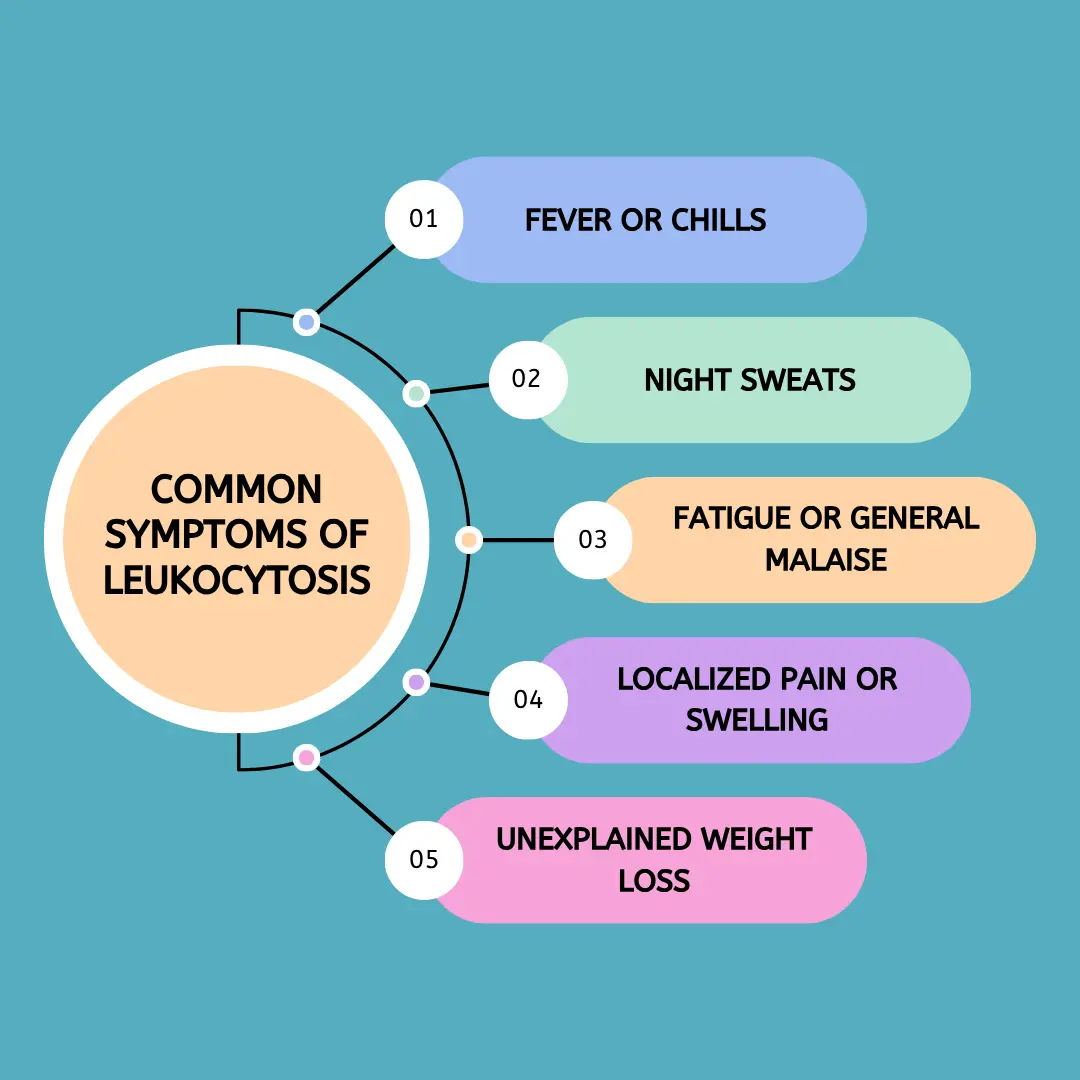
Leukocytosis is often an asymptomatic finding discovered during a routine Complete Blood Count (CBC). However, when the body triggers a high white blood cell production - requiring the use of the ICD 10 code for leukocytosis - it usually manifests through the symptoms of the underlying pathology.
Because an elevated WBC count is a physiological response to internal stress or invasion, the patient’s physical experience will mirror the specific "insult" the body is fighting.
The severity and type of symptoms often depend on which specific leukocyte lineage is elevated. While the leukocytosis ICD 10 designation covers the broad elevation, patients frequently present with:
- Pyrexia (Fever) and Chills: Common when the elevation is a response to infectious pathogens or systemic inflammation.
- Diaphoresis: Excessive night sweats, which can sometimes indicate more chronic hematologic concerns.
- Unintentional Weight Loss and Fatigue: Often seen in persistent cases where the metabolic demand of overproducing cells exhausts the body.
- Lymphadenopathy: Swelling of the lymph nodes, indicating an active immune mobilization.
- Splenomegaly: An enlarged spleen, which may cause abdominal discomfort or fullness.
ICD 10 Code for Leukocytosis Breakdown: D72
| ICD-10 Code | Description | Clinical Context |
|---|---|---|
| D72.829 | Leukocytosis, unspecified | Elevated WBC count without a specified cause or cell type. |
| D72.820 | Neutrophilia | Often indicates bacterial infection, inflammation, or physiological stress. |
| D72.821 | Monocytosis | Commonly linked to chronic infections (e.g., tuberculosis) or autoimmune disorders. |
| D72.828 | Lymphocytosis | Typically associated with viral infections (e.g., mononucleosis) or chronic lymphocytic leukemia (CLL). |
| D72.1 | Eosinophilia | Often seen in allergic reactions, asthma, or parasitic infections. |
| D72.822 | Basophilia | Rare condition; frequently related to myeloproliferative disorders. |
Clinical Documentation Standards for the ICD 10 Code for Leukocytosis
Reporting the ICD 10 code for leukocytosis (D72.829) requires strict adherence to clinical indicators that prove the condition impacted patient management. Per CMS Coding Guidelines, this diagnosis should only be captured when the elevated white blood cell count is actively evaluated, treated, or increases the complexity of care during the clinical encounter.
It must not be reported as an incidental laboratory finding or when a more definitive diagnosis - such as sepsis or a myeloproliferative neoplasm - better explains the hematologic profile.
Validating Medical Necessity for D72.829
To substantiate the use of the leukocytosis ICD 10 designation in a medical record, providers must document specific clinical actions. Payers often scrutinize these claims for medical necessity, making the following elements essential:
- Quantitative Evidence: Documentation of the absolute WBC value alongside the laboratory’s reference range.
- Clinical Rationale: A clear statement of the provider's concern or the differential diagnoses being ruled out.
- Active Management: Evidence of diagnostic escalation, such as ordering blood cultures, peripheral smears, or specialized imaging.
- Monitoring and Intervention: Documentation of serial CBCs or therapeutic adjustments specifically addressing the leukocyte elevation.
Mitigating Coding Errors and Denials
A primary error in reporting the ICD 10 code for leukocytosis is "unbundling" a symptom that is inherently part of a primary disease process. For instance, if leukocytosis is a transient, expected finding of acute pneumonia, the pneumonia code usually captures the full clinical picture.
Assigning a leukocytosis ICD 10 code without sufficient evidence of independent assessment can lead to Diagnosis-Related Group (DRG) shifts and subsequent audit failures. To ensure compliance, the medical record must reflect that the leukocytosis was an active "problem" addressed by the care team rather than a redundant laboratory observation.
Differential Classifications within the D72.82 ICD-10 Series
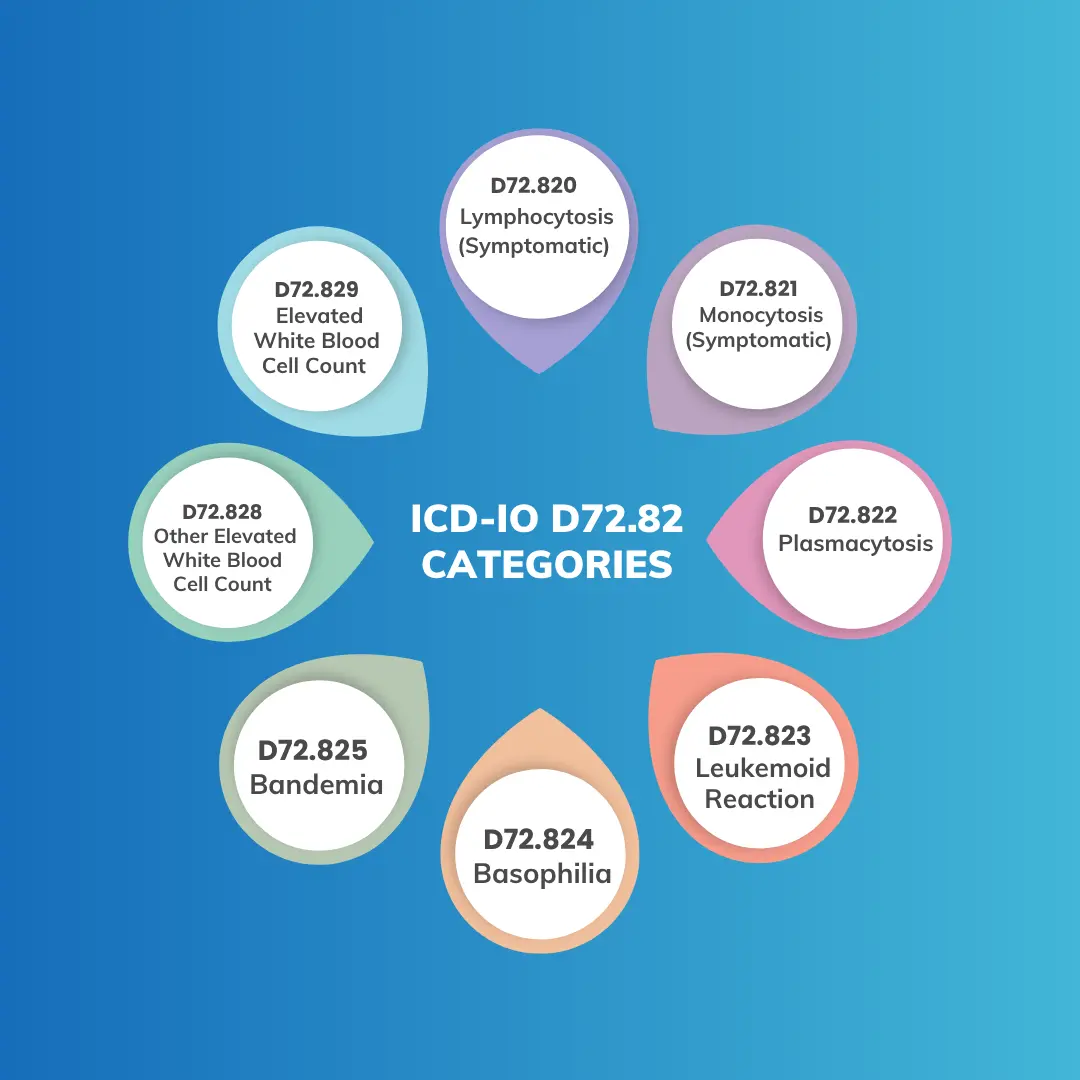
While the general ICD 10 code for leukocytosis (D72.829) serves as a vital diagnostic placeholder, clinical accuracy often requires transitioning to more granular codes based on leukocyte lineage. When a differential count identifies a specific cell type as the driver of the elevation, the broader leukocytosis ICD 10 designation is superseded by codes that reflect the underlying pathophysiology.
This specificity is essential for tracking disease progression and ensuring that the medical record aligns with the patient's biological immune response.
Neutrophilia - ICD-10 Code D72.820
Neutrophilia represents a primary increase in neutrophil counts, typically triggered by acute bacterial infections, physical trauma, or corticosteroid therapy. Rather than using a generic ICD 10 code for leukocytosis, clinicians should utilize D72.820 when the myeloid lineage shows a "left shift" or significant maturation toward active phagocytosis.
Lymphocytosis - ICD-10 Code D72.828
Lymphocytosis indicates a high lymphocyte count, a hallmark of viral pathogens like mononucleosis or chronic inflammatory states. Utilizing D72.828 instead of a standard leukocytosis ICD 10 entry allows for better tracking of the adaptive immune response, particularly in cases of chronic lymphocytic leukemia or acute viral surges.
Monocytosis - ICD-10 Code D72.821
Monocytosis is the pathological elevation of monocytes, often associated with subacute or chronic infections like tuberculosis and certain autoimmune disorders. This specific code identifies a unique inflammatory profile, distinguishing it from general leukocytosis ICD 10 findings to highlight potential myelodysplastic concerns.
Eosinophilia - ICD-10 Code D72.1
Eosinophilia occurs when eosinophil levels exceed the reference range, signaling allergic reactions, parasitic infestations, or systemic eosinophilic diseases. While it is a form of elevated WBCs, coding it under D72.1 provides the necessary depth for cases involving Type I hypersensitivity or Churg-Strauss syndrome.
Basophilia - ICD-10 Code D72.822
Basophilia is a rare finding involving elevated basophil counts, frequently serving as a marker for myeloproliferative neoplasms such as chronic myeloid leukemia. When this specific lineage is documented, D72.822 provides more diagnostic utility than the general ICD 10 code for leukocytosis, pointing toward specialized hematologic investigation.
Billing and Payer Compliance for Leukocytosis Reporting
Commercial and Medicare payers frequently audit claims containing the ICD 10 code for leukocytosis due to its potential for clinical redundancy. To maintain compliance, the medical record must substantiate that the elevation was a significant factor in the clinical decision-making process.
Payers specifically look for "carve-out" documentation where the leukocytosis ICD 10 designation is supported by associated services, such as specialized differential counts, infectious disease consultations, or escalated diagnostic imaging. Without documented evidence that the condition was managed independently of a primary diagnosis, the risk of claim denial or recoupment increases significantly.
Contraindications for Utilizing the ICD 10 Code for Leukocytosis
The ICD 10 code for leukocytosis should not be assigned if the elevated white blood cell count is an expected physiological component of a more specific, documented condition. For instance, in cases of acute appendicitis or localized abscess, the primary infection code typically encompasses the inflammatory response.
Furthermore, the leukocytosis ICD 10 (D72.829) should be omitted if the finding was incidental, present on admission but clinically inert, or not addressed through a specific treatment plan during the encounter. Utilizing this code as a standalone diagnosis without corroborating laboratory data and physician progress notes is considered a high-risk coding practice.
How ProMBS Supports Accurate Leukocytosis Coding
The most common pitfalls in Hematology Billing involve upcoding (using leukocytosis as a CC/MCC when it is integral to another condition) or failing to utilize the WBC differential for higher specificity.
At ProMBS, our certified coders mitigate these risks by:
- Audit-Proofing Documentation: We identify gaps where providers fail to link lab results to clinical assessments.
- Maximizing Specificity: We ensure codes like D72.820 (Neutrophilia) are used whenever the lab differential supports it, reducing the "unspecified" red flags that trigger payer denials.
- Regulatory Compliance: Our team stays updated on 2026 LCD (Local Coverage Determinations) to ensure your claims meet the latest medical necessity criteria.
Frequently Asked Questions
What is the ICD 10 code for leukocytosis?
The ICD 10 code for leukocytosis is D72.829, which represents leukocytosis, unspecified. Providers use this code when lab results confirm elevated white blood cells without identifying a specific lineage or cause. Documentation must show clinical evaluation or management to justify reporting it for reimbursement.
When should providers avoid using D72.829?
Providers should avoid D72.829 when leukocytosis is an expected component of a confirmed condition, such as sepsis or acute infection. If the elevation is incidental and does not influence care decisions, reporting it separately increases audit risk and may lead to claim denials.
How do you prove medical necessity for leukocytosis?
To prove medical necessity, providers must document the absolute WBC value, reference range, and clinical interpretation. The record should show diagnostic steps such as repeat CBC testing, cultures, or imaging. Clear linkage between lab findings and management decisions strengthens claim defensibility.
What is the difference between leukocytosis and leukemia in coding?
Leukocytosis reflects an elevated white blood cell count, often reactive. Leukemia represents a malignant blood disorder requiring cancer coding under C91–C95. Providers must code the confirmed diagnosis. Using a leukocytosis code after confirming leukemia misrepresents disease severity and affects compliance.
Do payers audit claims with leukocytosis codes?
Yes, payers frequently audit claims containing D72.829 because it may overlap with primary diagnoses. They review documentation to confirm the elevation influenced care. Without evidence of evaluation or management, auditors may remove the code or question reimbursement integrity.