Quick Answer: Vomiting ICD 10
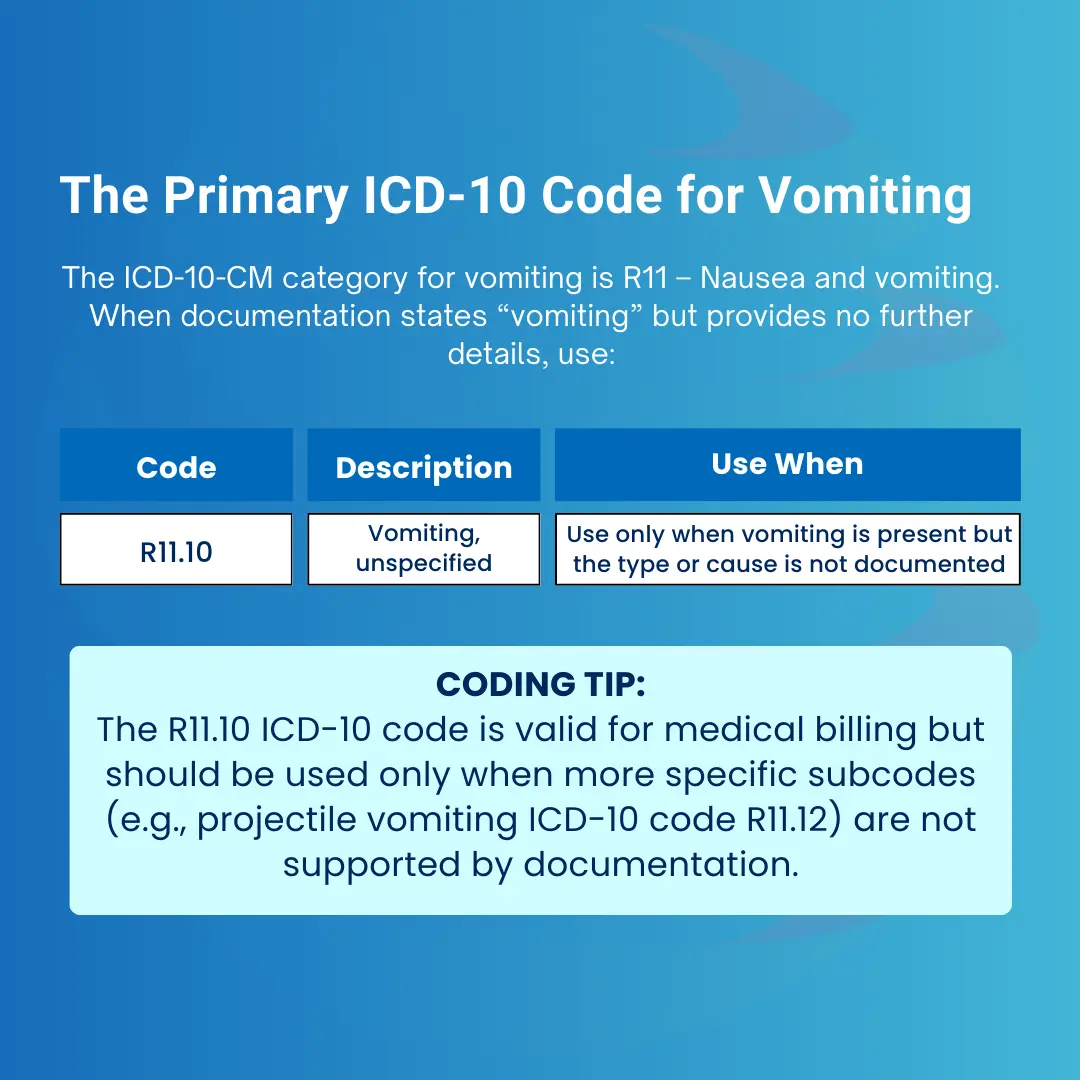
The primary ICD-10-CM code for vomiting is R11.10 (Vomiting, unspecified), which is used when a patient presents with vomiting without nausea. More specific codes exist, such as R11.11 for vomiting without nausea, R11.12 for projectile vomiting, and R11.2 for nausea with vomiting. These codes are part of the R00-R99 chapter for symptoms not elsewhere classified.
- R11.10: Vomiting, unspecified (most common).
- R11.11: Vomiting without nausea.
- R11.12: Projectile vomiting.
- R11.13: Vomiting of fecal matter.
- R11.14: Bilious vomiting.
- R11.15: Cyclical vomiting syndrome (non-migraine).
- R11.16: Cannabis hyperemesis syndrome.
- R11.2: Nausea with vomiting, unspecified.
Important Notes:
- Exclusions: These codes do not cover hematemesis (vomiting blood), which is classified under K92.0.
- Specificity: If vomiting is accompanied by nausea, R11.2 is generally used, while R11.10 is used for vomiting alone.
- Context: These are for 2026 ICD-10-CM coding, effective from October 1, 2025.
Vomiting appears in medical records every day. Nausea appears just as often. They look simple. They are not. In ICD-10-CM coding, Vomiting ICD 10 falls under Chapter 18. This chapter includes symptoms signs, and findings, not diseases. Payers review these claims closely.
Using the correct ICD 10 code for nausea and vomiting protects payment. It supports medical need. It keeps claims moving.
Coders face real choices. When does vomiting lead the claim? When does nausea with Vomiting ICD 10 follow another diagnosis? When should teams avoid R11.10?
This guide explains ICD 10 Nausea and Vomiting, the R11 code range, and Nausea and Vomiting in Pregnancy ICD 10 rules for 2025.
How Does Vomiting Happen in the Body?
Vomiting means the body forces stomach contents out. The brain controls this response. It reacts fast when the body senses danger. Triggers include infection, food toxins, pain, medication, and pregnancy.
These triggers often cause Nausea Vomiting ICD 10 symptoms together. The body follows a clear sequence during vomiting.
- A Trigger Appears
- The Brain Reacts
- Muscles Tighten
- The Stomach Moves Upward
- Vomiting Occurs
In coding, this matters. If nausea and vomiting share one cause, that cause leads. If no cause appears, vomiting and nausea ICD 10 codes stand alone. These symptoms fall under symptoms signs and abnormal findings that are not a diagnosis classifiable elsewhere.
How Does Vomiting ICD 10 Affect Coding Decisions?
Coding follows reason, not habit. If the provider documents a cause, that cause comes first. Vomiting becomes secondary.
Examples help.
- Gastroenteritis with vomiting → code gastroenteritis first.
- Medication reaction with nausea vomiting ICD 10 → code the reaction first.
- Pregnancy-related vomiting → use nausea and vomiting in pregnancy ICD 10, not R11.
When no cause appears, coders must choose the best ICD 10 Code for Vomiting or ICD 10 Code for Nausea Vomiting based on detail.
Known cause first. Symptom second. No cause? Symptom leads.
Which Vomiting ICD 10 Codes Should Coders Use?
Choosing the right vomiting ICD 10 code depends on symptom detail. Details drive clean claims. The Vomiting ICD 10 category includes specific codes within categories R00–R94 consist of symptom-based diagnoses only.
- R11.0 – Nausea only
- R11.10 – Vomiting, unspecified
- R11.11 – Vomiting without nausea
- R11.12 – Projectile vomiting
- R11.13 – Vomiting of fecal matter
- R11.14 – Bilious vomiting
- R11.15 – Cyclical vomiting syndrome
- R11.2 – Nausea with vomiting
- O21.x – Excessive vomiting in pregnancy
These codes reflect symptoms signs abnormal results and abnormal clinical and laboratory findings. Follow type 2 excludes notes to avoid errors.
Related ICD-10 Codes for Vomiting
| ICD-10 Code | Description | Usage Criteria |
|---|---|---|
| R11.0 | Nausea | Only nausea is documented |
| R11.1 | Vomiting | Parent category (non-billable) – see subcodes below |
| R11.11 | Vomiting without nausea | Use when vomiting occurs without accompanying nausea |
| R11.12 | Projectile vomiting | Sudden, forceful expulsion (common in pyloric stenosis) |
| R11.13 | Vomiting of fecal matter | Often linked to intestinal obstruction |
| R11.14 | Bilious vomiting | Green/yellow vomit caused by bile reflux |
| R11.15 | Cyclical vomiting syndrome, not intractable | Recurrent vomiting episodes without clear cause |
| R11.2 | Nausea with vomiting, unspecified | Use when both symptoms are documented without more detail |
| O21.x | Excessive vomiting in pregnancy | Use for pregnancy-related cases (hyperemesis gravidarum) |
What Documentation Is Needed for Vomiting ICD 10?
Strong documentation supports the right ICD 10 Nausea Vomiting code.
Providers should answer clear questions. When did nausea and vomiting start? How often do symptoms occur? Does vomiting occur with or without nausea?
Type matters. Projectile vomiting changes the code. Bilious vomiting changes the code.
Context matters too.
- Abdominal Pain
- Fever
- Diarrhea
- Headache
Pregnancy status matters most. Nausea and vomiting in pregnancy ICD 10 follows a different rule set. If the cause stays otherwise specified unknown etiology, detail becomes critical.
Why Do Vomiting ICD 10 Claims Get Denied?
Denials related to Vomiting ICD 10 coding usually stem from specificity gaps, sequencing violations, or failure to follow ICD-10-CM Official Guidelines.
• Overuse of R11.10 (Vomiting, unspecified): When documentation supports projectile, bilious, fecal, or cyclical vomiting but an unspecified code is reported, payers may deny for lack of specificity.
• Incorrect sequencing of symptom codes: Vomiting should not be listed as the principal diagnosis when a confirmed underlying condition such as gastroenteritis, obstruction, or medication reaction explains the symptom.
• Pregnancy coding errors: Reporting R11 codes instead of O21.x for pregnancy-related vomiting violates Chapter 15 obstetric guidelines and commonly results in claim rejection.
• Insufficient medical necessity documentation: Claims that do not document onset, severity, duration, associated findings, or clinical assessment may be denied for lack of justification.
• Mismatch between diagnosis and services billed: High-level emergency services or advanced imaging linked only to symptom codes may trigger payer review and denial.
• Failure to code related documented conditions: If dehydration, electrolyte imbalance, or infection is documented but not coded, payers may view the claim as incomplete or inconsistent.
Most Vomiting ICD 10 denials are preventable when specificity, sequencing, and documentation integrity are prioritized.
What Are Best Practices for Coding Vomiting ICD 10?
Accurate Vomiting ICD 10 coding requires structured evaluation of documentation and strict adherence to coding hierarchy.
• Code the confirmed diagnosis first: When an underlying etiology is established, it must be sequenced before vomiting in accordance with ICD-10-CM guidelines.
• Select the highest level of specificity available: Review documentation carefully for descriptors such as projectile, bilious, fecal, or cyclical vomiting and assign the appropriate R11 subcategory.
• Reserve R11.10 for true lack of detail: Use unspecified vomiting only when documentation provides no additional specificity.
• Apply R11.2 appropriately: Use this code only when both nausea and vomiting are documented together without further detail.
• Assess pregnancy status consistently: When vomiting occurs during pregnancy, apply O21.x codes instead of symptom codes and follow trimester-specific documentation rules.
• Ensure medical necessity is clearly supported: Documentation should reflect evaluation, clinical reasoning, and treatment decisions tied to the symptom.
• Conduct pre-submission claim validation: Review sequencing, specificity, and payer compliance edits before claim transmission.
Following these structured best practices strengthens compliance with the 2026 ICD-10-CM guidelines and significantly reduces Vomiting ICD 10 denial risk.
How Pro-MBS Prevents Vomiting ICD 10 Denials
At Pro-MBS, Vomiting ICD 10 coding is reviewed with clinical and compliance precision. Our certified coders validate documentation, confirm symptom specificity, and ensure correct sequencing when an underlying condition is present. We prevent overuse of R11.10 and apply pregnancy coding rules accurately under O21.x when required.
Every claim passes through payer-aligned edits and documentation checks before submission. The result is stronger medical necessity support, fewer denials, and faster reimbursement.
If your practice struggles with symptom-based coding errors, Pro-MBS provides targeted audits and revenue-focused coding support.
Frequently Asked Questions About Vomiting ICD 10
What is the correct Vomiting ICD 10 code for unspecified vomiting?
The appropriate code is R11.10. Vomiting, unspecified. This code should only be used when documentation does not describe the type or associated symptoms. If records mention bilious, projectile, or cyclical vomiting, a more specific Vomiting ICD 10 subcode must be selected to avoid denials.
Can Vomiting ICD 10 be coded as the primary diagnosis?
Vomiting ICD 10 may be primary only when no confirmed underlying condition explains the symptom. If a definitive diagnosis such as gastroenteritis, obstruction, medication reaction, or pregnancy-related condition exists, that diagnosis must be sequenced first.
What is the difference between R11.10 and R11.2 in Vomiting ICD 10 coding?
R11.10 represents vomiting without further detail. R11.2 is used when both nausea and vomiting are documented together without additional specificity. Accurate documentation review ensures proper Vomiting ICD 10 selection between these codes.
How is Vomiting ICD 10 coded during pregnancy?
Pregnancy-related vomiting requires O21.x codes, not R11 symptom codes. Accurate trimester documentation and severity details are essential. Using symptom codes instead of obstetric codes often results in payer denials and compliance issues.
What documentation supports accurate Vomiting ICD 10 coding?
Documentation should clearly define onset, duration, frequency, type of vomiting, associated symptoms, pregnancy status, and confirmed cause. The more detailed the record, the more precise the Vomiting ICD 10 code assignment becomes.
Why do Vomiting ICD 10 claims get denied?
Denials typically occur due to overuse of unspecified codes, improper sequencing, missing linkage to underlying diagnoses, or failure to apply pregnancy coding rules. Documentation gaps frequently trigger medical necessity reviews.
Is Vomiting ICD 10 considered an audit-sensitive code?
Vomiting ICD 10 is a symptom code category and becomes audit-sensitive when repeatedly used without specificity or without addressing an underlying diagnosis. Consistent misuse may increase payer scrutiny, particularly when tied to high-cost services.
If your organization is experiencing denial trends tied to Vomiting ICD 10, Pro-MBS provides targeted chart audits and documentation workflow optimization to strengthen coding precision and protect reimbursement.
