
Medical Billing Services control how money moves through a healthcare practice. When billing slows down, payments slow down too. That can affect payroll, supplies, and patient care very quickly.
Many clinics still treat billing as basic office work. Is that really the best way to protect your income? What happens when claims go unpaid or follow-ups get missed?
Small billing mistakes can turn into big money losses. Delayed claims mean delayed cash. Wrong codes can mean lower payments or denials.
This blog explains billing in very simple terms. It starts with why billing matters so much right now. Then it shows outsourcing options, real costs, and real returns.
You will also learn how Pro-MBS works differently. How do they help clinics get paid faster? How do they reduce stress for staff and doctors? By the end, you will know if outsourcing makes sense for you.
This guide is written for U.S.-based healthcare practices, including solo providers, group clinics, and multi-specialty practices.
Why Are Medical Billing Services Key to Practice Growth?
Medical Billing Services decide when and how a practice gets paid. If billing slows down, money slows down too. That can stop growth very quickly. Ask yourself this. What happens when payments arrive late every month? How do you plan staff, rent, or supplies without steady cash?
Billing mistakes cause more damage than many clinics expect. A missed follow-up can delay payment for weeks. A wrong code can lower what insurance pays.
Healthcare billing rules also change often. CMS, the Centers for Medicare and Medicaid Services, updates payment rules every year. These rules decide how much insurance will pay for care.
AMA, the American Medical Association, updates coding rules used for billing visits. If these codes are not used correctly, claims can get denied. Denied claims mean lost time and lost money.
Strong billing helps avoid these problems early. It keeps claims clean and payments moving. It also lowers audit risk and protects income. So here is the real question. Is billing helping your practice grow? Or is it quietly holding your practice back?
What Do Medical Billing Services Include Today?
Full Billing Process Explained
Billing starts the moment a patient is seen. The visit must be written clearly in the chart. Charges must match what the provider actually did. Next, the right codes are added to the visit. These codes tell insurance what care was given. If codes are wrong, payment can be reduced or denied.
Claims are then sent to insurance for review. Insurance checks the claim against its rules. If something is missing, the claim may be rejected. When payment arrives, it must be posted correctly. Balances are checked to make sure nothing is missed. Unpaid claims must be followed up until resolved.
This full process protects revenue and reduces risk. Strong billing makes sure no step gets skipped. Medical Billing Services help keep every step connected from visit to payment.
Why Does In-House Billing Cause Revenue Loss?
In-house billing teams often handle many tasks at once. They answer phones, post payments, and fix claims. When billing is only one of many duties, problems start to grow.
Have you noticed money coming in slower than expected? Do unpaid claims seem to sit longer each month? These are common signs of billing strain.
Small billing gaps can quietly drain income. Over time, these losses add up and slow growth.
Where Revenue Slips Away
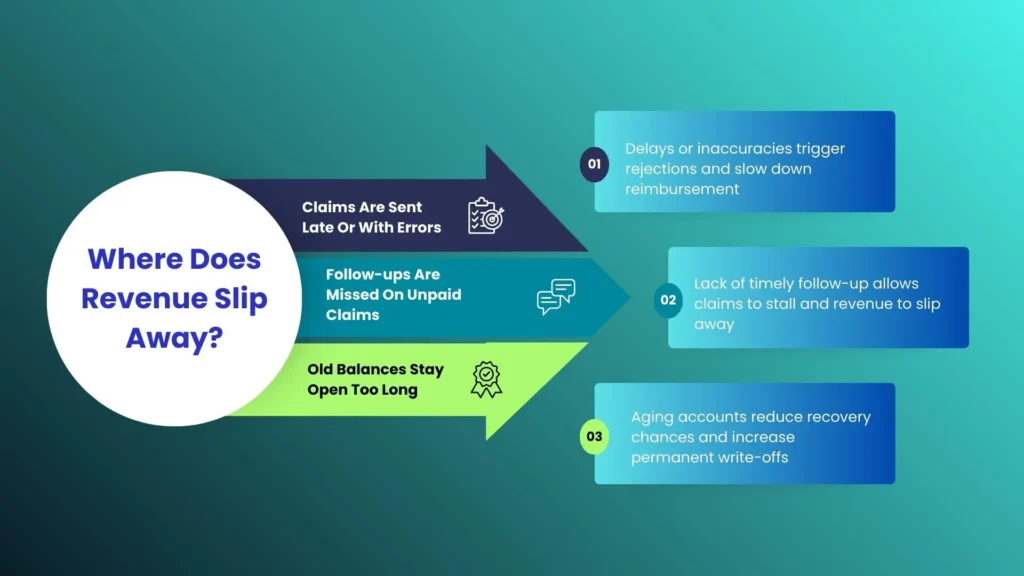
- Claims are sent late or with errors
- Follow-ups are missed on unpaid claims
- Old balances stay open too long
Each missed step delays payment. Some claims never get paid at all. This lost money is hard to recover later.
Audit and Risk Concerns
Billing is not just about payment speed. It also affects risk and safety. Missing notes increase audit risk. CMS, the Centers for Medicare and Medicaid Services, often reviews patterns across many claims.
If patterns look wrong, audits may follow. Audits take time and cause stress. Medical Billing Services reduce risk by keeping billing patterns clean and consistent. Strong billing helps avoid these problems early.
Which Medical Billing Outsourcing Model Fits Your Practice?
Outsourcing billing is not the same for every practice. Each clinic has different needs, staff, and goals. That is why billing support comes in different models.
Have you ever wondered which option fits your practice best? Do you need full help or just support in a few areas?
Choosing the right model can protect income and reduce stress. Outsourcing works best when it matches how your practice runs. Medical Billing Services are most effective when they fit existing workflows and daily routines. The goal is to fix gaps without disrupting care.
Outsourcing Models Compared
This table shows the main outsourcing choices clearly. Full service removes billing work from your team completely. Partial support helps when only certain tasks need help. Hybrid models allow practices to grow without hiring quickly.
The right model keeps billing strong and payments steady.
| Model Type | Who It Fits Best | What It Covers |
|---|---|---|
| Full Service | Small and solo clinics | All billing work |
| Partial Support | Clinics with some staff | Coding or follow ups |
| Hybrid Model | Growing practices | Shared billing tasks |
How Much Do Medical Billing Services Cost?
Short Answer:
Medical Billing Services usually cost either a percentage of collections or a flat monthly fee. Outsourcing delivers strong ROI when it reduces claim errors, speeds payments, and lowers the hidden costs of in-house billing.
Billing costs affect more than your budget. They affect how much money your practice keeps. That is why price should never be the only factor.
Have you ever picked the cheapest option and regretted it later? Did it lead to more work, more errors, or slower payments? Billing works the same way.
The right pricing model should support steady income. It should also reduce stress for staff and providers. At Pro-MBS, billing services are generally priced between 4-5% of collections, based on practice needs.
Common Pricing Types
- Percentage of collections
- Flat monthly fee
- Per claim pricing
Each pricing type works best in different situations. Some grow with your revenue. Others offer stable monthly costs.
The Hidden Cost of In-House Billing
In-house billing may look cheaper at first. But many costs stay out of sight.
Staff pay, training, and sick days add up fast. Errors cause delays and lost payments. Over time, these hidden costs can exceed outsourcing fees.
The real question is this. What option protects your income long term?
How Do You Measure ROI From Medical Billing Services?
Short Answer:
Outsourced Medical Billing delivers ROI when it shortens AR days, reduces denials, and recovers revenue that would otherwise be lost. Faster payments and lower staffing costs are the main drivers of return.
ROI helps answer one simple question. Is outsourcing billing worth the cost? It shows if the money gained is more than the money spent. Medical Billing Services show their value when gains clearly exceed costs.
Many clinics feel billing is “better” after outsourcing. But how do you know for sure? That is where ROI matters most. Strong ROI means billing is doing its job well. It shows that payments arrive faster and more often.
What ROI Looks Like in Billing
Clean claims mean fewer delays from insurance. Fewer errors lead to faster approvals. Lower AR days mean money arrives sooner.
The difference between in-house billing and outsourced billing becomes clear when ROI factors are compared side by side.
In-House Billing vs Outsourced Medical Billing Services
| Factor | In-House Billing | Outsourced Medical Billing |
|---|---|---|
| Staffing Cost | Salaries, benefits, training, turnover costs | Predictable service fee |
| Billing Accuracy | Depends on staff workload and experience | Dedicated billing specialists |
| Claim Follow-Up | Often delayed or inconsistent | Active, ongoing follow-up |
| Denial Management | Limited time to appeal and correct | Structured denial tracking |
| AR Days | Often higher due to delays | Lower AR with faster resolution |
| Compliance Risk | Higher if rules are missed | Reduced through payer rule checks |
| Scalability | Requires hiring more staff | Scales without hiring |
| Reporting | Basic or delayed visibility | Clear, regular performance reports |
| ROI Impact | Hidden losses reduce revenue | Faster payments and recovered revenue |
These differences directly affect how quickly clinics get paid and how much revenue they keep. Recovered revenue shows real value. This is money that may have been lost before.
Time savings also matter. Doctors spend less time on billing problems. Staff spend more time helping patients. So, ask this simple question. Is your billing saving time and bringing in more money?
How Does Pro-MBS Improve Billing ROI?
Many billing companies focus only on sending claims. They wait for problems instead of stopping them early. This often leads to delays, denials, and lost money.
Pro-MBS takes a different approach. They focus on getting it right the first time. This helps clinics get paid faster and with less stress.
Ask yourself this. Do billing problems keep coming back every month? Are the same issues slowing down payments again and again? Stopping problems early is the key to better results.
This is where Medical Billing Services make a real difference in daily cash flow.
How Pro-MBS Works Differently?
Billing steps follow payer rules from the start. This lowers the chance of claim errors.
Claims are checked before submission. This helps avoid rejections and delays. Unpaid claims get active follow-up. They are tracked until payment is received.
Reports are clear and easy to read. You can see what is working and what needs attention. This approach improves cash flow over time. It also builds trust through clear results.
How Does Pro-MBS Deliver Real Billing Results?
Adams Physical Therapy was busy every day. Patients came in. Care was given, but payments lagged behind. Claims moved slowly, and some never returned at all.
Pro-MBS stepped in and slowed everything down. They looked at each step with care. They fixed small breaks before they became big losses.
Here is what changed in this Physical Therapy Billing Case Study:
- Fewer claims were sent back
- More claims were paid the first time
- Payments arrived almost two weeks sooner
- Revenue grew without adding staff
Case Study Results at a Glance
| KPI | Before | After |
|---|---|---|
| Clean Claim Rate | 82% | 97% |
| Denial Rate | 23% | 9% |
| Avg. Reimbursement Time | 35 Days | 22 Days |
| Rework Hours (per 100 claims) | — | 4.67 saved |
| Revenue Growth | — | +8% |
As the noise faded, calm returned. Staff worked with less worry. Money moved again, steady and sure. This is what happens when billing finds its rhythm again.
Do Medical Billing Services Change by Practice Type?
Billing needs change as a practice grows. What works for one clinic may fail for another. That is why one billing plan does not fit everyone.
Have you noticed billing getting harder as volume grows? Do payment delays increase when you add providers or services? These are signs billing needs to change with the practice. Each practice type has different billing pressure points. Strong billing adjusts to those needs early.
Practice-Based Billing Support
Solo practices need fast and steady cash flow. Even small delays can cause stress. Group practices need billing to stay consistent. Each provider must follow the same rules. Medical Billing Services must adjust as practice size and volume change.
High-volume clinics handle many claims every day. They need strong coding and fast follow-up. Pro-MBS adjusts billing support for each model. This keeps payments steady as practices grow.
How Do Medical Billing Services Reduce Risk and Audits?
Billing is not only about getting paid. It is also about staying safe and compliant. Weak billing can put income and data at risk.
Do you know who can see patient data today? Are claims always matched to visit notes? These details matter more than many clinics realize. Good billing protects both money and trust.
How Outsourced Billing Reduces Risk
Secure systems control who can access data. Only approved users can view patient records. Claims match visit notes for audits. This helps avoid payment takebacks.
Clean billing patterns lower payer reviews. Fewer reviews mean fewer delays. Strong billing reduces stress and protects income long-term.
When Should a Practice Outsource Medical Billing Services?
Short Answer:
Healthcare practices should outsource medical billing when payments slow down, denials repeat, or staff cannot keep up with billing work. Outsourcing helps stabilize cash flow before revenue loss grows.
Outsourcing billing is often a turning point for a practice. Many clinics wait too long before making the change. By then, money loss is already happening.
Have you noticed cash coming in slower than before? Do billing problems feel constant instead of occasional? These are early warning signs. Outsourcing works best when done before problems grow. It helps stabilize income and reduce stress.
Signs Billing Is Holding You Back
- AR over sixty days keeps growing
- The same denials repeat every month
- Staff struggles to keep up
Each sign points to lost time and lost money. The longer these issues last, the harder they are to fix. Outsourcing brings fast relief. It restores focus, speeds payments, and supports growth.
What Is the Onboarding Process With Pro-MBS?
Changing billing can feel risky for any practice. Many clinics worry about delays, errors, or lost data. That fear often stops them from making needed changes.
But switching billing should not disrupt patient care. Pro-MBS plans each step before work begins. This helps avoid surprises and downtime. Do you worry about claims getting stuck during a switch? Do you fear staff confusion or system issues?
These concerns are common and valid. Systems connect securely with clear access rules. Current results are reviewed to set a clear baseline. This shows what needs to improve right away.
Regular updates keep teams aligned and informed. Problems are caught early and fixed fast. Medical Billing Services work best when communication stays clear during change. A smooth transition protects both care and cash flow.
Why Do Practices Choose Pro-MBS for Medical Billing Services?
We deliver clear results for healthcare practices. We focus on getting claims paid, not just sending them. When cash flow is stuck, we help restart it. We find what went wrong and fix it step by step.
At Pro-MBS, we maintain a 98.9% first pass clean claim rate. That means most claims are accepted the first time. Faster approval leads to faster payment.
We provide compliant billing and coding services. We also manage denials and follow up on unpaid claims. Our AR team tracks balances until payment is received. We scale support as your practice grows. You do not need to hire or train more staff.
Medical Billing Services should support growth, not create stress. We help practices regain control of cash flow and move forward.
Medical Billing Services Summary
Medical Billing Services help healthcare practices get paid faster by reducing claim errors, improving follow-up, lowering AR days, and reducing audit risk. Outsourcing works best when billing delays, denials, or staffing gaps begin affecting cash flow. Choosing the right billing partner supports steady revenue, compliance, and long-term growth.
Frequently Asked Questions
What are Medical Billing Services in simple terms?
Medical Billing Services handle the work needed to turn patient visits into payments. This includes sending claims, fixing errors, and following up until the money is paid.
When should a healthcare practice outsource billing?
Outsourcing makes sense when payments slow down, denials repeat, or staff cannot keep up. Many practices outsource before billing problems start hurting cash flow.
How much do Medical Billing Services usually cost?
Most services charge a percentage of collections or a flat monthly fee. The cost is often lower than hiring, training, and managing in-house billing staff.
Can outsourcing billing really improve cash flow?
Yes, outsourcing often speeds up payments by reducing claim errors and missed follow-ups. Faster payments help practices manage payroll and daily expenses.
What problems does in-house billing commonly cause?
In-house billing can lead to delayed claims, missed follow-ups, and growing unpaid balances. These issues often go unnoticed until revenue drops.
How do Medical Billing Services reduce audit risk?
Strong billing keeps claims consistent and matched to visit notes. Clean billing patterns lower the chance of audits and payment takebacks.
Is outsourced billing a good fit for small practices?
Yes, small and solo practices often benefit the most. Outsourcing removes staffing stress and helps keep payments steady without hiring more staff.