Outsourced Medical Billing now controls how fast medical practices get paid. Billing is no longer simple office work behind the scenes. When billing fails, money slips away without warning.
Many practices still choose billing models based on habit or comfort. That choice often costs more than leaders expect.
This guide compares in-house teams and outsourcing using clear outcomes. The focus stays on cost, accuracy, and real financial return.
Why Do Billing Decisions Affect Practice Profit?
Billing affects every dollar a practice earns today. If billing slows down, income slows down right away. This is why billing choices matter more now than ever before.
Insurance rules change often and feel harder to follow each year. Each payer has different rules for codes, notes, and timing. Even small mistakes can cause fast claim denials. When a claim gets denied, payment stops until someone fixes it.
According to Centers for Medicare & Medicaid Services, clean claims help speed up payment and reduce delays. Clean claims are claims sent correctly the first time. They reduce back and forth with insurance companies. They also lower the risk of lost or unpaid claims.
Late payments hurt more than cash flow. They affect payroll, hiring, and daily planning. Staff stress rises when money comes in late. Growth plans often pause while bills stack up.
Billing is no longer simple office work. It is now a system that protects revenue. The right billing model helps practices stay stable and grow.
How Do In-House Medical Billing Teams Work?
Many practices begin with in-house billing teams. This choice feels safe because staff work inside the office. Leaders believe closer control means fewer problems. At first, billing seems simple and manageable. Over time, cracks often start to show.
In-house billing works best when volume stays low and rules stay stable. Today, neither of those conditions lasts very long.
Full Billing Process Explained
Billing starts the moment a patient is seen. The visit must be written clearly in the chart. Charges must match what the provider actually did. Next, the right codes are added to the visit. These codes tell insurance what care was given. If codes are wrong, payment can be reduced or denied.
Claims are then sent to insurance for review. Insurance checks the claim against its rules. If something is missing, the claim may be rejected. When payment arrives, it must be posted correctly. Balances are checked to make sure nothing is missed. Unpaid claims must be followed up until resolved.
This full process protects revenue and reduces risk. Strong billing makes sure no step gets skipped. Medical Billing Services help keep every step connected from visit to payment.
Responsibilities Handled Under Medical Billing Services
In-house billing staff handle many different duties daily. They check patient insurance before visits. They submit claims after care is given. They post payments once money arrives. They also work denials when claims get rejected.
Many billing staff also help the front desk. They answer phones, check patients in, or handle questions. Each added task pulls focus away from billing work. Billing errors often happen during these split duties.
Operational Limits of Small Teams
Where In-House Billing Often Breaks
Follow-ups often get missed without warning. Older claims age past payer deadlines. Some claims never get worked again.
Reports may arrive late or lack detail. Leaders cannot see where money gets stuck. According to the American Medical Association, lack of billing visibility increases revenue loss risk.
These breakdowns usually happen quietly. By the time leaders notice, revenue damage already exists.
What Do Outsourced Medical Billing Services Include?
Outsourced billing does much more than sending claims. It runs the entire payment process from start to finish. This matters because each step affects how fast money arrives.
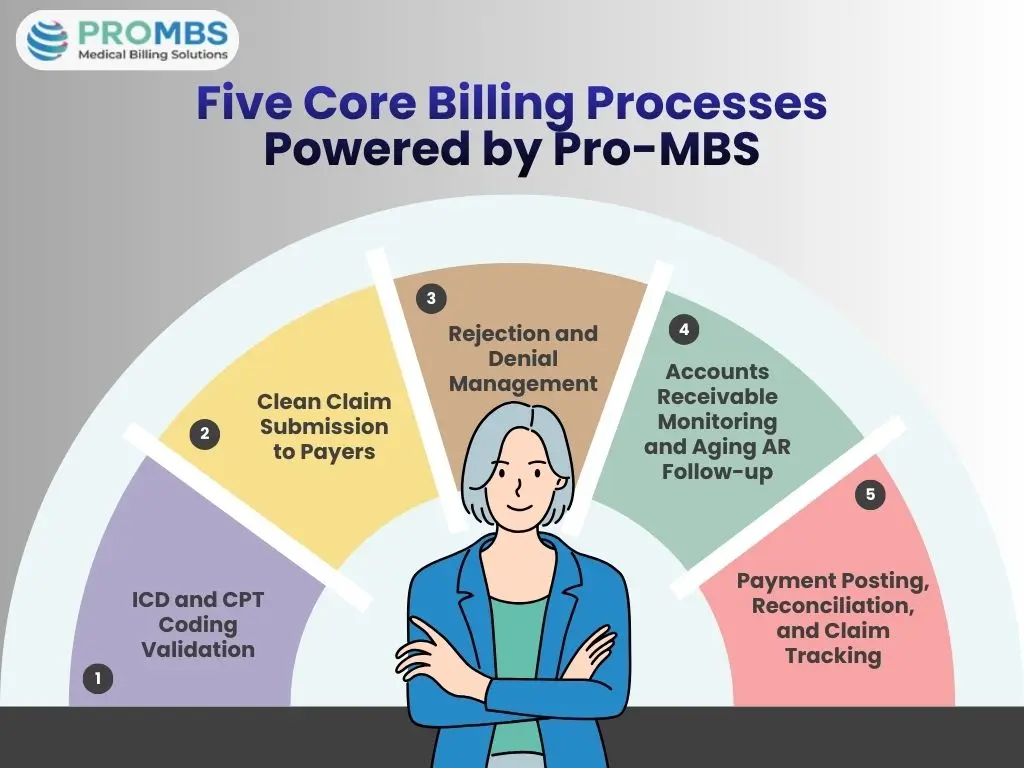
Outsourced medical billing services manage coding checks, claim filing, and follow-ups. They also handle appeals, reports, and payment tracking. Nothing gets skipped or delayed due to time limits. This full support helps protect every earned dollar.
Dedicated Roles Instead of Shared Tasks
Each billing task goes to a trained specialist. One person checks codes before claims go out. Another tracks unpaid claims and works denials. Someone else reviews payments and reports.
This clear role setup reduces mistakes. Staff focus on one job instead of many. Accuracy improves because attention stays sharp. Claims move faster with fewer errors.
Accountability and Clear Reporting
Outsourced teams track each claim from start to payment. They measure clean claim rates and unpaid days. Reports show which claims pay and which stall.
Leaders see problems early instead of guessing. This visibility builds trust and control. According to the American Medical Association, clear billing data helps practices protect revenue.
How Medical Billing Companies Handle Scale
Large billing teams handle growth without slowing down. More claims do not overwhelm the system. Work spreads across trained staff as volume rises.
Billing continues during staff changes or busy seasons. No single absence stops the process. This steady flow keeps cash moving as practices grow.
Is In-House Billing or Outsourced Medical Billing More Costly?
Cost seems simple at first glance. Most practices look only at monthly spending. That view misses where money slowly slips away. Real cost builds over time through delays, errors, and lost payments. This is why cost should be measured by outcome, not appearance.
Direct Costs of In-House Billing
These costs show up clearly on paper. They are easy to see and easy to track. Most practices plan around only these items.
- Salaries and benefits
- Billing software and tools
- Training and overtime
Staff pay grows each year with raises and benefits. Software needs updates, fixes, and support fees. Training repeats when staff leave or rules change.
Hidden Costs Practices Often Miss
Hidden costs cause the most damage. They grow quietly without clear warning signs.
Staff turnover leads to lost knowledge. Claims sit unpaid while new staff learn the process. Errors cause rework that brings no extra income. Follow-ups get missed when workloads grow too large.
Over time, these losses add up to real revenue gaps. Most practices only notice after cash flow drops.
How Outsourced Medical Billing Is Priced
Outsourced medical billing uses simple pricing. Most services charge a percent of collections. This means cost rises only when revenue grows.
There are no salaries to manage. There are no training gaps during staff changes. The billing team scales without extra hiring. This model aligns cost with performance. Both sides focus on getting claims paid.
Why Total Cost Matters More
Total cost includes lost revenue, not just expenses. Recovered payments often cover service fees. Fewer errors mean fewer unpaid claims.
Net income matters more than fixed costs. A lower expense means little if revenue drops. The right billing model protects what the practice earns.
How Does Billing Accuracy Impact Revenue and Compliance?
Accuracy decides whether claims get paid or stopped. Every claim must be right the first time to earn revenue. When accuracy drops, payment slows, and losses begin quietly.
Errors cost more than most practices realize. One small mistake can delay payment for weeks. In-house teams may miss code changes as rules shift often. These mistakes lead to denials and permanent write-offs.
Outsourced medical billing adds multiple review steps. Each claim gets checked before it goes out. This lowers the risk of simple errors.
Experienced teams track rule changes daily. They adjust fast when payers update requirements. The American Medical Association stresses that accurate coding protects both payment and compliance.
Does Outsourced Medical Billing Improve Cash Flow Speed?
Billing speed controls how steady a practice feels day to day. When money comes in late, stress rises across the office. Slow payments affect planning, staffing, and basic operations. Fast billing keeps the business stable and predictable.
Fast billing keeps cash flow steady. Claims go out on time and follow-ups stay consistent. Slow billing creates stress and financial risk.
Outsourced teams submit claims quickly after services are billed. They follow AR on set schedules without delay. No claim sits untouched for too long. Payments arrive sooner and more often. Cash flow becomes easier to predict and manage.
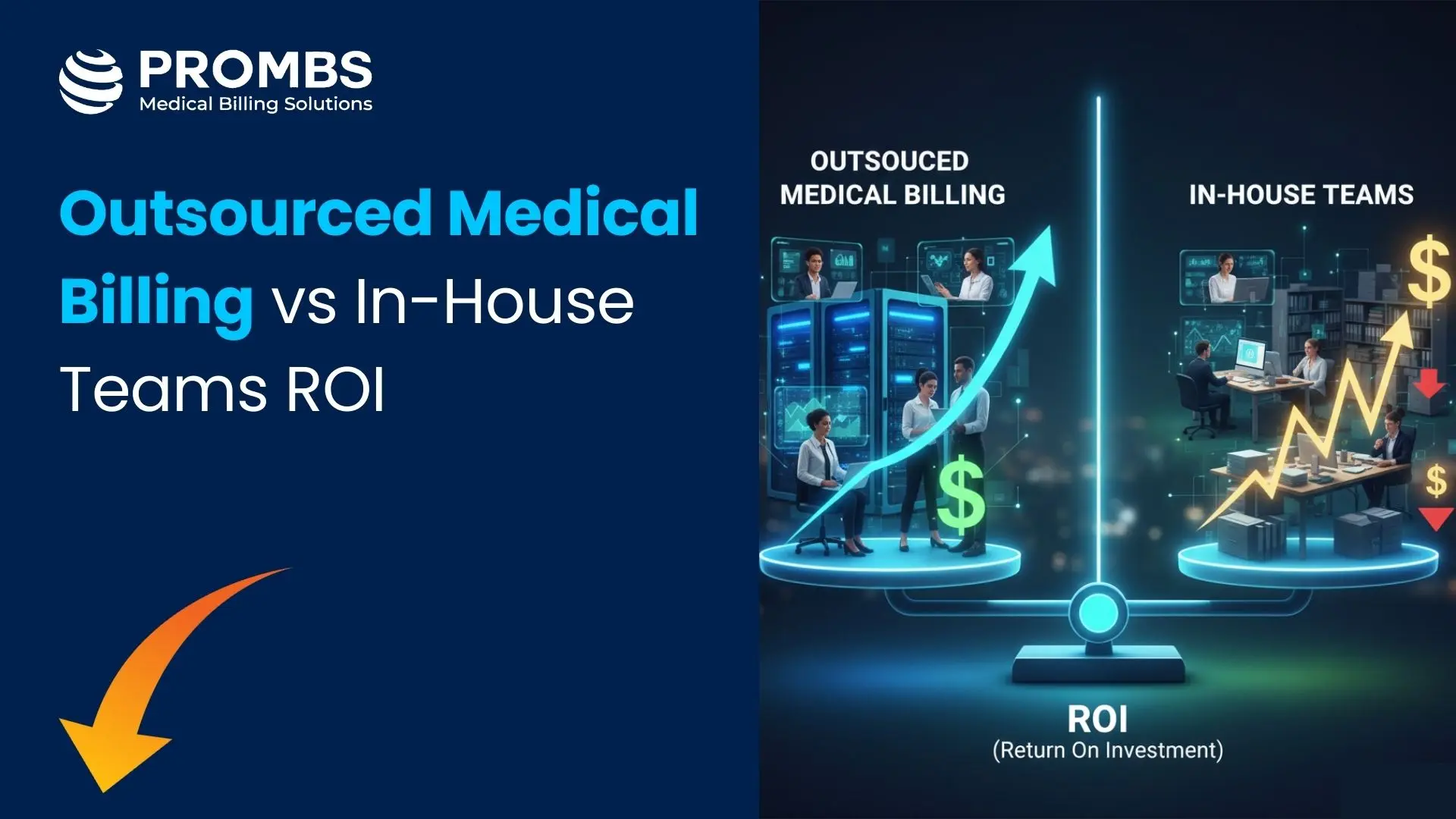
Which Billing Model Delivers Better ROI: Outsourced Medical Billing vs In-House?
ROI shows what truly works over time. It measures what a practice gains, not just what it spends. Looking only at cost hides real performance issues.
Which model brings more value long-term? The answer comes from revenue results, not budget lines.
| Area | In-House Billing | Outsourced Medical Billing |
|---|---|---|
| Missed Revenue | Higher | Lower |
| Staff Time | Heavy | Light |
| Growth Support | Limited | Strong |
| Long-Term ROI | Lower | Higher |
Better follow-up and saved staff time drive ROI. These gains protect revenue and free staff to focus on patient care.
What Risks Come With In-House Billing Teams?
Risk often hides in daily routines. Problems appear when systems rely on one person. This is when revenue becomes fragile without warning.
What happens when key staff leave? Single-person billing creates weak points. Claims stop during absences or sudden exits. Outsourced billing spreads work across teams. Coverage stays active at all times.
When Does In-House Medical Billing Still Make Sense?
In-house billing still works for some practices. It can make sense when size stays small and Outsourced Medical Billing adds little extra value.
- Very small clinics
- Low claim volume
- Strong billing leadership
- Short-term hybrid setups
These situations are specific and often temporary. As practices grow, billing needs change, and pressure increases quickly.
When Is Outsourced Medical Billing the Better Choice?
Growth reveals billing problems quickly. These signs point to Outsourced Medical Billing when in-house systems can no longer keep up.
- Rising denials
- Aging AR
- Poor reporting
- Expansion plans
Outsourced medical billing services support steady long-term growth. They create the foundation needed for stronger control and better results.
How Does Pro-MBS Improve Billing ROI With Outsourced Medical Billing?
Pro-MBS helps practices move from in-house billing smoothly. Daily work continues without disruption or downtime. Reports stay clear, simple, and easy to understand.
Pro-MBS brings deep experience to every account. The team has over a decade of medical billing experience. They handle thousands of claims each month across multiple specialties.
Pro-MBS supports primary care, specialty clinics, and growing practices. Each workflow is built around accuracy and fast follow-up. This helps Reduce Denials and speed up payment.
With Outsourced Medical Billing from Pro-MBS, practices gain control. Revenue becomes easier to track, predict, and protect. Growth happens without adding staff pressure.
Frequently Asked Questions
What is outsourced medical billing?
Outsourced Medical Billing means hiring an outside team to manage billing work. They handle claims, follow-ups, and payments. This helps practices get paid faster and avoid errors.
Is outsourced medical billing better than in-house billing?
Outsourced Medical Billing is often better for growing practices. It reduces errors and speeds up payments. In-house billing may work only for very small clinics.
How does outsourced medical billing improve cash flow?
Outsourced teams send claims quickly and follow up on time. They do not miss unpaid claims. This helps money come in sooner and more often.
Does outsourced medical billing reduce claim denials?
Yes, Outsourced Medical Billing reduces denials. Claims are checked before they are sent. This lowers mistakes that cause rejections.
Is outsourced medical billing expensive?
Outsourced Medical Billing usually costs a percent of collections. You pay more only when you earn more. Recovered revenue often covers the service cost.
When should a practice switch to outsourced medical billing?
A practice should switch when denials rise or AR grows old. Poor reports and slow payments are also signs. Growth often makes outsourcing the smarter choice.
Can small practices use outsourced medical billing?
Yes, small practices can use Outsourced Medical Billing. It helps when staff time is limited. Even small clinics benefit from better follow-up and accuracy.