🧾 What is Point of Care (CNA)?
A Point-of-Care CNA provides hands-on, real-time patient care where the patient is physically located, such as a hospital room, nursing home bed, rehabilitation unit, or home setting.
If you work as a CNA, you already use this approach during your shift, even if you do not call it by name. This guide explains the role in plain, beginner-friendly language.
You will learn what it means and why it matters so much. You will also see how it supports safety and teamwork. We start with the basics, then build a deeper understanding.
What is the Point of Care CNA
This section explains the concept in simple terms and why real-time documentation matters in daily care.
A CNA using a point of care approach documents care while it is happening, not hours later. Nothing waits until the end of the shift. This approach keeps care accurate and safe.
This method focuses on bedside documentation, where observations and tasks are recorded as care is delivered. It supports clear, accurate, and honest care records. In everyday terms, the process is simple: you help a patient, notice a change, and document it right away.
At the point of care, CNAs handle key daily tasks. They take vital signs and help with basic needs. They also watch for safety risks and behavior changes.
Traditional charting works very differently. It depends on the memory after care ends. Point of Care CNA relies on real-time facts instead.
Here is a simple comparison of both charting styles.
| Charting Style | When Charting Happens | Error Risk | Impact on Patient Safety |
|---|---|---|---|
| Traditional Charting | After care is completed | Higher | Delayed response to patient condition changes |
| Point of Care CNA | During care at the bedside | Lower | Real-time alerts and faster response from nursing staff |
This table shows why timing matters so much. Real-time charting lowers errors and missed care. It also improves trust across the care team.
📌 Important Note:
Point of Care CNA describes a documentation method, not a specific software. PointClickCare is one electronic health record system that facilities may use to perform point of care documentation, but the two terms are not the same.
What Does Point of Care CNA Mean for a CNA
This section explains how Point of Care CNA fits into daily work. It shows what the role looks like during a normal shift. Point of care means staying focused on the patient at all times.
It also means paying attention to small changes that matter. This approach turns simple observation into clear action. Point of care happens at the bedside most often.
It also happens in patient rooms and shared care spaces. CNA point of care fits into bathing, feeding, and toileting tasks. It also supports safety checks and comfort care.
For point of care for CNA, documentation becomes part of care itself. This routine helps POC CNA work stay smooth and organized.
Why Does Point of Care CNA Matter in Healthcare
This section explains why real-time CNA documentation improves safety and care coordination. It also explains its role in better communication across care teams. When CNAs document care right away, everyone sees the same clear picture.
Healthcare depends on clear and timely information. CNA point of care delivers that information faster and more accurately. Real-time notes help staff notice problems before they grow worse.
Early action prevents harm and delays. Clear CNA documentation supports nurse decisions. It also helps providers adjust care plans without waiting. This teamwork improves outcomes and patient trust.
Timely and accurate bedside documentation aligns with guidance from the American Medical Association. Which emphasizes real-time clinical documentation as a key.
🔍 Did You Know?
Late or incomplete documentation is a common factor in patient safety events. Real-time bedside charting helps care teams act faster and more accurately.
Benefits of Real-Time Bedside Documentation
This section focuses on accuracy and timing. It explains why real-time bedside documentation improves care records. Clear documentation tells the true care story and supports safer decisions.
What CNAs document at the point of care
CNAs document vital signs and daily care tasks. They also note safety concerns and behavior changes. This includes eating habits, movement, and skin condition changes. These details help nurses understand what happens between visits.
Why real-time charting matters
Real-time charting prevents forgotten details during busy shifts. It captures care exactly as it happens. This timing keeps records accurate and easy to trust. It also protects CNAs during audits and chart reviews.
How POC CNA reduces errors
What Tasks Do CNAs Perform at the Point of Care
This section explains the most common Point of Care CNA tasks. These tasks happen during nearly every shift. They form the foundation of safe and steady patient care.
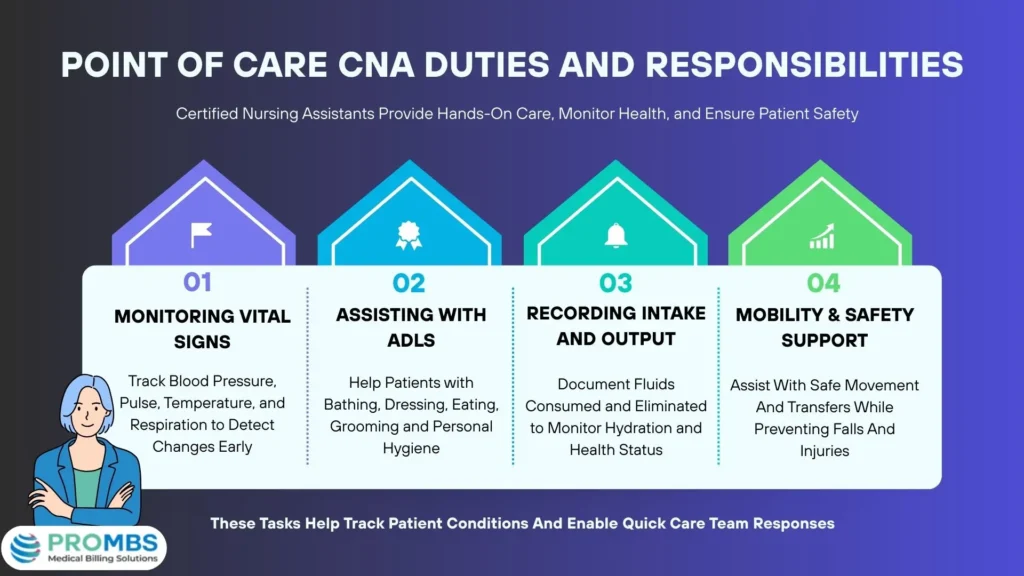
Each task supports comfort, safety, and daily health needs. CNAs perform these duties while staying close to the patient.
Below are key tasks completed at the point of care.
- Vital Signs
- Activities of Daily Living
- Intake And Output
- Mobility And Safety Observations
These tasks give a clear picture of patient well-being. They also help the care team respond quickly to changes.
🧠 Pro-Tip:
Most care decisions start with CNA observations. CNAs see patients more often than any other team member. Their point of care notes help guide safe and timely care.
How Do Point of Care CNAs Use Electronic Health Records
This section explains how the Point of Care CNA work connects with electronic records. It keeps the focus clear, simple, and useful for daily care. Digital systems bring charts directly to the bedside.
They support safer care by reducing delays and missed details. They also help teams share the same information at the same time.
CNAs use tablets or handheld devices during care. They enter notes while helping patients with daily needs.
Point-of-care charting means no waiting until the shift ends.
Records update right away for nurses and providers. This process improves accuracy and builds trust in the care record.
🧠 Pro-Tips for Using POC Tablets
- Sanitize your tablet or stylus between every patient room to prevent cross-contamination.
- Never share your login PIN or credentials with other staff, even during busy shifts.
- If the Wi-Fi drops, keep a small paper cheat sheet and enter documentation as soon as the system is back online.
How Does Point of Care CNA Support Nurses and Providers
This section explains teamwork. It shows how Point of Care CNA strengthens care delivery. CNAs spend the most time with patients. Their notes guide the care team.
How CNA Point of Care data helps nurses
Role of CNAs in care teams
CNAs serve as constant observers throughout the day. They notice small changes others may not see right away. Their documentation gives patients a clear and steady voice. This role makes CNAs a key part of the care team.
Why timely documentation matters
Timely notes shape treatment plans without delay. They help providers make informed decisions quickly. Accurate timing also supports safe and smooth shift changes. This process reduces errors and keeps care consistent.
What Are Common Point of Care CNA Documentation Mistakes
This section explains common documentation mistakes made during care. It also shows why these errors matter in daily work. Even small mistakes can affect patient safety and team trust.
Below are common errors seen in Point of Care CNA documentation.
- Late charting
- Missing observations
- Copying old entries
These mistakes create gaps in the care record. They can also cause confusion for nurses and providers.
🧠 Pro-Tip :
Don’t just chart numbers. If a patient seems quieter, less responsive, or “off,” use the notes section. These small changes are often early signs of infection or decline.
What Are the Best Point of Care CNA Practices
This section explains daily habits that support safe care. These habits help Point of Care CNA work accurately and steadily. They also make each shift smoother and less stressful.
Below are simple best practices every CNA should follow.
- Chart While You Provide Care
- Use Clear And Accurate Words
- Report Changes Right Away
- Follow Facility Rules
These steps support trust across the care team. Consistency helps protect patients and strengthens CNA confidence.
Why Are Point of Care CNA Skills Important for Career Growth
This section links Point of Care CNA skills to long-term career growth. It explains why employers place high value on these abilities.
Healthcare settings depend on accurate and timely documentation. Employers trust CNAs who document care clearly and on time.
Point of care skills reduce errors and lower daily stress. They help CNAs feel more confident during busy shifts. These skills also improve teamwork with nurses and providers.
Strong documentation supports promotions and added responsibilities. It also helps CNAs prepare for nursing and other clinical roles.
Reviewed by healthcare documentation and compliance professionals with 10+ years of experience supporting CNA workflows, nursing teams, and U.S. clinical care facilities.
Frequently Asked Questions
What is point of care CNA, and why does it matter?
In simple terms, point of care CNA means documenting care at the bedside as it happens, not hours later. This keeps details fresh and accurate. It helps nurses act faster when something changes. That quick response keeps patients safer.
How does POC CNA work during a normal shift?
POC CNA work blends into everyday tasks. You chart while helping with meals, hygiene, or vital signs. When you notice a change, you write it down right away. This habit saves time later. It also makes the shift feel more organized.
What does CNA point of care documentation include?
CNA point of care documentation covers what you see and do. You record vital signs, intake and output, and daily care. You also note changes in mood, movement, or skin. These details matter more than people realize. They help the care team understand the full picture.
Why is point of care for CNA better than late charting?
Point of care for CNA removes guesswork from documentation. Late charting depends on memory, which can fade fast. Real-time notes show what truly happened. They reduce errors and mix-ups. That builds trust with nurses and providers.
What is POC CNA charting, and how can CNAs do it well?
POC CNA charting means charting as care happens. You use clear, simple words and stick to facts. You document right after each task. You report changes without delay. These small habits lead to better care every day.
Is Point of Care CNA the same as PointClickCare?
No. Point of Care CNA describes how CNAs document care at the bedside. PointClickCare is a software system used by many facilities. CNAs may use PointClickCare to perform point of care documentation, but the role and the software are not the same.
- Our Latest Posts
