

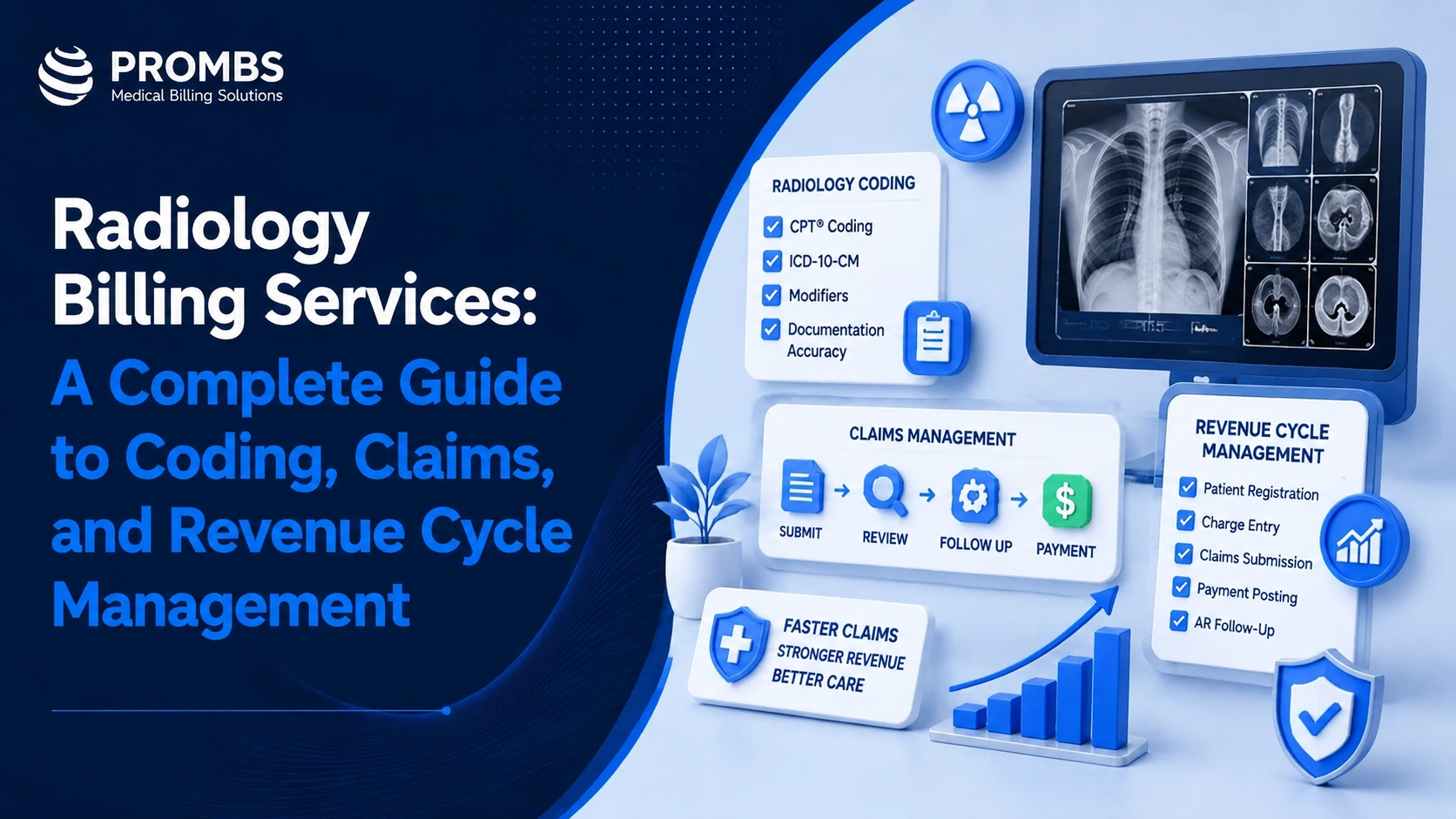
Radiology practices play a critical role in modern healthcare by helping physicians diagnose and monitor a wide range of medical conditions through advanced imaging services. However, behind every successful imaging practice is an efficient billing process that ensures procedures are accurately documented, coded, submitted, and reimbursed.
Radiology billing services involve much more than submitting claims after an imaging procedure. Radiology practices must manage complex coding requirements, payer rules, authorization processes, medical necessity reviews, and documentation standards that directly affect reimbursement.
A single imaging procedure may involve multiple billing considerations, including:
- The type of imaging performed
- The reason for the examination
- The provider interpretation
- Technical resources involved
- Insurance coverage requirements
- Documentation supporting medical necessity
When these areas are not managed correctly, practices may experience:
- Claim denials
- Authorization delays
- Incorrect reimbursements
- Delayed payments
- Increased accounts receivable
- Administrative burden on staff
A specialized radiology billing workflow helps imaging centers and radiology practices improve claim accuracy, reduce revenue leakage, and create a more predictable revenue cycle.
This guide explains how radiology billing works, why it requires specialized expertise, common challenges practices face, and strategies to improve revenue cycle performance.
Why Radiology Billing Requires Specialized Knowledge
Radiology billing is different from many other medical specialties because imaging services involve complex procedures, strict documentation requirements, and detailed coding rules.
Radiology practices may provide services including:
- X-rays
- MRI scans
- CT scans
- Ultrasound examinations
- Mammography
- Nuclear imaging
- Interventional radiology procedures
Each service requires accurate reporting of:
- The imaging procedure performed
- The diagnosis supporting the procedure
- The physician interpretation
- Required modifiers
- Applicable payer requirements
Unlike simple office visits, radiology billing often involves multiple components that must be correctly represented on a claim.
For example, imaging services may involve:
- A technical component related to equipment, facility resources, and staff
- A professional component related to physician interpretation and reporting
Incorrect handling of these elements can result in claim delays, payment reductions, or denials.
This is why radiology practices need billing processes built around the specialty rather than a general medical billing approach.
Understanding the Radiology Revenue Cycle
A successful radiology revenue cycle involves multiple steps working together.
Each stage affects whether imaging services are reimbursed accurately and on time.
1. Patient Registration and Insurance Verification
The billing process begins before the imaging procedure takes place.
Accurate patient registration and insurance verification help confirm:
- Patient demographics
- Insurance coverage
- Benefits
- Deductible requirements
- Copayment responsibilities
- Authorization requirements
Radiology services are often expensive compared to routine office visits, making eligibility verification especially important.
Errors at this stage can result in:
- Claim rejections
- Unexpected patient balances
- Delayed reimbursement
A proactive verification process helps identify coverage issues before services are performed.
2. Prior Authorization Management
Authorization is one of the biggest challenges in radiology billing.
Many advanced imaging services require approval from insurance companies before the procedure can be performed.
Authorization requirements commonly affect services such as:
- MRI
- CT scans
- Certain diagnostic imaging procedures
Common authorization challenges include:
- Missing approvals
- Incorrect authorization details
- Expired authorizations
- Delays from payer communication
Without proper authorization workflows, practices may perform services that later become difficult to reimburse.
An organized authorization process helps ensure imaging services meet payer requirements before claims are submitted.
3. Documentation Review
Documentation is essential for supporting radiology reimbursement.
Medical records should clearly demonstrate:
- The reason for the imaging study
- The patient’s condition
- Medical necessity
- Provider orders
- Interpretation requirements
Insurance companies often review whether imaging services are supported by appropriate documentation.
Incomplete or unclear documentation can lead to:
- Medical necessity denials
- Additional payer reviews
- Payment delays
A strong documentation review process helps ensure claims are supported before submission.
4. Radiology Medical Coding
Medical coding converts imaging services and diagnoses into standardized codes used by insurance companies.
Radiology billing commonly involves:
CPT Codes
CPT codes describe the imaging service performed.
Examples include:
- MRI procedures
- CT imaging
- X-ray services
- Ultrasound procedures
- Diagnostic studies
Selecting the correct CPT code requires understanding the exact service performed.
ICD-10 Diagnosis Codes
ICD-10 codes explain why the imaging procedure was medically necessary.
Diagnosis codes may relate to:
- Symptoms
- Injuries
- Chronic conditions
- Disease evaluation
- Diagnostic concerns
Accurate diagnosis coding helps connect the imaging service with the patient’s medical need.
Modifier Usage
Modifiers provide additional information about how a service was performed or billed.
Radiology billing frequently requires careful modifier usage, especially when dealing with professional and technical components.
Common issues include:
- Incorrect modifier selection
- Missing modifiers
- Incorrect component billing
Coding accuracy is essential because even small mistakes can affect reimbursement.
Technical and Professional Component Billing in Radiology
One of the most important concepts in radiology billing is understanding the difference between technical and professional components.
Technical Component (TC)
The technical component generally relates to:
- Imaging equipment
- Facility resources
- Technologists
- Operational costs
Professional Component (26 Modifier)
The professional component generally relates to:
- Physician interpretation
- Reading and analyzing images
- Creating diagnostic reports
Some radiology services may involve both components, while others may involve only one.
Incorrectly reporting these components can result in:
- Claim processing errors
- Reduced reimbursement
- Payment delays
Radiology billing requires careful attention to these details to ensure claims accurately represent the services provided.
Key Components of Effective Radiology Billing
| Billing Component | Why It Matters |
|---|---|
| Insurance Verification | Confirms coverage, benefits, and authorization requirements before imaging services are performed. |
| Authorization Management | Helps prevent denials caused by missing or incorrect approvals. |
| Documentation Review | Ensures medical records support the imaging service and reimbursement requirements. |
| Radiology Coding | Accurately represents imaging procedures, diagnoses, and billing components. |
| Claims Management | Improves claim accuracy and reduces avoidable payment delays. |
| Denial Management | Identifies claim issues and helps prevent recurring revenue problems. |
| AR Follow-Up | Helps recover outstanding payments and improve collection performance. |
Common Radiology Billing Challenges Practices Face
Radiology practices manage some of the most complex billing workflows in healthcare because imaging services involve advanced procedures, strict payer requirements, and detailed documentation standards.
A single error in coding, authorization, or claim submission can delay reimbursement or result in denied payments.
Understanding these challenges helps radiology practices build stronger revenue cycle processes and prevent avoidable revenue loss.
1. Complex Radiology Coding Requirements
Radiology coding requires specialized knowledge because imaging procedures vary significantly in complexity.
A radiology practice may bill for:
- Diagnostic imaging studies
- Multiple imaging views
- Contrast-enhanced procedures
- Interpretation services
- Professional and technical components
Common coding challenges include:
- Incorrect CPT code selection
- Missing procedure details
- Incorrect use of modifiers
- Diagnosis codes not supporting medical necessity
- Incorrect component billing
For example, a CT scan with contrast may require different coding considerations compared with a standard CT procedure.
Accurate coding ensures that the claim correctly represents the service performed and improves the likelihood of proper reimbursement.
2. Prior Authorization and Insurance Approval Delays
Authorization challenges are among the most common issues affecting radiology practices.
Advanced imaging procedures often require insurance approval before services can be performed.
Common authorization problems include:
- Authorization not obtained before the procedure
- Incorrect authorization information
- Expired approvals
- Delays caused by payer communication
These issues can create:
- Delayed patient care
- Scheduling problems
- Claim denials
- Lost revenue opportunities
A proactive authorization workflow helps practices confirm payer requirements before imaging services are provided.
3. Medical Necessity Documentation Issues
Insurance companies often evaluate whether an imaging procedure was medically necessary.
Radiology claims may be questioned when:
- Diagnosis information is incomplete
- Documentation does not support the procedure
- The reason for imaging is unclear
- Required clinical information is missing
Strong documentation should connect:
- Patient symptoms
- Clinical findings
- Diagnosis
- Requested imaging service
Better documentation helps reduce medical necessity denials and supports accurate reimbursement.
4. Professional and Technical Component Billing Errors
Radiology billing requires careful handling of professional and technical components.
Errors may occur when:
- The wrong modifier is applied
- Components are incorrectly separated
- Services are billed incorrectly
Common mistakes include:
- Incorrect use of modifier 26
- Incorrect use of TC modifier
- Missing component information
These errors can result in:
- Claim delays
- Incorrect payments
- Reimbursement issues
A specialized radiology billing process helps ensure these components are accurately reported.
5. Claim Denials and Payment Delays
Claim denials are one of the biggest obstacles affecting radiology revenue.
Common denial reasons include:
- Missing authorization
- Incorrect coding
- Diagnosis mismatch
- Duplicate claims
- Documentation issues
- Timely filing problems
However, successful denial management requires more than appealing rejected claims.
Practices need to analyze:
- Which procedures are denied most frequently
- Which payers create recurring problems
- Why claims are failing
- Which workflows need improvement
A data-driven denial management approach helps prevent repeated issues.
Common Radiology Billing Denials and Prevention Strategies
| Denial Reason | Why It Happens | Prevention Strategy |
|---|---|---|
| Authorization Denial | Required approval was not obtained before imaging services were performed. | Verify payer authorization requirements before scheduling procedures. |
| Coding Errors | Incorrect CPT codes, modifiers, or billing components are submitted. | Perform coding reviews and maintain accurate radiology coding workflows. |
| Medical Necessity Denial | Documentation does not adequately support the imaging procedure. | Ensure diagnosis and clinical documentation support the service provided. |
| Duplicate Claim Issues | The same service is submitted multiple times or incorrectly processed. | Review claims before submission and monitor payer responses. |
| Technical/Professional Component Errors | Incorrect billing of interpretation or technical services. | Apply proper component billing rules and modifier usage. |
| Timely Filing Issues | Claims are submitted after payer deadlines. | Maintain consistent claim submission and follow-up processes. |
Radiology Billing and Coding Services: What Practices Should Understand
Accurate radiology billing depends heavily on proper coding.
Radiology coding communicates three important things to payers:
- What service was performed
- Why the service was medically necessary
- How reimbursement should be calculated
A strong coding process helps prevent claim errors and improves reimbursement consistency.
CPT Coding in Radiology
CPT codes identify imaging services performed by radiology providers.
Radiology practices commonly use CPT codes for:
- X-rays
- CT scans
- MRI procedures
- Ultrasound examinations
- Mammography
- Diagnostic imaging services
Correct CPT selection requires understanding:
- Procedure type
- Body area examined
- Contrast usage
- Number of views
- Professional interpretation requirements
Incorrect CPT coding can lead to:
- Claim rejection
- Reduced reimbursement
- Payer review
ICD-10 Diagnosis Coding in Radiology
ICD-10 codes explain the medical reason an imaging service was performed.
Accurate diagnosis coding helps establish medical necessity.
Radiology diagnosis codes may relate to:
- Symptoms
- Injuries
- Chronic conditions
- Disease monitoring
- Diagnostic evaluations
A mismatch between the diagnosis and imaging procedure can result in claim delays or denials.
Modifier Usage in Radiology Billing
Modifiers provide additional information about how services were performed.
Radiology billing frequently requires careful modifier application.
Common examples include:
Modifier 26
Used to identify the professional component of a service.
Modifier TC
Used to identify the technical component of a service.
Incorrect modifier usage can affect:
- Claim processing
- Reimbursement amounts
- Payer acceptance
Regular coding reviews help identify these issues before claims are submitted.
How Radiology Practices Can Improve Revenue Cycle Performance
Improving revenue cycle performance does not always require increasing procedure volume.
Many radiology practices can improve financial outcomes by strengthening existing workflows.
1. Improve Authorization Management
Authorization delays can create significant revenue problems.
Practices should:
- Verify payer requirements early
- Track authorization status
- Confirm approval details
- Maintain authorization records
A proactive process reduces denied claims and scheduling disruptions.
2. Strengthen Coding Accuracy
Accurate coding improves claim quality.
Practices should regularly review:
- CPT code selection
- Diagnosis coding
- Modifier usage
- Professional and technical components
Coding accuracy helps ensure imaging services are properly represented.
3. Monitor Denial Trends
Tracking denial volume alone is not enough.
Radiology practices should analyze:
- Most common denial reasons
- Frequently denied procedures
- Problematic payers
- Documentation issues
This allows practices to address root causes rather than repeatedly fixing the same problems.
4. Improve Accounts Receivable Management
Unpaid claims can significantly impact radiology practice cash flow.
Effective AR management focuses on:
- Aging claims
- Outstanding balances
- Payer follow-up
- Payment delays
Regular AR reviews help identify where revenue is getting delayed.
5. Use Revenue Cycle Reporting
Clear reporting helps radiology practices understand financial performance.
Important reports include:
- Claim status reports
- Denial reports
- AR aging reports
- Payment summaries
- Payer performance reports
Better visibility allows practices to make informed revenue cycle decisions.
Radiology Revenue Cycle Improvement Checklist
| Area to Review | Questions Practices Should Ask |
|---|---|
| Authorization | Are required approvals verified before imaging procedures are performed? |
| Coding Accuracy | Are CPT codes, ICD-10 codes, and modifiers reviewed before submission? |
| Documentation | Does clinical documentation support medical necessity? |
| Denial Management | Are recurring denial patterns identified and corrected? |
| AR Management | Are unpaid claims actively monitored and followed up? |
In-House vs Outsourced Radiology Billing Services
Radiology practices often reach a point where they need to evaluate whether managing billing internally is still the most effective approach.
While in-house billing provides direct control, it also requires continuous investment in:
- Experienced billing staff
- Radiology coding knowledge
- Authorization management
- Billing software
- Compliance updates
- Denial prevention processes
As imaging practices grow, billing operations become more complex due to increased procedure volume, payer requirements, and administrative responsibilities.
Outsourcing radiology billing services allows practices to work with experienced revenue cycle professionals while reducing the operational burden on internal teams.
The right approach depends on practice size, imaging volume, available resources, and financial goals.
| Area | In-House Billing | Outsourced Radiology Billing |
|---|---|---|
| Radiology Expertise | Depends on internal staff knowledge of imaging-specific coding and payer requirements. | Provides access to specialists familiar with radiology workflows, coding, and reimbursement challenges. |
| Authorization Management | Practice staff manages approvals, payer communication, and tracking. | Dedicated teams help manage authorization workflows and reduce approval-related delays. |
| Coding Accuracy | Requires ongoing training and internal coding reviews. | Provides specialized coding support for imaging procedures and billing requirements. |
| Denial Management | May receive limited attention due to competing administrative tasks. | Uses structured processes to identify denial causes and prevent recurring issues. |
| Scalability | Growth may require additional employees and resources. | Can adapt as imaging volume and revenue cycle needs increase. |
| Financial Reporting | Practice manages reporting processes internally. | Provides better visibility into claims, payments, denials, and AR performance. |
Benefits of Outsourcing Radiology Billing Services
Outsourcing radiology billing is not only about reducing administrative workload. It can also help imaging practices create a more organized and efficient revenue cycle.
Access to Specialized Radiology Billing Knowledge
Radiology billing involves challenges that require specialty-specific expertise, including:
- Imaging procedure coding
- Technical and professional component billing
- Authorization workflows
- Medical necessity requirements
- Payer-specific guidelines
A specialized billing partner understands these requirements and helps practices maintain more accurate billing processes.
Improved Claim Accuracy
Small errors in radiology claims can result in significant payment delays.
A dedicated billing team can help review:
- CPT code selection
- ICD-10 diagnosis coding
- Modifier usage
- Documentation requirements
- Claim information
Better claim accuracy improves the likelihood of faster and more consistent reimbursement.
Better Denial Prevention
Denial management should begin before a claim is rejected.
A proactive revenue cycle approach reviews:
- Authorization requirements
- Coding accuracy
- Documentation quality
- Payer trends
- Common rejection patterns
This helps identify issues before they affect future claims.
Reduced Administrative Burden
Radiology teams already manage complex clinical and operational responsibilities.
Internal staff often handle:
- Scheduling
- Patient communication
- Insurance coordination
- Documentation management
- Billing follow-up
Outsourcing allows practices to reduce administrative pressure while maintaining better control over revenue cycle performance.
Improved Revenue Visibility
Many practices know their total collections but lack detailed insight into revenue performance.
A structured radiology billing process provides visibility into:
- Claim status
- Denial trends
- AR aging
- Payment patterns
- Payer performance
This information helps practice owners identify opportunities for improvement.
How to Choose a Radiology Billing Company
Choosing the right billing partner requires more than comparing prices.
Radiology practices should evaluate whether a potential partner understands the specialty-specific challenges involved in imaging reimbursement.
1. Radiology Specialty Experience
A billing company should understand:
- Imaging procedure workflows
- Professional and technical components
- Coding requirements
- Authorization processes
- Payer expectations
Specialty knowledge helps reduce errors and improve billing efficiency.
2. Strong Coding and Compliance Knowledge
Radiology billing requires accurate handling of:
- CPT codes
- ICD-10 diagnosis codes
- Modifiers
- Documentation requirements
A reliable billing partner should have processes to review claims before submission.
3. Transparent Reporting
Practices should have clear visibility into revenue performance.
Important reporting areas include:
- Claims submitted
- Payments received
- Denial categories
- AR aging
- Payer performance
Transparency helps practices make informed financial decisions.
4. Effective Communication
A successful billing partnership requires consistent communication.
Practices should understand:
- Who manages their account
- How updates are provided
- How issues are escalated
- How performance is reviewed
A billing partner should operate as an extension of the practice team.
How Pro Medical Billing Solutions Supports Radiology Practices
Radiology practices need a billing partner that understands the relationship between imaging services, documentation, coding, and reimbursement.
Pro Medical Billing Solutions helps imaging practices improve revenue cycle performance through structured workflows, experienced billing professionals, and specialty-focused support.
Our radiology billing support includes:
- Insurance eligibility verification
- Prior authorization support
- Radiology coding review
- Claims submission and tracking
- Payment posting
- Denial management
- Accounts receivable follow-up
- Revenue cycle reporting
For practices looking for dedicated support, our Radiology Billing Services are designed to help manage imaging-specific billing challenges and improve revenue cycle efficiency.
Accurate coding, effective claim management, and proactive denial prevention are essential components of successful radiology billing.
Frequently Asked Questions
What are radiology billing services?
Radiology billing services include managing the complete revenue cycle process for imaging practices, including insurance verification, authorization management, coding, claim submission, payment posting, denial management, and accounts receivable follow-up.
These services help radiology practices improve reimbursement accuracy and maintain a healthier financial workflow.
Why is radiology billing complex?
Radiology billing is complex because imaging services involve detailed coding requirements, authorization processes, medical necessity reviews, and professional versus technical component billing.
Even small billing errors can create delays or claim denials.
What codes are commonly used in radiology billing?
Radiology billing commonly involves:
- CPT procedure codes
- ICD-10 diagnosis codes
- Modifier codes such as 26 and TC
Accurate code selection helps ensure imaging services are properly represented and reimbursed.
How can radiology practices reduce claim denials?
Radiology practices can reduce denials by improving:
- Authorization management
- Documentation accuracy
- Coding review
- Modifier usage
- Eligibility verification
- Denial analysis
Identifying the root causes of denials helps prevent recurring billing problems.
Should radiology practices outsource billing?
Outsourcing can help radiology practices access specialty billing expertise, reduce administrative workload, improve coding accuracy, and gain better visibility into revenue cycle performance.
It can be especially beneficial for practices dealing with increasing denials, authorization challenges, or growing accounts receivable.
Final Thoughts: Building a Stronger Radiology Revenue Cycle
Radiology billing requires much more than submitting claims after imaging procedures.
The combination of advanced diagnostic services, complex coding requirements, authorization challenges, and payer expectations makes revenue cycle management a critical part of imaging practice success.
A strong radiology billing process helps practices:
- Improve claim accuracy
- Reduce avoidable denials
- Manage authorization requirements
- Improve AR performance
- Gain better financial visibility
Whether a radiology practice is experiencing delayed payments, increasing administrative workload, or recurring claim issues, a specialized billing approach can help create a more efficient and predictable revenue cycle.
With the right processes and expertise, radiology providers can focus more on delivering accurate diagnostic services while maintaining stronger financial operations.
Ready to identify opportunities within your billing workflow? Explore our Radiology Billing Services and discover how specialized revenue cycle support can help your practice improve performance.