

Accurate coding is the foundation of compliant medical billing. When it comes to musculoskeletal complaints, left foot pain is one of the most frequently reported conditions in outpatient settings. Selecting the correct ICD 10 code for left foot pain is essential not only for proper reimbursement but also for avoiding denials and ensuring medical necessity.
This guide explains the correct ICD 10 Code for Left Foot Pain, its related codes, CPT crosswalks, documentation requirements, and denial prevention strategies.
What Is Left Foot Pain?
Left foot pain refers to discomfort, aching, or soreness localized specifically to the left foot. The pain may be acute (sudden onset) or chronic (long-term), and it can interfere with ambulation, standing, or daily activities.
Common Symptoms:
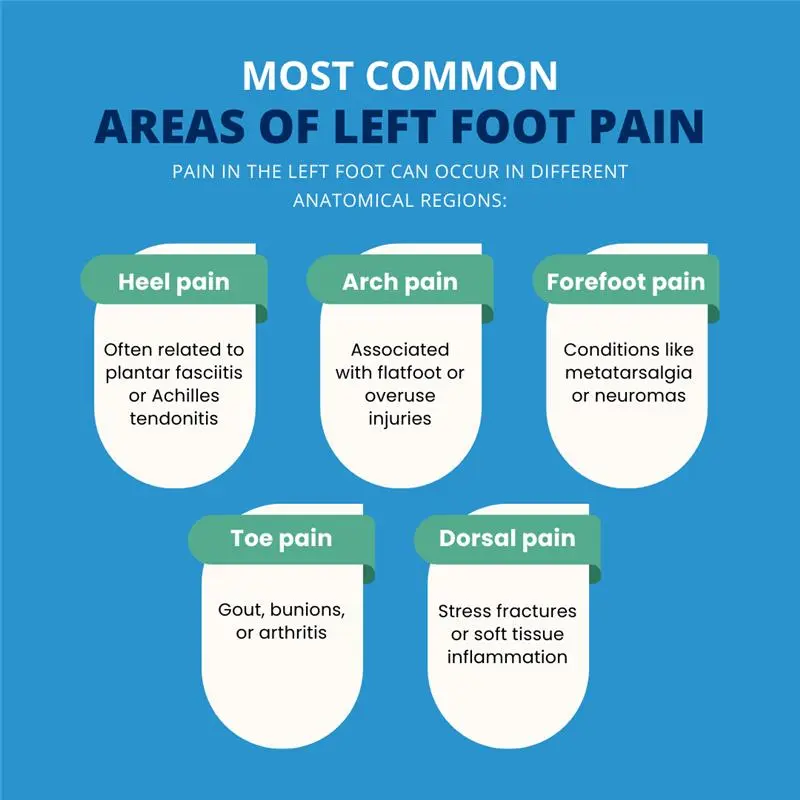
- Sharp or stabbing pain in the foot arch or heel
- Burning, tingling, or numbness
- Swelling or redness around joints
- Difficulty walking or bearing weight on the left foot
What Is the ICD 10 Code for Left Foot Pain?
The official ICD 10 code for left foot pain is:
M79.672 – Pain in left foot
This code is specific to pain in the left foot and should be reported when the provider has not identified a more definitive diagnosis (e.g., fracture, gout, neuropathy). It is a billable code used widely in outpatient, urgent care, and specialty practice billing.
Related ICD 10 Codes for Foot Pain
Alongside M79.672, coders should be aware of related ICD-10 codes, including:
| ICD-10 Code | Description | Notes/Usage |
|---|---|---|
| M79.672 | Pain in left foot | Primary code for nonspecific left foot pain |
| M79.671 | Pain in right foot | Used when pain is documented in the right foot |
| M79.673 | Pain in unspecified foot | Only use when laterality is not documented |
| M77.32 | Metatarsalgia, left foot | Specific to forefoot pain in the left foot |
| M72.2 | Plantar fasciitis | For heel/arch pain due to fascia inflammation |
| M25.572 | Pain in left ankle and joints of left foot | Use when pain involves ankle or multiple joints |
When to Use and When Not to Use M79.672
When to Use:
- The provider documents nonspecific pain localized to the left foot without identifying a more specific diagnosis.
- The encounter is for evaluation and management of generalized foot pain symptoms.
When Not to Use:
- If a definitive diagnosis exists (e.g., fracture, diabetic neuropathy, gout), always code the underlying condition instead of just pain.
- For post-surgical pain, use G89 codes (Pain, not elsewhere classified) in combination with foot site codes.
- For bilateral pain, use both M79.671 and M79.672 or M79.673 if unspecified.
Related CPT Codes for ICD 10 Code for Left Foot Pain
While ICD-10 codes describe diagnoses, CPT codes describe procedures/services performed. Common CPT codes related to the ICD 10 code for left foot pain (M79.672) include:
| CPT Code | Description | Notes/Usage |
|---|---|---|
| 99213 / 99214 | Established patient office or outpatient E/M visit (low to moderate complexity) | Used when evaluating left foot pain in a clinic or office setting |
| 73630 | Radiologic examination, foot; complete, minimum of 3 views | Ordered to rule out fractures, arthritis, or structural abnormalities |
| 20550 | Injection(s); single tendon sheath, ligament, or aponeurosis (e.g., plantar fascia) | Used for therapeutic injections related to foot pain, such as plantar fasciitis |
| 29540 | Strapping; ankle and/or foot | Applied for support, immobilization, or stabilization during treatment |
| 97110 | Therapeutic exercise, per 15 minutes | For rehabilitation exercises targeting strength, flexibility, and mobility |
| 97140 | Manual therapy techniques, per 15 minutes | Hands-on therapy for soft tissue mobilization, joint mobilization, or pain relief |
What to Document for Left Foot Pain
To support billing with M79.672, providers should document:
- Exact location of pain (left foot)
- Duration (acute, subacute, chronic)
- Associated symptoms (swelling, numbness, gait disturbance)
- Diagnostic tests ordered (imaging, labs)
- Treatments provided (strapping, injections, therapy)
- Patient’s response to interventions
Why Claims Get Denied for Left Foot Pain ICD 10 Code
Common denials for the ICD 10 code for left foot pain (M79.672) often stem from weak documentation or misapplication of the code. Payers require proof of medical necessity, meaning the provider must clearly document symptoms, physical findings, and justification for diagnostic tests or treatment. If imaging or procedures are billed with M79.672 as the only diagnosis, payers may consider the claim unsupported and deny payment.
Another frequent issue is incorrect laterality or coding nonspecific pain when a definitive diagnosis is available. For instance, submitting M79.671 (right foot) when the chart notes left-sided pain, or continuing to bill M79.672 when plantar fasciitis has already been confirmed, raises red flags. To avoid denials, coders should verify laterality, ensure documentation aligns with the billed code, and always report the most specific diagnosis available.
How to Avoid Denials
- Always document onset, location, severity, and duration of the pain.
- Verify laterality (left vs. right) in both provider notes and claim forms.
- Link M79.672 to the appropriate CPT service with clear medical necessity.
- Update codes if a definitive diagnosis emerges (e.g., plantar fasciitis, fracture).
- Review payer-specific rules for pain codes versus underlying conditions.
How Pro-MBS Can Help With ICD 10 Code for Left Foot Pain
Our Pro-MBS team of billing and coding specialists is dedicated to ensuring accurate application of the ICD 10 code for left foot pain (M79.672) and its related codes. We focus on payer-specific compliance, making sure each claim is coded with precision and supported by the correct documentation. This minimizes the risk of denials, enhances claim acceptance, and keeps your revenue cycle running smoothly.
By leveraging our expertise in ICD-10 and CPT coding, Pro-MBS helps providers maintain compliance while maximizing reimbursement. Our seamless EHR integration, documentation reviews, and clean claim submission process allow practices to focus on delivering quality patient care while we manage the technical aspects of coding and billing.
Frequently Asked Questions
What is the specific ICD 10 code for left foot pain?
The specific ICD 10 code for left foot pain is M79.672. This code belongs to a category used for pain in the limbs. In medical billing, this code is “billable,” meaning it is detailed enough to be used on an official insurance claim. It specifically identifies that the pain is located in the left foot rather than the right or an unspecified side.
Can I use ICD 10 Code for Left Foot Pain (M79.672) if the doctor finds a broken bone?
No, you should not use M79.672 if a more specific diagnosis like a fracture (broken bone) or gout is found. Code M79.672 is for “nonspecific” pain. If the doctor identifies the exact cause of the pain—such as Plantar Fasciitis (M72.2)—you must use the code for that specific condition instead. Always code the most detailed diagnosis available to ensure the insurance claim is accurate.
What CPT codes are commonly billed with M79.672?
When a patient has left foot pain, doctors often use CPT codes to describe the services they provide. Common codes include:
99213 or 99214: For an office visit to check the pain.
- 73630: For a complete X-ray of the foot (minimum of 3 views).
- 29540: For “strapping,” which is specialized taping to support the foot.
- 97110: For physical therapy exercises to help the foot heal.
Why would an insurance claim for left foot pain be denied?
An insurance claim for left foot pain is often denied because of laterality errors or a lack of medical necessity. A laterality error happens if the doctor’s notes say “left foot” but the bill says “right foot” (M79.671). Claims are also denied if the notes don’t explain why a test (like an X-ray) was needed. To avoid this, providers must clearly document the exact location, how long the pain has lasted, and any swelling or trouble walking.