

Best practices for medical coding accuracy and speed are the foundation of a strong and compliant healthcare organization. Each wrong code entered will affect payments, reporting, and overall compliance. Whenever your coding teams focus on both accuracy and speed, they will help reduce denials, get you paid faster, and stay audit ready.
Medical coding accuracy is more complex than just picking the right codes. It is about understanding what the provider meant and turning that into a clear billable documentation. Coders who are trained well, supported by useful tools as well as backed by solid processes can work faster without losing any quality. Improving both accuracy and efficiency is not just about training. It means developing habits that make good coding your second nature. According to the American Health Information Management Association (AHIMA), continuous training and education accompanied by routine coding audits are essential for maintaining long-term accuracy and compliance.
This article provides you practical strategies, training ideas, as well as tools, which help healthcare organizations reach and maintain top level coding accuracy and speed.
Why Medical Coding Accuracy Matters?
Best practices for medical coding turn patient care into billable payments on which the whole organization depends. When coding is not accurate, problems start quickly. Claims get denied, audits increase, and reports become unreliable. Even a small mistake can cause a chain reaction that affects both revenue and reputation.
Accurate coding means fair payment, trustworthy data, and full compliance. It also helps leaders make smart decisions because they can trust their data. The Centers for Medicare & Medicaid Services (CMS) reported that coding errors are among the top causes of claim denials and compliance findings in audits. In short, coding accuracy keeps the entire revenue cycle healthy and compliant as well as the organization’s reputation strong.
| Impact Area | Description | Example |
|---|---|---|
| Financial Stability | Accurate codes prevent denials and improve cash flow. | Clean claims lead to faster payments. |
| Compliance | It keeps the organization audit ready and reduces any possible penalties. | Meets CMS and payer guidelines. |
| Quality Reporting | Creates reliable data for improving care and outcomes. | Accurate HEDIS and outcome measures. |
When teams make accuracy their priority, they gain a massive control over both compliance and financial results. It becomes easier to detect small mistakes early and build a workflow that is reliable, consistent, and efficient, which result in preventing any potential mistakes. According to the Office of Inspector General (OIG), consistent coding accuracy reduces the likelihood of federal audit triggers and repayment demands.
Common Causes of Coding Errors
Coding mistakes often come from everyday issues like ambiguous documentation, outdated knowledge, or heavy and stressed workloads. These problems might seem small or nothing, but they add up quickly and contribute into your loss. It means understanding where errors begin is the first step to fixing them for smooth cash flow.
Incomplete Documentation
One of the main reasons for coding mistakes is missing or vague information in a provider’s notes. When key details are left, coders have to guess or leave claims incomplete. Both choices result in increasing the chance of denials. A Journal of AHIMA study found that incomplete documentation causes nearly 40% of coding-related rejections and denials.
Training helps coders detect when something doesn’t look correct and ask questions early before making a random call. This kind of communication between coders and providers prevents confusion and builds a smoother workflow. It also encourages mutual respect since both sides understand the impact of detailed documentation on claim success.
Outdated Knowledge
Coding guidelines change every year. New procedures are added, old codes are replaced, and payer rules shift constantly. Even skilled coders can make mistakes if they don’t stay current. The American Academy of Professional Coders (AAPC) recommends regular refresher courses and annual code updates to help coders keep up with new rules.
Short, focused training sessions can make a big difference. When coders stay informed, they code faster, make fewer errors, and help their organization avoid costly denials.
Time Pressure
Many coding teams face tight deadlines and large volumes of charts. Under pressure, accuracy often takes a back seat. Rushed work leads to simple errors like using the wrong modifier or missing a diagnosis code. A fair workload and strong workflow tools help prevent this. Coders who have enough time to review their work catch small mistakes before claims go out. In the long run, that saves time, money, and frustration for everyone involved.
By addressing these three problem areas, documentation, education, and time management, healthcare organizations can lower their denial rates and strengthen their revenue cycle. With the right habits and support, coders can work more confidently and deliver cleaner, more accurate claims every time.
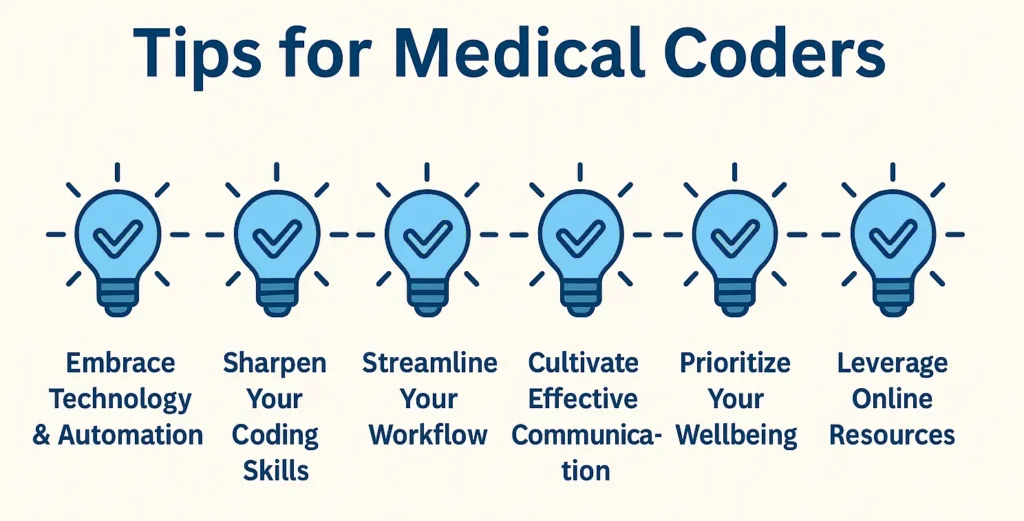
Strategies for Accuracy and Speed of Staff Training
Improving accuracy in medical coding starts with strong and consistent training. The best programs blend technical learning with real examples, feedback, and teamwork. Coders need to understand the “why” behind every rule, not just how to apply it.
Evaluating the Results of Your Billing Automation
Once automation is in place, it’s important to track how it’s working. Watching your billing metrics helps you spot improvements and identify areas for fine-tuning.
Build Strong Foundations
Coders should have a solid understanding of medical terminology, anatomy, and pathophysiology. Knowing how the body works and what terms mean helps prevent simple mistakes and misinterpretations. The American Health Information Management Association (AHIMA) reports that coders who receive structured refresher training maintain up to 15 percent higher accuracy rates than those without ongoing education. Regular workshops or short review sessions help reinforce key concepts and keep skills sharp.
Apply Case-Based Learning
Using real cases during training makes learning more practical. When coders see how documentation connects to billing, the lessons stick. Specialty-based sessions, such as cardiology or orthopedics, also help them understand detailed procedures and code them correctly. Reviewing denied claims as examples can turn past mistakes into learning opportunities that benefit the whole team.
Encourage Mentorship and Peer Reviews
Mentorship gives new coders a chance to learn from experienced staff while building confidence. Peer review programs also promote teamwork and consistency. Coders can compare their approaches, share feedback, and identify common issues before they become larger problems. The Medical Group Management Association (MGMA) found that peer review programs can lower denial rates by nearly 20 percent within six months.
Strengthen Provider Collaboration
Accurate coding depends on strong communication between coders and clinicians. When both sides understand what the other needs, documentation improves. Joint training sessions can close the gap between clinical notes and billing accuracy. This shared understanding reduces queries, speeds up claim submission, and strengthens compliance.
When these training strategies come together, coding becomes faster, cleaner, and more reliable. Teams that learn continuously build confidence and accuracy into their everyday work.
How to Improve Speed and Accuracy in Medical Coding?
The importance of speed and accuracy in medical coding lies in finding the right balance between productivity and precision. Coders must work efficiently without cutting corners or sacrificing quality. A few smart process improvements can make that possible.
Steps to Enhance Both in Medical Coding:
- Automate repetitive tasks using AI-assisted coding tools that handle data entry and validation.
- Set productivity goals that reflect case complexity rather than a one-size-fits-all target.
- Use dual reviews for complicated or high-value claims to prevent rework later.
- Track trends and accuracy scores with performance dashboards to identify training needs.
- Offer targeted feedback and recognize coders who maintain accuracy at higher speeds.
The Healthcare Financial Management Association (HFMA) reports that automation and data-driven feedback improve coding turnaround times by up to 25 percent without lowering quality. These tools and processes help teams code more efficiently while maintaining precision.
When coders have the right resources, fair expectations, and clear communication, they naturally perform at their best. Over time, this approach strengthens both accuracy and speed, creating a smoother, more reliable revenue cycle.
Measuring Coding Accuracy and Performance
Improving best practices for medical coding accuracy is not a one-time goal. It requires consistent measurement and review. Every healthcare organization should know its overall accuracy rate and monitor it regularly to keep performance on track.
Tracking key metrics gives leaders a clear picture of how well their coding teams are performing and where support might be needed.
Key metrics to monitor include:
- Accuracy Rate: The percentage of charts coded correctly without errors.
- Denial Rate: The number of claims rejected because of coding or documentation issues.
- Coder Productivity: The average number of charts coded per hour or per day.
- Audit Results: Findings from both internal and external audits that measure consistency and compliance.
Keeping an eye on these indicators helps organizations identify training gaps before they cause financial problems. It also promotes accountability across teams and encourages steady improvement. According to the American Academy of Professional Coders (AAPC), healthcare facilities that track coder accuracy monthly resolve denied claims 35 percent faster than those that do not.
Regular performance tracking turns coding accuracy into an ongoing priority rather than an occasional check. Over time, this builds a culture of quality, transparency, and continuous improvement.
Why Is Medical Coding Accuracy Important to a Healthcare Organization?
Medical coding accuracy influences every part of a healthcare organization. It affects billing, compliance, patient satisfaction, and even decision-making. When coding is inaccurate, data becomes unreliable, payments get delayed, and the risk of audit penalties increases.
Accurate coding ensures that claims reflect the actual services provided and that payments are made fairly and on time. It also supports strong financial performance and keeps an organization in good standing with regulators and payers.
| Area | Benefit | Example |
|---|---|---|
| Compliance | Reduces the risk of fines and audit findings. | Accurate ICD-10 documentation. |
| Revenue | Speeds up payments and reduces rework. | Clean claim submissions. |
| Data Integrity | Provides reliable data for reporting and analysis. | Improves operational planning. |
When coding accuracy becomes a shared goal, everyone benefits. Coders, clinicians, and billing teams work more efficiently, compliance improves, and revenue flow becomes more predictable. Becker’s Hospital Review notes that even a 1 percent improvement in coding accuracy can add millions in annual revenue for large health systems.
Making accuracy part of daily practice builds trust at every level between staff, patients, and payers. It is one of the simplest ways to protect financial stability while improving the overall quality of care.
How Partnering with Pro-MBS Can Help
Partnering with Pro-MBS gives healthcare organizations direct access to certified experts who specialize in coding accuracy, compliance, and revenue optimization. The Pro-MBS team works closely with providers to identify gaps in documentation, reduce claim denials, and streamline coding workflows. Each solution is tailored to your organization’s specific goals, helping you maintain compliance while improving financial performance.
Pro-MBS also offers hands-on support and training to strengthen your internal processes. Whether you need help managing day-to-day coding operations or want to enhance your revenue cycle through automation, Pro-MBS provides scalable services that deliver measurable results:
- Medical Coding and Auditing Services: Ensure precise code selection, cleaner claims, and consistent compliance.
- Revenue Cycle Management Solutions: Optimize billing workflows, shorten payment cycles, and increase cash flow.
By combining human expertise with smart technology, Pro-MBS helps healthcare organizations achieve greater accuracy, faster reimbursements, and long-term stability. Implementing best practices for medical coding not only improves accuracy and speed but also strengthens your entire revenue cycle.
Get Your Free Consultation Now
FAQs
How can I reduce coding errors in my practice?
Regular medical coding training, detailed documentation, and the use of advanced coding tools can significantly improve coding accuracy. Conducting routine coding audits helps identify patterns and prevent repeat mistakes. It’s equally important to maintain open communication between coders and healthcare providers to ensure consistent documentation and compliance with medical coding best practices.
What should I do if a claim is denied due to coding issues?
Start by reviewing the denial reason and verifying that your documentation supports the ICD-10 and CPT codes used. Work with your coding team to identify any gaps or inaccuracies and correct them before resubmitting the claim. Following medical coding compliance guidelines and maintaining accurate documentation will help reduce future denials and strengthen your overall revenue cycle management.
How can technology improve medical coding accuracy?
Modern coding software and AI-driven medical coding tools can automate repetitive tasks, flag documentation errors, and recommend the correct codes in real time. Integration with Electronic Health Records (EHRs) enhances workflow efficiency, reduces manual entry errors, and ensures consistent medical coding accuracy and speed. These tools help coders focus more on analysis and quality assurance instead of data entry.
Are certifications important for medical coders?
Yes, certifications such as CPC (Certified Professional Coder) and CCS (Certified Coding Specialist) are essential for maintaining medical coding accuracy and compliance. They validate a coder’s expertise in ICD-10 and CPT coding systems, ensuring they stay up to date with the latest medical coding best practices, payer regulations, and documentation standards. Certified coders are more likely to deliver accurate results, reduce denials, and improve reimbursement outcomes.
What measures can you implement to increase coding accuracy?
Improve medical coding accuracy by offering regular training sessions, ensuring complete and clear provider documentation, and conducting routine coding audits. Use AI-powered coding tools and EHR integration to automate tasks and minimize manual errors. Consistent communication between coders and providers also supports compliance and accuracy.
How can inaccurate coding affect your practice?
Inaccurate medical coding can lead to claim denials, payment delays, and lost revenue. It can also trigger compliance issues during payer or CMS audits, resulting in fines or repayment demands. Poor coding accuracy impacts data integrity, making reports unreliable and affecting clinical and financial decisions. Maintaining accurate ICD-10 and CPT coding ensures faster reimbursements, audit readiness, and overall revenue cycle stability.