

ICD-10 Code for Lung Cancer | C34 Coding Guide
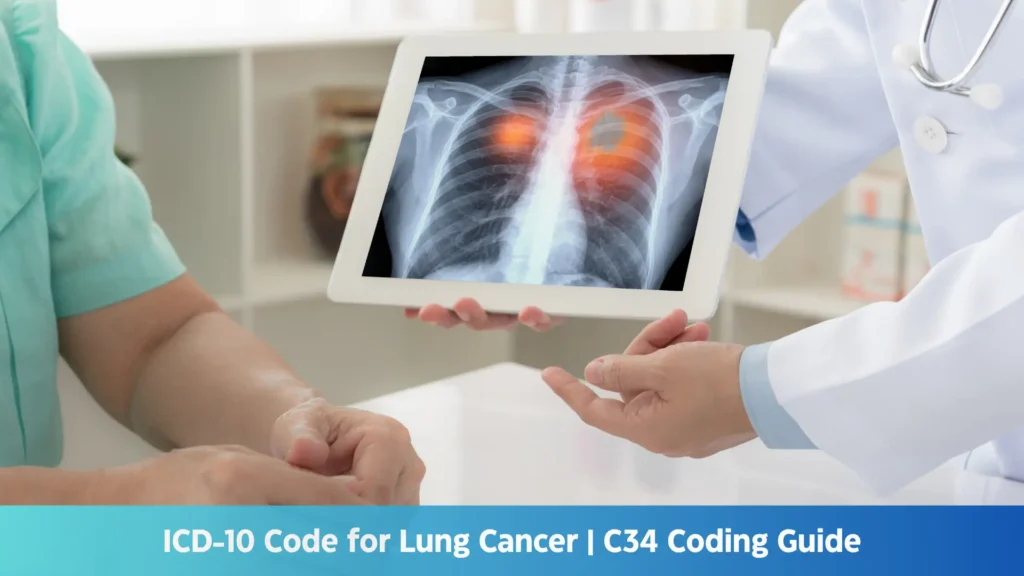
According to the World Health Organization (WHO), lung cancer accounts for approximately 2.2 million new cases and 1.8 million deaths annually, making it the most lethal cancer worldwide. The American Cancer Society (ACS) projects that in 2025, there will be approximately 226,650 new lung cancer diagnoses and 124,730 deaths from lung cancer in the United States […]
Dizziness ICD 10 Code R42: Symptoms, Rules, and Coding Risks

🧠 Dizziness and giddiness are symptoms, not diagnoses.In medical billing, ICD-10 code R42 is used when a patient reports dizziness, lightheadedness, or giddiness without a confirmed underlying condition. When documentation only states “dizzy” or “giddy,” and no vestibular or neurological diagnosis is established, R42 is the correct and compliant code. Dizziness is a common reason […]
POS 11 Medical Billing: Accurate Coding & Reimbursement

Why Accuracy in POS Coding Matters In professional medical billing, Place of Service (POS) codes are not just administrative markers, they determine how claims are adjudicated and how much providers are reimbursed. One of the most commonly used POS codes in outpatient care is POS 11. This code identifies services performed in a physician’s office […]
TPI Number in Medical Billing | Full Technical Guide

Introduction In medical billing, correct provider identification is as critical as accurate coding. Even the most meticulously coded claim can be denied if payer systems cannot match the provider details to their authorized records. Historically, Texas Medicaid used a TPI (Texas Provider Identifier) number to ensure clean claims routing and payment accuracy. While the National […]
Shortness of Breath ICD 10 Code | R06.02

Shortness of Breath ICD 10 uses code R06.02. This code applies when a patient has trouble breathing and the provider has no confirmed diagnosis during the visit. Shortness of Breath ICD 10 is a common reason people go to the doctor. Clinics and hospitals see it every day. Wrong coding causes claim denials. It also […]
PMS and EHR Integration Explained | Technical Guide

Introduction In today’s healthcare environment, efficient practice operations rely on seamless coordination between administrative systems and clinical systems. The Practice Management System (PMS) handles the financial and operational side of a practice, while the Electronic Health Record (EHR) focuses on patient care and clinical documentation. When PMS and EHR systems are fully integrated, they streamline […]
Chronic Respiratory Failure ICD 10 Guide: 2026 Edition
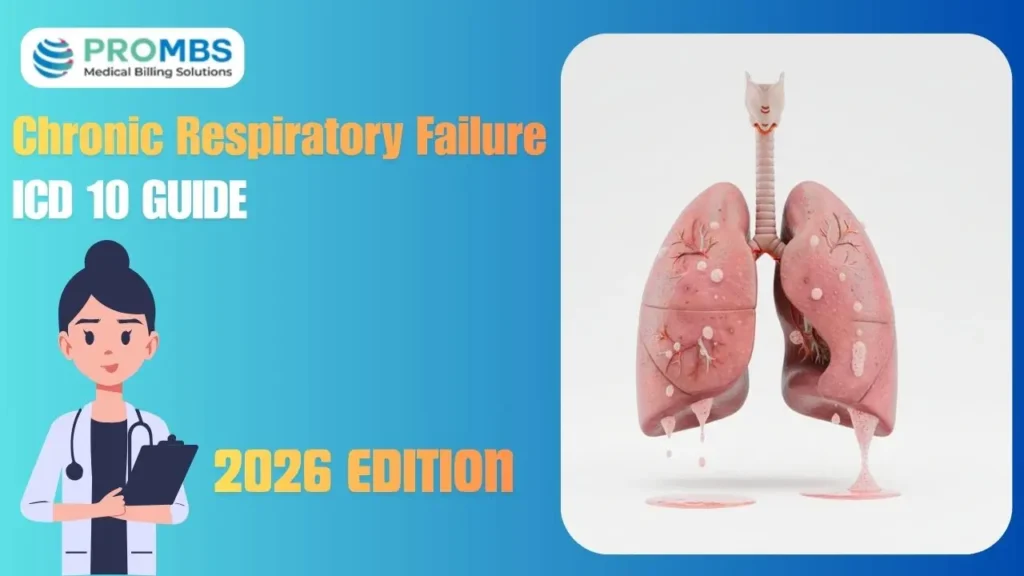
Chronic respiratory failure ICD 10 coding is a critical component in ensuring accurate reimbursement and avoiding claim denials. As healthcare systems increasingly rely on value-based care models and payer audits, precise chronic respiratory failure ICD 10 coding becomes essential for both compliance and securing appropriate reimbursement. Given the complexity of chronic respiratory failure, which often […]
ICD 10 Code for Panic Disorder (F41.0) | 2025 Billing Guide
What Is Panic Disorder? Panic disorder is a psychiatric condition classified under anxiety disorders in both ICD-10-CM and DSM-5. It is defined by recurrent, unexpected panic attacks sudden surges of intense fear or discomfort that peak within minutes, typically resolve within 20–30 minutes, though some residual symptoms may persist longer. A panic attack involves at […]
ICD-10 Code for Blurry Vision | H53.8

Blurry vision is one of the most commonly reported visual symptoms, and it can stem from a wide range of ocular, neurological, or systemic conditions. For medical coders and healthcare professionals, it’s essential to understand how to accurately classify this symptom using the ICD-10 system. The ICD 10 code for blurry vision ensures consistency in […]