

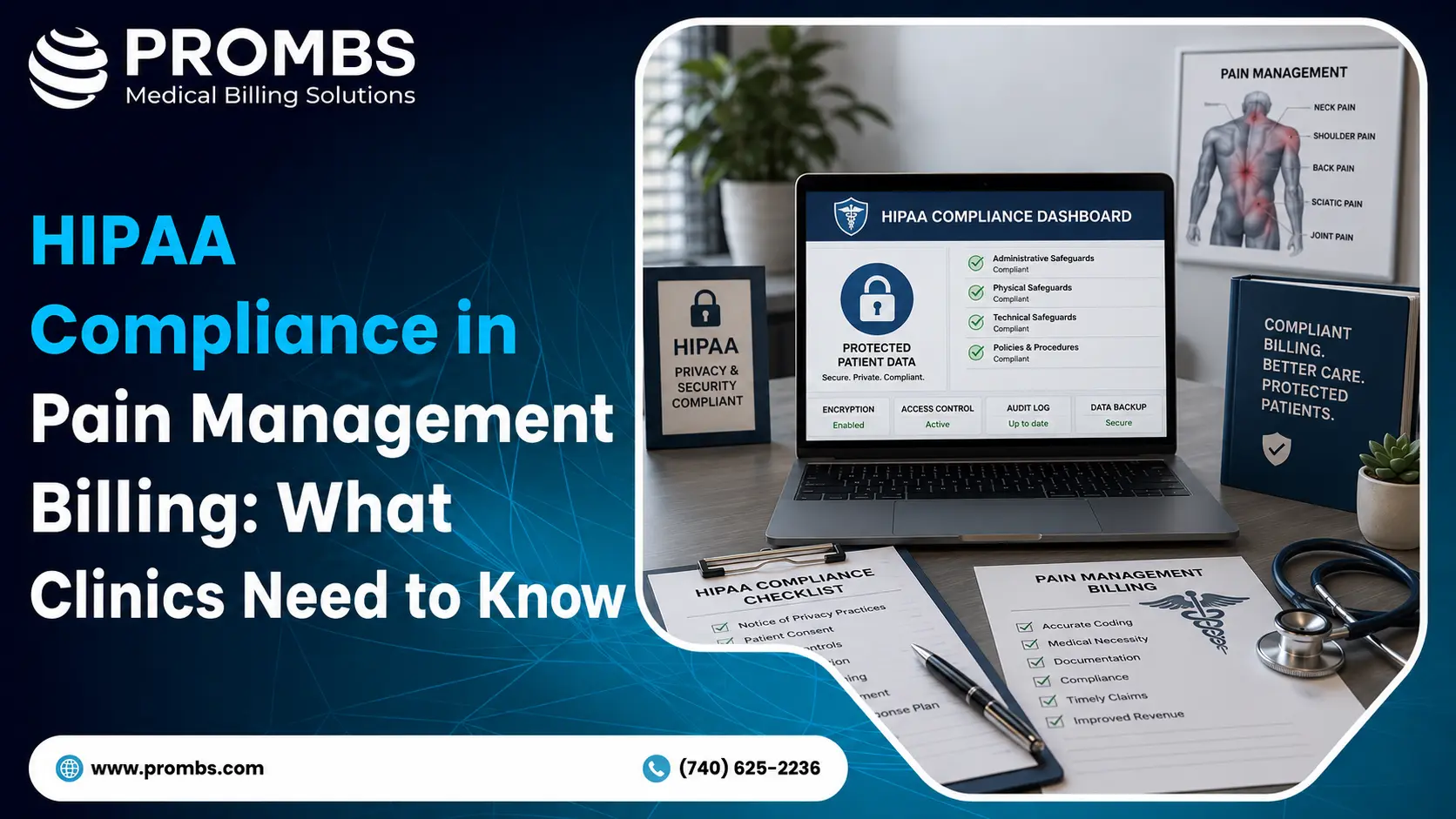
Pain clinics handle some of the most sensitive patient data in outpatient medicine: procedure notes, controlled-substance records, imaging details, and treatment histories that span years, not weeks. That makes HIPAA compliance a daily operational concern in billing, not a once-a-year checkbox.
Why does this matter so much in pain care specifically?
Because pain billing isn’t simple. Clinics bill for frequent visits. They bill for injections. They bill for procedures that repeat month after month. Insurance companies notice these patterns, and reviewers look closely at how that data is handled, not just at whether the codes are correct.
What happens when PHI handling is weak? Claims slow down. Staff spends more time fixing access issues instead of billing. Payments arrive late. Stress builds across the practice.
This guide covers how HIPAA compliance actually functions inside day-to-day billing operations for pain clinics: the risks specific to this specialty, the safeguards that matter, and how to evaluate whether a billing partner takes data protection seriously.
Why Pain Clinics Face Higher HIPAA Exposure
Pain management carries more HIPAA exposure than most outpatient specialties for one simple reason: the same detailed records get reused constantly.
A single patient’s chart might be touched by intake staff, coders, billers, and prior-authorization teams multiple times a month, every time a procedure repeats. Each reuse is another point where access needs to be controlled correctly.
What makes this harder in practice:
- Multi-location practices mean more staff touching the same records, often across different systems.
- Remote billing teams add another layer of risk. Off-site access has to be reviewed regularly, or it quietly widens over time.
- Controlled-substance and drug-testing data (common in pain management) carries extra sensitivity beyond standard PHI.
None of this means a practice is doing something wrong. It means pain billing has a narrower margin for error on data handling than lower-frequency specialties.
Common HIPAA Gaps in General Billing Vendors
Billing vendors that aren’t built around this specialty tend to repeat the same handful of mistakes:
- Shared logins instead of role-based access
- Weak or unencrypted file-sharing methods
- Broad access given to staff who don’t need it for their role
- Little to no activity tracking or audit trail
These gaps are rarely intentional. They happen because general billing models aren’t designed around how often pain records get reused.
Required HIPAA Safeguards for Pain Billing
A HIPAA-compliant billing operation for pain management should have, at minimum:
- Role-based access: staff only see what their role requires
- Encrypted data storage and transmission
- Secured remote-access systems for off-site billing staff
- Regular staff training on PHI handling, refreshed annually
- Ongoing access audits, not a one-time setup
Compliance isn’t a project with an end date. It’s a maintenance habit that has to keep pace with staff turnover and system changes.
How Weak PHI Handling Slows Down Payments
Here’s the part that often surprises practices: HIPAA gaps rarely show up as a fine first. They show up as a payment delay.
When a payer’s system flags inconsistent or poorly controlled data handling patterns around a claim, review cycles lengthen. No warning letter arrives first, the money just moves slower. Strong access controls and clean data handling keep claims moving through payer systems without adding that extra layer of scrutiny.
How to Evaluate a Billing Partner's HIPAA Compliance
Before signing with any billing partner, ask direct questions:
- Will they sign a Business Associate Agreement (BAA)?
- Who, specifically, can see patient data, and how is that list maintained?
- How is access tracked and audited?
- What is the response plan if a data issue occurs?
- Is remote access to records encrypted and monitored?
Vague answers to any of these are a warning sign. A partner that takes PHI protection seriously will have clear, specific answers, not general reassurances.
Compliance-First Billing Protects Long-Term Revenue
Billing volume grows as a practice grows, and small data-handling gaps that seem harmless at low volume tend to compound as more patients, more staff, and more systems get added. Starting with strong PHI controls, rather than retrofitting them later, reduces disruption and protects revenue as the practice scales.
Partner with Pro-MBS for HIPAA-Compliant Pain Billing Operations
Pro-MBS builds HIPAA safeguards directly into its pain management billing operations, so compliance isn’t a separate process bolted onto billing. It’s part of how claims move every day.
We control who accesses patient data, how it’s shared, and how that access is reviewed over time, all within U.S. payer and regulatory requirements. If you want to understand how compliant billing workflows function in practice, talk to our team.
For the coding, modifier, and reimbursement side of pain billing, see our companion guide: Pain Management Billing in 2026: Coding, Compliance, and Revenue.
Reduce HIPAA Risk in Your Pain Management Billing
Get a free Compliance & Access Audit and uncover PHI handling gaps before a payer or auditor does.
Frequently Asked Questions
What does HIPAA compliance mean for pain management billing specifically?
It means every stage of the billing process, from intake through claim submission, protects patient data through controlled access, encrypted storage, and tracked activity. Pain billing carries extra exposure because the same detailed procedure records get reused across repeat visits.
Why does HIPAA compliance affect how fast claims get paid?
Payers watch for data-handling patterns, not just coding accuracy. When access controls look weak, claims are more likely to get pulled for extra review, which slows payment, often without any formal notice first.
What HIPAA risks are unique to pain clinics?
Frequent reuse of detailed procedure notes, multi-location staff access, remote billing teams, and sensitive controlled-substance and drug-testing records all raise exposure beyond what lower-frequency specialties face.
What should a practice look for in a HIPAA-compliant billing partner?
A signed Business Associate Agreement, clear role-based access controls, documented staff training, and a defined response plan for data issues. Vague answers to these questions are a red flag.
Is HIPAA compliance a one-time setup?
No. Access needs change as staff turn over and systems update. Compliance requires ongoing review, not a single onboarding step.