


The correct Tick Bite ICD 10 code for follow-up visits in 2026 is W57.xxxD.
Tick Bite ICD 10 follow-up coding remains the same under 2026 ICD-10-CM rules. This rule did not change for 2026, but confusion around it increased.
Many denials now happen because follow-up visits are coded like first visits. This guide gives the answer first, then explains the rule simply and clearly.
All guidance follows ICD-10-CM rules from the Centers for Medicare & Medicaid Services and coding education from the American Medical Association.
What Is the Correct Tick Bite ICD 10 Code for Follow-Up Visits in 2026?
What code should you use for a Tick Bite follow-up visit in 2026?
In ICD-10-CM, a follow-up visit means care given after active treatment for the tick bite has ended. The answer did not change. Use W57.xxxD for a subsequent encounter.
This code shows the first visit already happened. The 2026 ICD-10-CM update did not remove or revise this rule. The ICD 10 for Tick Bite follow-up still depends on care stage, not visit date.
Did 2026 Rules Change Tick Bite ICD 10 Follow-Up Coding?
Did anything new happen in 2026 that affects Tick Bite follow-up visits? No changes were made to encounter character rules.
The “A” character is still used only once. It applies to the first exam and treatment only. The “D” character is still required for all follow-up visits.
This applies even if the follow-up happens weeks or months later. Coders should not expect a new code for 2026. The Tick Bite ICD 10 follow-up logic stayed the same.
What Is the Difference Between W57.xxxA and W57.xxxD?
The difference between these two Tick Bite ICD 10 codes is based entirely on when the care occurs, not how serious the visit is.
Tick Bite ICD 10 follow-up code comparison:
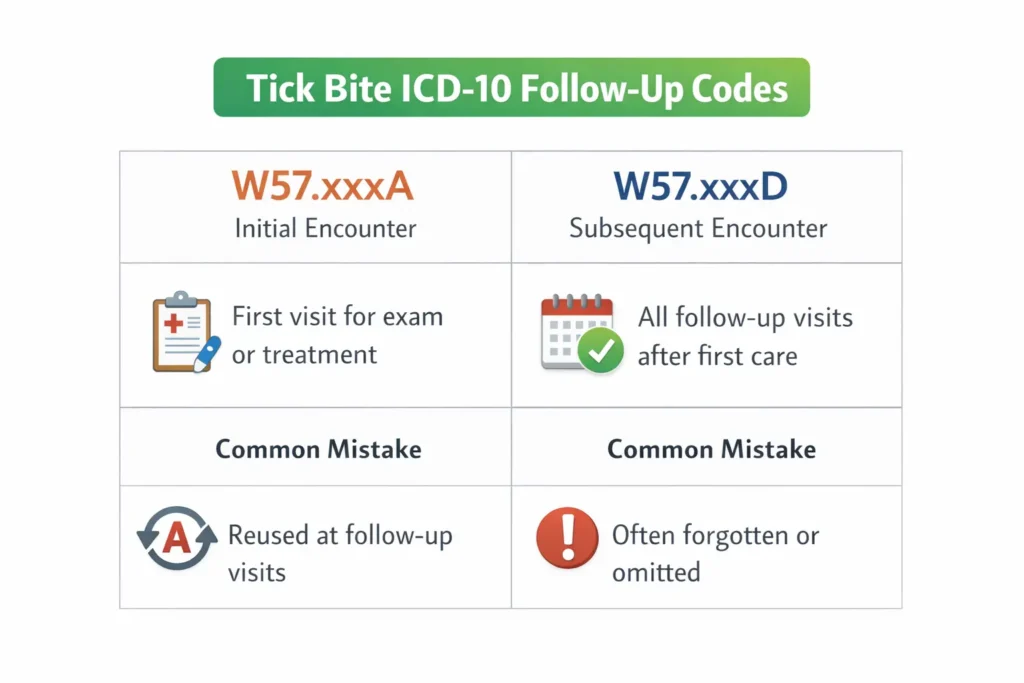
This table shows the key difference between W57.xxxA and W57.xxxD and explains when each Tick Bite ICD 10 code should be used.
| Code | Encounter Type | When to Use It | Common Mistake |
|---|---|---|---|
| W57.xxxA | Initial encounter | First visit for exam or treatment | Reused at follow-up visits |
| W57.xxxD | Subsequent encounter | All follow-up visits after first care | Often forgotten or omitted |
W57.xxxA is used once and only once.
W57.xxxD is used for every visit after that, even without symptoms.
When Is a Visit Considered a Tick Bite Follow-Up?
How can you tell if today’s visit is a follow-up under 2026 rules? Ask one simple question. Was the Tick Bite already evaluated or treated before today?
If yes, today’s visit is a subsequent encounter. That means W57.xxxD must be used. This applies to wound checks, monitoring visits, and reassurance visits.
Visit length does not matter. Visit complexity does not matter. The Tick Bite ICD 10 code is based on care stage only.
Can Tick Bite ICD 10 Follow-Up Coding Be Used Without Symptoms?
What if the patient feels fine at the follow-up visit? Does the 2026 rule still apply?
Yes, W57.xxxD is still correct. Symptoms are not required for a follow-up encounter. The patient already had the first visit. That alone places the visit in the follow-up phase.
Do not add symptom codes unless they are clearly documented. Payers expect clean alignment between notes and codes. Tick Bite ICD 10 follow up coding still works without symptoms.
What If New Symptoms Appear at a Tick Bite Follow-Up Visit?
What if something new is found during the follow-up?
The encounter type does not change. If a rash appears, the rash code comes first. If an infection develops, the infection code comes first. If fever is noted, the symptom code comes first.
In each case, the Tick Bite ICD 10 diagnosis code becomes secondary. It explains the cause but does not lead the claim. This hierarchy rule also stayed the same in 2026.
Why Are Tick Bite ICD 10 Follow-Up Claims Denied in 2026?
Why are denials increasing if the rule did not change? Because payers are enforcing encounter characters more closely. These errors often appear during routine claim reviews, not formal audits. Billing teams often see denials when encounter characters are reused incorrectly.
Many claims fail because W57.xxxA is reused. Some claims fail because the encounter letter is missing. Others fail when Lyme disease is coded without proof.
These are technical errors, not clinical ones. They are easy to avoid with correct follow-up coding.
What Documentation Supports Tick Bite ICD 10 Follow-Up Coding?
What must the record show to support W57.xxxD?
The story must be clear. The note should show the Tick Bite was already treated. It should explain why the patient returned. It should list current findings or no symptoms. It should reflect provider’s thinking and plan.
Clear documentation supports clean claims under the 2026 rules.
Does Tick Bite ICD 10 Follow-Up Coding Support E&M Billing?
Did E&M rules change for Tick Bite follow-ups in 2026? No, medical need still controls payment. If the provider evaluates or counsels the patient, E&M may apply. If the visit is brief with no decision-making, payment may not apply.
The ICD 10 cm code for Tick Bite supports the visit story only.
Why Partner With Pro-MBS for Tick Bite ICD 10 Coding?
Why do Tick Bite ICD 10 follow-up codes still cause problems in 2026? Because one small letter now carries more weight with payers.
Pro-MBS helps teams apply the correct ICD 10 Tick Bite codes every time. We align documentation, coding rules, and payer logic to prevent denials.
Schedule Your Free Coding Review with Pro-MBS Today.
Frequently Asked Questions
What is the correct Tick Bite ICD 10 code for a follow-up visit in 2026?
The correct code is W57.xxxD. This code is used for all tick bite follow-up visits after the first visit.
Did the Tick Bite ICD 10 follow-up code change in 2026?
No, the code did not change in 2026. Tick Bite ICD 10 follow-up visits still use W57.xxxD.
When should W57.xxxD be used instead of W57.xxxA?
Use W57.xxxD after the first visit is complete. W57.xxxA is used only for the first exam or treatment visit.
Can Tick Bite ICD 10 follow-up coding be used without symptoms?
Yes, symptoms are not required. Follow-up visits still use W57.xxxD even when the patient feels fine.
What if new symptoms appear during a tick bite follow-up visit?
The new symptom is coded first. The Tick Bite ICD 10 code becomes secondary and explains the cause.
Why are Tick Bite ICD 10 follow-up claims often denied?
Most denials happen when W57.xxxA is reused by mistake. Missing or wrong encounter letters also cause claim denials.
What documentation supports Tick Bite ICD 10 follow-up coding?
The note must show the tick bite was already treated. It should explain why the patient returned and what was found.