

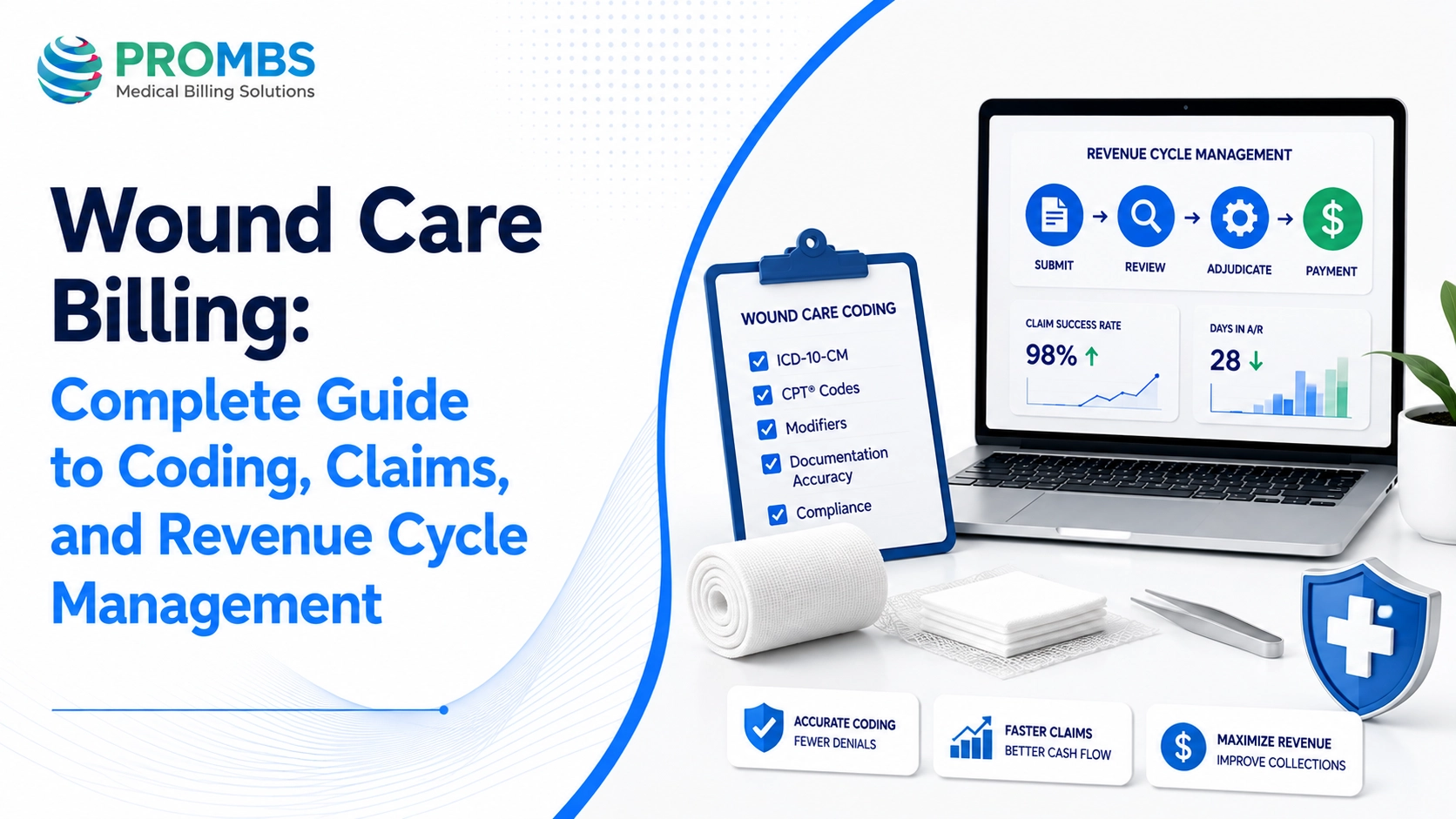
Wound care practices provide essential treatment for patients dealing with complex wounds, chronic ulcers, surgical wounds, diabetic wounds, pressure injuries, and other conditions that require specialized care.
However, providing high-quality wound care is only one part of running a successful practice.
Behind every completed treatment is a complex billing process that determines whether the practice receives accurate reimbursement.
This is where wound care billing becomes critical.
Unlike general medical billing, wound care billing requires a detailed understanding of:
- Procedure coding
- Wound measurements
- Documentation requirements
- Medical necessity
- Debridement procedures
- Payer guidelines
- Claim submission rules
A small documentation or coding mistake can result in:
- Claim denials
- Payment delays
- Reduced reimbursement
- Increased administrative workload
For example, wound care procedures often require accurate documentation of wound characteristics, including size, depth, tissue removed, and medical necessity. Payers evaluate whether the documentation supports the billed service before reimbursement is approved.
A successful wound care revenue cycle requires more than submitting claims.
Practices need a structured process that connects:
- Patient evaluation
- Documentation
- Coding
- Claim submission
- Payment processing
- Denial management
- Accounts receivable follow-up
This guide explains how wound care billing works, why it is complex, common challenges practices face, and how healthcare organizations can improve their revenue cycle performance.
What Is Wound Care Billing?
Wound care billing is the process of converting wound treatment services into accurate medical claims submitted to insurance payers for reimbursement.
It involves documenting, coding, submitting, and managing claims for services such as:
- Wound evaluations
- Debridement procedures
- Chronic wound treatment
- Ulcer management
- Skin substitute procedures
- Advanced wound therapies
- Follow-up wound care services
The goal of wound care billing is to ensure that the services provided are accurately represented and reimbursed.
A complete wound care billing process includes:
- Patient registration
- Insurance verification
- Documentation review
- Medical coding
- Claim preparation
- Claim submission
- Payment posting
- Denial resolution
- AR follow-up
Unlike some specialties where billing may focus primarily on office visits, wound care reimbursement often depends heavily on procedure details and documentation accuracy.
Why Wound Care Billing Is More Complex Than General Medical Billing
Wound care billing requires specialty-specific knowledge because reimbursement depends on multiple clinical and administrative factors.
A wound care claim must accurately communicate:
- The type of wound being treated
- The location of the wound
- The severity of the condition
- The procedure performed
- The depth of treatment
- The medical necessity supporting the service
For example, wound debridement coding depends on factors such as the tissue removed and the depth of the procedure performed. The documentation must support the specific service billed.
A generic billing approach may not understand these specialty requirements.
Common Services That Require Wound Care Billing Expertise
Wound care practices may provide several types of services that require accurate billing workflows.
1. Wound Evaluation and Management
Initial and follow-up wound assessments require proper documentation of:
- Wound location
- Wound condition
- Progress over time
- Treatment plan
- Medical necessity
Documentation plays an important role because payers need evidence that the service provided was clinically necessary.
2. Debridement Procedures
Debridement is one of the most complex areas of wound care billing.
Debridement involves removing damaged, infected, or non-viable tissue to support wound healing.
Billing depends on factors such as:
- Tissue depth
- Surface area
- Procedure type
- Documentation details
For example, wound care coding guidelines distinguish debridement services based on the depth of tissue removed and other procedure characteristics.
Common issues occur when:
- The billed code does not match documentation
- Tissue depth is unclear
- Wound measurements are missing
- Medical necessity is not supported
3. Advanced Wound Care Treatments
Many wound care practices provide advanced treatments that require additional billing knowledge.
Examples include:
- Skin substitutes
- Negative pressure wound therapy
- Specialized wound management procedures
- Chronic wound treatments
These services often involve detailed payer requirements and documentation expectations.
4. Chronic Wound Management
Chronic wounds often require ongoing treatment and monitoring.
Examples include:
- Diabetic ulcers
- Pressure ulcers
- Venous ulcers
- Arterial ulcers
Billing accuracy depends on properly documenting:
- Wound characteristics
- Treatment progress
- Medical necessity
- Ongoing care plan
The Wound Care Billing Workflow
A successful wound care billing process involves several connected steps.
| Step | Purpose |
|---|---|
| Patient Registration | Collects accurate patient and insurance information. |
| Insurance Verification | Confirms coverage, benefits, and payer requirements. |
| Documentation Review | Ensures wound details support billed services. |
| Medical Coding | Assigns accurate diagnosis and procedure codes. |
| Claim Submission | Sends accurate claims to insurance companies. |
| Payment Posting | Records payments and adjustments. |
| Denial Management | Identifies and resolves reimbursement issues. |
| AR Follow-Up | Manages unpaid claims and delayed payments. |
Why Documentation Is Critical in Wound Care Billing
Documentation is one of the biggest factors affecting wound care reimbursement.
A wound care claim should clearly support:
- Why the service was necessary
- What procedure was performed
- What condition was treated
- How the wound was assessed
- What treatment was provided
Important documentation details may include:
- Wound location
- Wound measurements
- Wound depth
- Tissue characteristics
- Presence of infection
- Treatment response
- Procedure details
CMS wound care guidance emphasizes that documentation should support medical necessity and include wound characteristics such as size, depth, tissue condition, and treatment progress.
Without proper documentation, even correctly performed procedures may face reimbursement challenges.
Common Wound Care Billing Challenges
| Challenge | Impact on Practices |
|---|---|
| Complex Coding Requirements | Incorrect codes can lead to claim delays or denials. |
| Documentation Issues | Missing wound details can affect medical necessity approval. |
| Denials | Creates delayed reimbursement and additional administrative work. |
| Payer Requirements | Different policies can create billing complexity. |
| AR Management | Unpaid claims can affect practice cash flow. |
Wound Care Coding: What Practices Need to Know
Accurate coding is one of the most important components of successful wound care billing.
Wound care coding communicates:
- What procedure was performed
- Why the procedure was medically necessary
- How the payer should reimburse the service
Because wound care involves different treatment levels and procedures, coding requires careful attention to clinical documentation.
Common coding categories include:
- CPT codes
- ICD-10 diagnosis codes
- HCPCS codes
- Modifiers
Incorrect coding can lead to:
- Claim denials
- Reduced reimbursement
- Payment delays
- Compliance concerns
CPT Coding in Wound Care Billing
CPT codes describe the procedures and services provided by wound care professionals.
Common wound care services that require CPT coding include:
- Wound evaluation
- Debridement procedures
- Skin substitute applications
- Advanced wound treatments
- Follow-up management
Debridement Coding Challenges
Debridement is one of the most complex areas of wound care billing.
The correct code selection depends on details such as:
- Type of tissue removed
- Depth of tissue removal
- Wound location
- Surface area treated
- Procedure documentation
For example, a debridement procedure involving skin and subcutaneous tissue requires different coding considerations than a procedure involving deeper tissue layers.
Common debridement coding problems include:
- Incorrect code selection
- Missing wound depth documentation
- Incorrect wound measurements
- Documentation not matching the billed procedure
A wound care practice may perform the correct clinical procedure but still face reimbursement issues if the coding does not accurately represent the service.
ICD-10 Diagnosis Coding in Wound Care
ICD-10 codes explain the patient’s condition and support medical necessity.
Accurate diagnosis coding helps payers understand:
- What type of wound is being treated
- Where the wound is located
- Severity of the condition
- Why treatment is necessary
Common wound-related diagnoses may include:
- Diabetic ulcers
- Pressure ulcers
- Venous ulcers
- Non-pressure chronic ulcers
- Surgical wounds
Diagnosis coding should accurately reflect:
- Wound type
- Location
- Severity
- Associated conditions
A mismatch between diagnosis coding and treatment performed can increase the risk of claim denial.
HCPCS Coding and Advanced Wound Care Services
Some wound care products and services require HCPCS coding.
This may include:
- Skin substitutes
- Certain medical supplies
- Advanced wound care products
These services often have additional payer requirements.
Practices need to ensure:
- Correct product coding
- Proper documentation
- Appropriate quantity reporting
- Medical necessity support
Errors in HCPCS coding can result in reimbursement delays or denials.
Modifier Usage in Wound Care Billing
Modifiers provide additional information about how a service was performed.
In wound care billing, modifiers may be necessary to communicate:
- Multiple procedures
- Specific service circumstances
- Additional details about the billed service
Common modifier issues include:
- Missing modifiers
- Incorrect modifier usage
- Documentation not supporting modifier application
Proper modifier usage helps prevent claim processing issues.
Documentation Requirements for Wound Care Billing
Documentation is one of the biggest factors affecting wound care reimbursement.
A wound care claim should clearly demonstrate:
- The condition being treated
- The service performed
- Why treatment was necessary
- The patient’s progress
Important Documentation Elements
1. Wound Location
Documentation should clearly identify:
- Body area
- Specific anatomical location
- Laterality when applicable
Example:
Instead of:
“Foot wound treated”
Documentation should specify:
“Right heel wound”
Specific details support accurate coding.
2. Wound Measurements
Wound measurements are critical for many wound care services.
Documentation may include:
- Length
- Width
- Depth
- Surface area
Accurate measurements help support:
- Treatment decisions
- Procedure coding
- Medical necessity
3. Wound Depth and Tissue Involvement
Depth documentation is especially important for debridement procedures.
Records should clearly describe:
- Tissue level involved
- Type of tissue removed
- Procedure depth
Missing depth information is a common cause of coding problems.
4. Procedure Details
Documentation should clearly explain:
- Procedure performed
- Technique used
- Area treated
- Materials used
- Patient response
This creates a clear connection between the clinical service and the billed claim.
5. Medical Necessity Support
Payers need evidence that wound care services are clinically necessary.
Documentation should support:
- Patient condition
- Treatment rationale
- Progress monitoring
- Continued care requirements
Common Wound Care Billing Denials and Prevention Strategies
| Denial Reason | Why It Happens | Prevention Strategy |
|---|---|---|
| Incorrect Procedure Coding | The billed code does not match the procedure documented. | Perform coding reviews and ensure documentation supports procedures. |
| Missing Wound Details | Documentation lacks wound location, size, or depth information. | Maintain detailed wound assessment documentation. |
| Medical Necessity Denial | The payer does not find sufficient support for treatment. | Ensure records clearly explain why services were required. |
| Modifier Errors | Modifiers are missing or incorrectly applied. | Review modifier requirements before claim submission. |
| HCPCS Coding Issues | Products or supplies are incorrectly reported. | Verify product coding and payer requirements. |
| Authorization Problems | Required approval was not obtained. | Confirm payer requirements before treatment. |
How Wound Care Practices Can Prevent Claim Denials
Reducing denials requires improving processes before claims are submitted.
A proactive wound care billing strategy includes:
1. Improve Documentation Accuracy
Strong documentation is the foundation of reimbursement.
Practices should ensure every wound assessment includes:
- Complete wound measurements
- Location details
- Depth information
- Treatment performed
- Patient progress
Better documentation supports cleaner claims.
2. Perform Regular Coding Reviews
Coding audits help identify:
- Incorrect procedure codes
- Documentation gaps
- Modifier problems
- Training opportunities
Regular reviews help prevent repeated billing errors.
3. Verify Payer Requirements
Different insurance companies may have different requirements for:
- Coverage
- Documentation
- Authorization
- Product usage
- Billing rules
Understanding payer expectations helps prevent avoidable denials.
4. Monitor Denial Patterns
A practice should not only fix denied claims individually.
It should analyze:
- Why claims are denied
- Which procedures are affected
- Which payers create problems
- Whether issues repeat
This allows practices to improve the underlying workflow.
5. Improve Claims Review Before Submission
Before sending claims, practices should review:
- Patient information
- Diagnosis codes
- Procedure codes
- Modifiers
- Documentation support
A strong claim review process improves first-pass claim acceptance.
Wound Care Billing Denial Prevention Checklist
| Area | Review Question |
|---|---|
| Documentation | Does the record clearly support the wound condition and treatment provided? |
| Coding | Do CPT and ICD-10 codes accurately match the documented service? |
| Measurements | Are wound size, location, and depth properly documented? |
| Authorization | Are payer approval requirements completed before treatment? |
| Claims | Are claims reviewed before submission? |
Why Wound Care Practices Need Specialty Billing Expertise
Wound care billing requires knowledge that goes beyond general medical billing.
A billing team must understand:
- Complex procedures
- Documentation requirements
- Coding guidelines
- Payer expectations
- Denial prevention strategies
Without specialty knowledge, practices may experience:
- Lost reimbursement
- Increased denials
- Delayed payments
- Administrative burden
A specialized approach helps ensure that clinical work is accurately represented and properly reimbursed.
How Wound Care Practices Can Improve Revenue Cycle Performance
Wound care billing challenges are rarely caused by one single issue.
Revenue problems often happen because multiple areas of the revenue cycle are connected.
A practice may experience claim denials because of:
- Documentation gaps
- Coding mistakes
- Authorization issues
- Incorrect billing workflows
- Poor follow-up processes
Improving revenue cycle performance requires a complete approach that focuses on prevention, accuracy, and visibility.
1. Strengthen Documentation Workflows
Documentation is one of the most important factors in wound care reimbursement.
Practices should create consistent documentation processes that capture:
- Wound location
- Wound measurements
- Depth
- Tissue involvement
- Treatment provided
- Patient progress
Complete documentation helps:
- Support medical necessity
- Improve coding accuracy
- Reduce payer questions
- Prevent claim delays
2. Improve Coding Accuracy
Because wound care procedures can involve multiple coding considerations, regular coding reviews are important.
Practices should evaluate:
- CPT code selection
- ICD-10 diagnosis accuracy
- Modifier usage
- Procedure documentation
Coding audits can help identify:
- Common errors
- Training opportunities
- Documentation inconsistencies
A proactive coding approach improves claim accuracy before problems occur.
3. Create a Denial Prevention Strategy
Many practices focus on recovering denied claims after revenue has already been delayed.
A stronger approach focuses on prevention.
A denial prevention strategy should include:
- Tracking denial reasons
- Reviewing payer patterns
- Identifying recurring problems
- Improving workflows
For example:
If a practice repeatedly receives denials for insufficient wound documentation, the solution is not only appealing claims.
The solution is improving documentation processes.
4. Monitor Accounts Receivable
Unpaid claims can significantly affect wound care practice cash flow.
Practices should regularly review:
- Aging claims
- Outstanding balances
- Payer delays
- Unresolved denials
Effective AR management helps identify where revenue is getting stuck.
5. Use Revenue Cycle Reporting
Without reporting, practices may not know where problems exist.
Important wound care billing metrics include:
- Clean claim rate
- Denial rate
- Days in AR
- Collection rate
- Top denial reasons
- Payment trends
Better reporting allows practice leaders to make informed decisions.
In-House vs Outsourced Wound Care Billing
Many wound care practices evaluate whether to manage billing internally or partner with an experienced billing company.
Both options have advantages.
The right choice depends on:
- Practice size
- Claim volume
- Internal expertise
- Revenue cycle challenges
- Growth goals
| Area | In-House Billing | Outsourced Wound Care Billing |
|---|---|---|
| Specialty Expertise | Depends on internal knowledge of wound care coding and reimbursement requirements. | Provides access to specialists familiar with wound care billing challenges. |
| Coding Accuracy | Requires continuous training and internal reviews. | Provides dedicated coding support and claim reviews. |
| Denial Management | May focus on fixing denied claims after they happen. | Uses proactive strategies to identify and prevent recurring denials. |
| Documentation Review | Depends on internal processes. | Provides structured review workflows. |
| Scalability | Growth may require additional staff and resources. | Can adjust support based on practice needs. |
| Reporting | Practice manages financial tracking internally. | Provides revenue cycle insights and performance reporting. |
Benefits of Outsourcing Wound Care Billing
Outsourcing wound care billing is not simply about reducing administrative work.
The right billing partner can help practices create a more efficient revenue cycle.
Access to Wound Care Billing Expertise
Wound care billing requires knowledge of:
- Procedure coding
- Documentation requirements
- Payer guidelines
- Medical necessity
- Denial prevention
A specialty-focused billing partner understands these challenges and helps practices maintain accurate billing workflows.
Improved Claim Accuracy
A dedicated billing team can review:
- Procedure codes
- Diagnosis codes
- Documentation
- Modifiers
- Claim details
This helps reduce avoidable billing errors.
Better Denial Prevention
A proactive billing approach identifies:
- Common denial reasons
- Problematic payers
- Documentation issues
- Coding trends
This helps practices reduce recurring reimbursement problems.
Reduced Administrative Burden
Wound care providers already manage complex patient care responsibilities.
Internal teams may also handle:
- Billing questions
- Insurance communication
- Claim follow-up
- Denial appeals
- AR management
Outsourcing allows staff to focus more on patient care while billing specialists manage revenue cycle tasks.
How to Choose a Wound Care Billing Partner
Choosing a wound care billing company requires evaluating more than price.
Practices should consider:
1. Do They Understand Wound Care Billing?
A billing partner should understand:
- Debridement coding
- Wound documentation requirements
- Skin substitute billing
- Payer expectations
- Common denial issues
General medical billing experience may not always be enough.
2. How Do They Handle Denials?
Ask:
“Do you only appeal denied claims, or do you analyze why denials occur?”
A strong partner should provide:
- Denial tracking
- Root cause analysis
- Appeal management
- Prevention strategies
3. What Reporting Do They Provide?
Practices should have visibility into:
- Claims
- Payments
- Denials
- AR performance
- Collection trends
Reporting helps practices understand financial performance.
4. How Will Communication Work?
A successful partnership requires clear communication.
Practices should understand:
- Who manages the account
- How updates are provided
- How issues are escalated
- How performance is reviewed
How Pro Medical Billing Solutions Supports Wound Care Practices
Wound care practices need a billing partner that understands the connection between clinical documentation, coding accuracy, payer requirements, and reimbursement.
Pro Medical Billing Solutions helps wound care organizations improve revenue cycle performance through:
- Wound care billing support
- Medical coding assistance
- Documentation review
- Claims management
- Denial management
- Payment posting
- Accounts receivable follow-up
- Revenue cycle reporting
Our approach focuses on improving the processes behind reimbursement challenges.
Instead of only fixing denied claims, PROMBS helps practices identify why billing problems occur and create stronger workflows.
Learn more about our Medical Billing Services and how specialized billing support can help healthcare practices improve revenue cycle performance.
Frequently Asked Questions
What is wound care billing?
Wound care billing is the process of documenting, coding, submitting, and managing claims for wound treatment services.
It includes services such as wound evaluations, debridement procedures, advanced wound treatments, and ongoing wound management.
Why is wound care billing complex?
Wound care billing is complex because reimbursement depends on detailed documentation, procedure coding accuracy, wound measurements, medical necessity, and payer requirements.
Small errors can result in claim delays or denials.
What are common wound care billing challenges?
Common challenges include:
- Incorrect procedure coding
- Missing wound documentation
- Modifier errors
- Medical necessity issues
- Authorization problems
- Denied claims
How can wound care practices reduce claim denials?
Practices can reduce denials by improving:
- Documentation accuracy
- Coding reviews
- Payer requirement tracking
- Claim quality checks
- Denial analysis
Should wound care practices outsource billing?
Outsourcing may help practices access specialty billing expertise, improve coding accuracy, reduce administrative workload, and strengthen revenue cycle performance.
It can be especially useful for practices dealing with complex coding requirements, increasing denials, or growing AR challenges.
Final Thoughts: Building a Stronger Wound Care Revenue Cycle
Wound care billing requires more than submitting claims.
The combination of complex procedures, detailed documentation requirements, coding challenges, and payer rules makes revenue cycle management a critical part of wound care practice success.
A strong wound care billing process helps practices:
- Improve claim accuracy
- Reduce avoidable denials
- Protect reimbursement
- Improve AR performance
- Gain better financial visibility
Whether a practice is struggling with coding challenges, delayed payments, or increasing administrative workload, a specialty-focused billing approach can help create a more predictable revenue cycle.
With the right processes and expertise, wound care providers can focus more on patient treatment while maintaining stronger financial operations.