

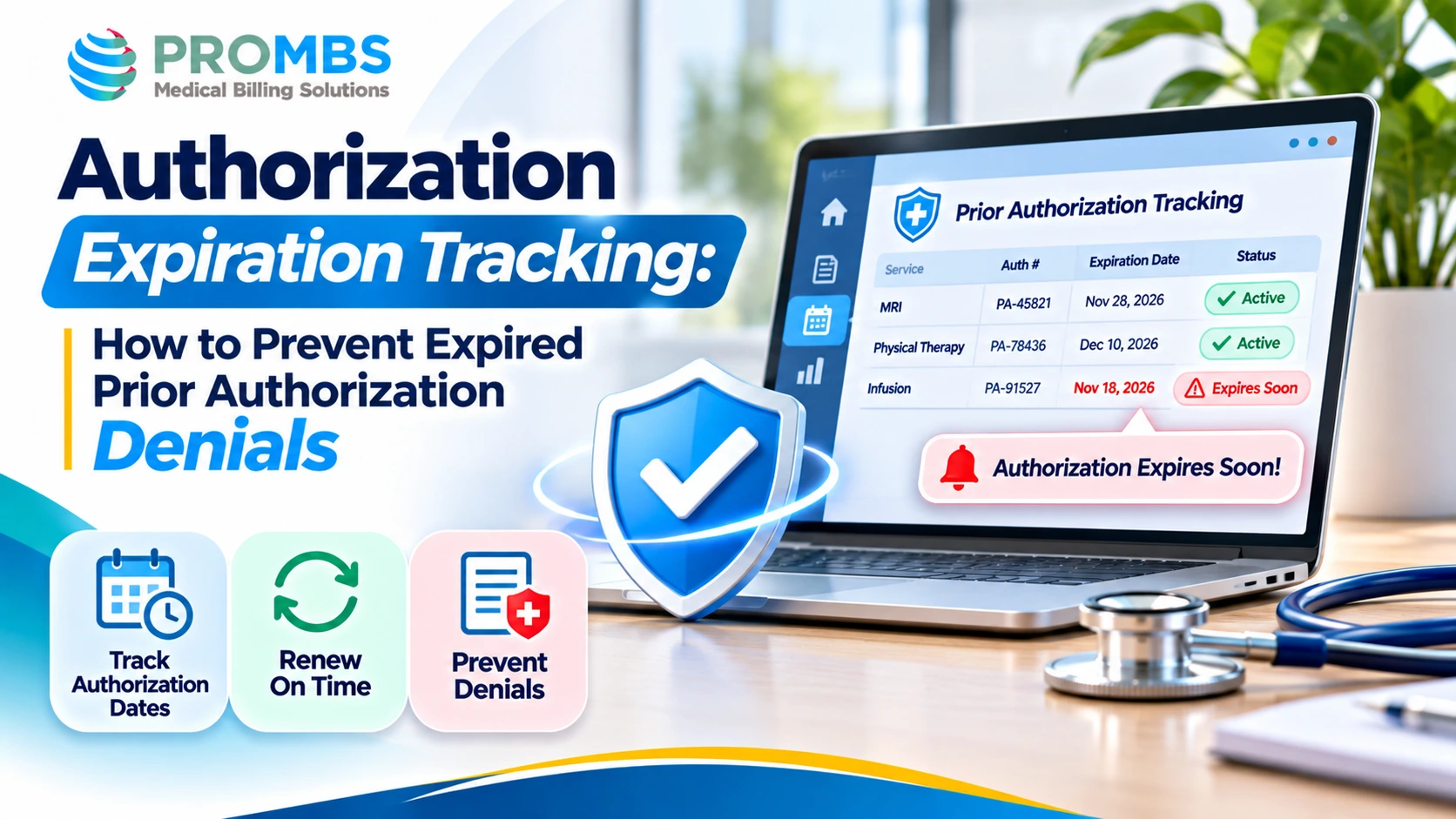
A medical practice obtains prior authorization for a patient’s treatment, receives approval from the insurance company, and schedules the service. Everything appears ready for reimbursement. However, when the claim is eventually submitted, the insurer denies payment because the authorization expired before the treatment occurred.
This situation can arise even when the provider obtained authorization correctly and the medical service was necessary. The problem is not always a missing approval. Sometimes, the authorization existed but was no longer valid for the date or circumstances of the service.
Consider an orthopedic practice that receives authorization for a surgical procedure scheduled in September. The patient develops a temporary medical complication, and the surgery is postponed until November. The scheduling department updates the appointment, but the authorization team does not review the original approval dates. When the procedure is performed, the authorization period has already ended.
The insurance company may subsequently deny the claim because the service occurred outside the approved period. The practice must then investigate whether an extension, reconsideration, or another permitted review is available, even though the original authorization had been obtained before the procedure was first scheduled.
For healthcare providers, authorization expiration tracking is essential to preventing these avoidable reimbursement problems. It helps practices monitor approval validity, anticipate renewal requirements, and identify treatment changes that may affect coverage before services are delivered.
The challenge becomes more significant for providers managing recurring treatments such as physical therapy, infusion therapy, behavioral health services, and other specialty care. These treatments may continue for weeks or months, while authorizations remain subject to defined dates, quantities, clinical conditions, or other restrictions.
A reliable authorization management process should therefore answer more than whether an approval exists. It must establish when the authorization begins, when it ends, what services it covers, and whether the planned treatment remains within the approved conditions.
What Is Authorization Expiration Tracking in Medical Billing?
Authorization expiration tracking is the process of monitoring the validity periods and ending conditions of insurance prior authorizations to help ensure that services requiring approval are furnished within the applicable authorization terms.
A prior authorization is a payer’s determination, made before the relevant service, that the requested treatment meets specified requirements under the applicable insurance coverage and review process.
However, approval is not necessarily open-ended. A payer may authorize a service for a particular period, number of visits, quantity of treatments, or other defined circumstances.
Once the authorization expires, additional services may require a new approval, renewal, or amendment, depending on the payer’s requirements.
Why Tracking the Expiration Date Matters
A medical practice may correctly obtain authorization for a covered service but still encounter a payment problem if the treatment is delivered after the approved period.
For example, assume an insurer approves physical therapy from March 1 through May 31.
The patient completes several visits during that period, but the therapist recommends continued treatment in June.
If the practice schedules additional visits without verifying whether the authorization was renewed, claims for the June services may be denied when prior authorization is required.
The clinical need for continued treatment does not automatically extend the original insurer approval.
The practice must determine whether the payer requires a new authorization or another permitted update before assuming the services remain authorized.
Authorization Approval Is Not Unlimited Coverage
Prior authorization should be understood as approval for a defined scope of care rather than a guarantee of unrestricted reimbursement.
For example, an authorization may identify a procedure, a provider, a treatment location, and a particular service period.
A claim can still encounter an adjustment if the actual service differs from the approved conditions.
Additionally, prior authorization does not replace the other requirements governing coverage and payment. Claims remain subject to applicable coding, eligibility, benefit, documentation, and contractual rules.
This is why authorization tracking should be connected to scheduling, clinical documentation, and insurance billing rather than maintained as an isolated administrative record.
What Determines When a Prior Authorization Expires?
The validity of a prior authorization depends on the actual approval issued by the payer and the conditions attached to it.
Some approvals specify a clear beginning and ending date. Others identify an event, treatment quantity, or circumstance that determines when the authorization is no longer applicable.
The billing department should review the complete approval rather than rely only on the authorization number.
| Authorization Detail | What It Controls | Potential Billing Risk |
|---|---|---|
| Effective date | When the approval becomes applicable | Service furnished before approval begins |
| Expiration date | When the approved period ends | Service furnished after validity ends |
| Approved service | Procedure, treatment, or drug covered | Actual service differs from approval |
| Authorized quantity | Number of visits, units, or treatments | Approved quantity exhausted |
| Provider or facility | Approved rendering or service location details | Claim information does not match |
| Additional conditions | Frequency, dosage, site of care, or other restrictions | Treatment falls outside approved scope |
The importance of each field depends on the payer and the service.
For example, a surgical authorization may primarily concern a specific procedure and treatment window, while an ongoing therapy authorization may contain both a date range and a maximum number of visits.
The practice must monitor every applicable limitation.
Effective Date vs. Expiration Date
The effective date establishes when the authorization begins under the payer’s approval.
The expiration date identifies the end of the approved period or a relevant ending condition.
For example, an authorization may be valid from June 1 through August 31.
If the approval includes August 31, a qualifying service furnished on that date may be within the authorized period, assuming all other conditions are satisfied.
However, a service performed on September 1 would fall outside the original date range.
Practices should confirm the exact interpretation of the payer’s approval, including any time-specific or service-specific restrictions, instead of assuming that every payer uses identical date rules.
Authorization Expiration vs. Authorization Units Exhausted
Two common prior authorization problems are often confused: an authorization that has expired and an authorization whose approved quantity has been exhausted.
Although both situations can affect reimbursement, they involve different limitations.
Authorization expiration occurs when the approval is no longer valid under its specified date range or ending condition.
Authorization exhaustion occurs when the approved number of units, visits, treatments, or other quantities has been consumed.
A practice must monitor both because one limitation may be reached before the other.
Example 1: Authorization Expired but Units Remain
Suppose a payer authorizes 20 physical therapy visits from January 1 through March 31.
The patient completes only 12 visits before March 31.
Eight approved visits remain unused, but the authorization period has ended.
If the patient returns for treatment in April, those unused visits are not automatically valid for the new service date.
The practice must determine whether an extension or new authorization is required.
Example 2: Authorization Active but Units Exhausted
Now consider a payer approval for 40 therapy units valid from January 1 through March 31.
The patient uses all 40 units by February 15.
Although the authorization’s expiration date remains several weeks away, the approved quantity has been exhausted.
Additional services may require more authorized units before the date range ends.
Why the Difference Matters
The first scenario requires investigation of the authorization’s validity period.
The second requires investigation of the approved quantity and utilization.
A tracking system that monitors only expiration dates will not detect exhausted units. A system that monitors only remaining units will not identify approvals that have already expired.
PROMBS examines the quantity-related issue in Authorization Units Exhausted: Preventing Therapy and Infusion Claim Denials.
The new authorization expiration workflow should operate alongside, rather than replace, unit-level tracking.
Why Prior Authorizations Expire Before Treatment Is Completed
Authorization expiration is not always caused by staff forgetting to monitor an approval date.
Sometimes, the treatment schedule changes after the original authorization is issued. In other situations, clinical needs develop beyond the period initially approved by the insurer.
Understanding these situations helps practices recognize when an authorization review is necessary.
Treatment Is Rescheduled
A procedure may be postponed because of illness, scheduling conflicts, equipment availability, or changes in the patient’s condition.
If the new service date falls outside the original authorization period, the practice may need an extension or replacement approval.
For example, a diagnostic procedure originally approved for October may be rescheduled for December.
The authorization team should verify whether the existing approval remains valid before the procedure takes place.
Updating the appointment date in the scheduling system does not automatically update the authorization with the insurer.
Treatment Continues Longer Than Expected
Some patients require more visits or a longer treatment period than initially anticipated.
A therapist may determine that additional skilled treatment is appropriate, or a specialist may extend a course of therapy after reviewing the patient’s response.
The medical need for continued treatment can be legitimate, but the original authorization may have a fixed end date.
The practice should coordinate the additional clinical documentation and determine the payer’s renewal requirements before the approval expires.
Delays Occur During Treatment
A patient may temporarily interrupt a treatment program because of illness, travel, hospitalization, or another clinical circumstance.
When care resumes, the remaining authorized quantity may appear sufficient, but the original validity period may have ended during the interruption.
This creates a risk when the scheduling department evaluates only the number of visits remaining.
The practice must confirm that both the date range and quantity remain valid.
Insurance Coverage Changes
An authorization issued by one insurer does not automatically remain valid after the patient changes health plans.
For example, a patient receiving recurring infusion treatment may obtain new insurance through an employer.
The old payer’s authorization may no longer support services furnished under the new coverage.
The practice should verify the new plan’s authorization requirements and obtain any necessary approval through the appropriate process.
A previously approved treatment does not automatically establish that another insurer must authorize or reimburse the same service.
Why an Approved Authorization Can Still Lead to a Claim Denial
A valid authorization number is only one part of determining whether the actual service satisfies the payer’s requirements.
Claims may be denied even when an authorization exists because the service date, procedure, provider, location, or treatment details do not match the approval.
For example, a payer may authorize an outpatient procedure at one facility, but the treatment is later moved to another location.
If the authorization applies to a specific site of care and the change requires approval, the claim may encounter a payment problem.
Similarly, an authorization may identify a particular CPT code while the final service is reported using a different code based on the procedure actually performed.
These differences should be investigated before the practice assumes that the insurer incorrectly denied payment.
Expiration and Claim Processing Are Separate Events
A provider may submit a claim several weeks after treatment.
What matters for an expired-authorization dispute is generally whether the service occurred within the applicable authorization period and satisfied the approval’s conditions, not simply whether the claim was submitted after the authorization’s end date.
For example, a qualifying service performed on May 20 under an authorization valid through May 31 does not ordinarily become unauthorized solely because the billing department submits the claim in June.
However, the claim must still satisfy the payer’s filing deadlines and other requirements.
This distinction prevents practices from confusing authorization expiration with timely filing.
Authorization Does Not Guarantee Payment
An approval does not automatically guarantee payment for every submitted claim.
Other requirements may still apply, and the effect of an approval depends on the applicable program and regulations.
Medicare Advantage provides certain protections against reopening previously approved medical necessity determinations, subject to specific rules and exceptions. However, those protections do not automatically resolve unrelated billing errors or services outside the approval’s scope.
PROMBS discusses related issues in Authorization Approved but Claim Denied: Why It Happens and How to Fix It.
How Expired Authorizations Affect Different Medical Specialties
The operational risk created by an expired authorization varies according to the services furnished.
A surgical practice may need approval for a specific procedure date, while a therapy provider may require authorization covering repeated visits.
Understanding these differences helps identify which appointments and treatment plans need ongoing monitoring.
Surgical Procedures
Surgical authorizations may cover a particular procedure, provider, facility, and service period.
When a surgery is postponed, the authorization should be reviewed against the new date and any changes to the planned procedure.
For example, a patient may initially be scheduled for surgery in February but undergo the procedure in April after additional medical evaluation.
If the original approval expired in March, the practice may need a renewed or amended authorization.
The issue should be identified before the operation rather than discovered during claim follow-up.
Diagnostic Imaging
Advanced imaging services may require authorization covering a specific diagnostic procedure and approved date range.
A patient may postpone an MRI because of scheduling availability or another medical issue.
If the examination takes place after the authorization expires, the imaging provider may encounter a denial even if the original request was approved.
The scheduling workflow should therefore include a validity check whenever an authorized imaging appointment is rescheduled.
Physical and Occupational Therapy
Therapy services often continue across multiple visits and may require authorization for both treatment quantity and duration.
For example, a patient may receive approval for 16 physical therapy visits during an eight-week period.
If the patient’s schedule changes and treatment continues beyond those eight weeks, the remaining visits may not automatically qualify under the original authorization.
The practice should monitor the approval end date alongside the patient’s expected treatment completion date.
Infusion Therapy
Infusion services may involve authorization requirements tied to a specific medication, dosage, treatment frequency, and administration location.
A patient receiving a biological infusion may experience a treatment interruption that pushes the next appointment beyond the authorized period.
If the treatment plan changes, the practice may also need to verify whether the existing approval covers the revised dosage or schedule.
Drug prior authorization requirements vary by benefit and payer. The CMS-0057-F decision-timeframe provisions discussed later in this article apply to non-drug items and services and should not be assumed to govern every infusion medication authorization.
Common Denial Codes Associated With Authorization Problems
Medical practices may encounter standardized Claim Adjustment Reason Codes when an insurer denies a service involving authorization requirements.
Two relevant codes are CO-197 and CO-198, although the complete remittance must be reviewed to determine the specific circumstances.
CO-197: Required Authorization Was Absent
CARC 197 generally indicates that required authorization, notification, or precertification was absent.
This may occur when an approval was not obtained or when the payer could not identify a valid authorization for the service.
If an existing approval does not cover the treatment date, the payer may also process the claim as lacking valid authorization, depending on its rules and coding practices.
The billing department should examine the complete payer explanation before assuming that the authorization was never requested.
CO-198: Authorization Limit Exceeded
CARC 198 generally indicates that an authorization, notification, or precertification limit has been exceeded.
The problem may involve approved quantities or another limitation attached to the authorization.
For example, a payer may determine that the provider used more visits than authorized.
These codes can help direct the investigation, but they do not independently establish whether an expiration date, quantity limit, or another authorization condition caused the denial.
Why Root-Cause Identification Matters
An expired authorization should not automatically be handled as an exhausted-unit denial.
Similarly, a missing authorization number on the submitted claim may require a different correction from a service that occurred after the approved period ended.
The practice should retrieve the original approval, review the relevant treatment date, and compare the actual service with the payer’s authorization record.
This establishes whether the issue concerns missing approval, expired validity, incorrect claim information, or another authorization limitation.
2026 CMS Prior Authorization Rules and Their Impact on Renewal Planning
The CMS Interoperability and Prior Authorization Final Rule, CMS-0057-F, introduced requirements intended to improve prior authorization transparency and processing.
Certain operational requirements took effect in 2026, including shorter decision timeframes for specified affected payers.
These changes are important for authorization renewal planning, but they should not be confused with the duration of an approved authorization.
Standard Prior Authorization Decision Timeframe
For applicable affected payers, the final rule generally requires standard decisions for non-drug medical items and services within seven calendar days of receiving a request.
This requirement applies to specified payer categories, including Medicare Advantage organizations and relevant Medicaid and CHIP programs and managed care plans.
The particular provisions must be evaluated according to the applicable program and permitted exceptions.
Expedited Prior Authorization Decision Timeframe
For qualifying expedited non-drug authorization requests, applicable affected payers generally must issue decisions within 72 hours, subject to the relevant requirements.
Expedited review is intended for circumstances meeting the applicable urgency criteria, not merely because an administrative renewal was started late.
Practices should not label routine requests as urgent without a valid basis.
Important Exceptions and Limitations
The CMS-0057-F decision-timeframe requirements do not apply universally to every insurance company or authorization request.
The rule excludes drug authorizations from these particular provisions and does not impose the same shortened decision-timeframe requirements on qualified health plan issuers on the federally facilitated exchanges.
Certain programs also permit extensions under specified conditions.
The practice should verify the actual payer’s requirements rather than apply the seven-day standard to every authorization.
Decision Deadlines Are Not Expiration Dates
This distinction is particularly important for authorization expiration tracking.
A seven-calendar-day decision deadline generally concerns how long the affected payer has to respond to a qualifying standard authorization request.
It does not mean an approved authorization is valid for seven days.
The authorization’s expiration date or ending condition is a separate matter established by the actual approval.
A practice can therefore receive a timely authorization decision but still experience a later denial if it fails to monitor when the approval ends.
For authoritative details, see the CMS Interoperability and Prior Authorization Final Rule.
What Changes in 2027 for Authorization Expiration Information?
The CMS-0057-F Prior Authorization API requirements have compliance dates beginning in 2027 for applicable affected payers.
These requirements are designed to support more standardized electronic communication about authorization requests and responses.
Under the finalized framework, an approved request communicated through the required API must identify the date or circumstance under which the authorization ends.
This requirement is directly relevant to authorization tracking because practices need reliable information about the approved service and its validity.
Why Electronic Expiration Information Matters
Today, authorization information may be recorded through payer portals, electronic messages, approval letters, or other communication channels.
Manual entry and inconsistent records can create problems when the approval’s end date is not transferred accurately into scheduling or billing systems.
More standardized electronic authorization information may help practices identify relevant validity conditions and maintain better tracking records.
However, API availability does not eliminate the need to verify the approval’s actual scope or monitor changes in treatment.
The practice must still determine whether the authorization covers the service as scheduled and furnished.
What Medical Practices Should Prepare For
Practices should review whether their EHR, practice-management, or authorization technology can preserve important approval details rather than storing only a reference number.
The applicable data may include approval status, covered services, validity dates or ending circumstances, and other conditions relevant to treatment.
Although the API requirements offer opportunities to improve authorization workflows, providers should not assume that all payers or software systems will support identical functionality immediately.
The official CMS Prior Authorization API guidance explains the relevant response requirements.
The Financial Impact of Expired Authorization Denials
An expired authorization can delay reimbursement for services already furnished and create additional administrative work.
The practice may need to retrieve the original approval, review the patient’s treatment history, contact the payer, investigate renewal requirements, and determine whether any appeal or exception is available.
However, the full billed charge should not automatically be treated as recoverable revenue.
The actual financial opportunity depends on the applicable allowed amount, contractual restrictions, coverage requirements, and final payer determination.
Example: An Expired Authorization and Unpaid Claim
Consider a hypothetical medical practice that performs a procedure with an original charge of $2,500.
The contracted allowed amount is $1,600.
The insurer denies the claim because the service occurred after the authorization expired.
The practice should investigate whether the payer’s determination is accurate and whether an appropriate review or recognized exception applies.
If the approval genuinely expired before treatment and no applicable exception exists, recovering the original expected insurer payment may be difficult.
The $2,500 charge does not automatically become the patient’s responsibility.
The practice must evaluate relevant contractual and legal billing restrictions before deciding how the remaining account should be classified.
Why Prevention Matters More Than Repeated Appeals
Some authorization disputes can be resolved when the payer overlooked a valid extension or processed an approval incorrectly.
Others may have limited recovery potential because the service was genuinely outside the authorized period and no acceptable exception exists.
A medical practice should therefore prioritize identifying expiration risks before treatment rather than depending on retroactive authorization requests or appeals after a denial.
Renewal availability and retroactive approval policies vary by payer and service.
Approval should never be assumed simply because a renewal request was submitted.
Why Authorization Expiration Tracking Must Connect Clinical and Billing Teams
One of the most common operational problems is that authorization information is maintained separately from scheduling and treatment records.
The authorization department may know when an approval expires, while the scheduling team changes an appointment without notifying the employees responsible for renewal.
Similarly, a clinician may extend a treatment plan without realizing that the approval’s validity period will end before the additional sessions are completed.
These gaps can allow treatment to continue under an expired authorization even when each department is performing its individual duties.
Scheduling Changes Should Trigger Authorization Review
When an authorized service is moved to another date, the scheduling workflow should trigger a check of the approval’s validity.
The review should determine whether the new service date remains within the approved period and whether other conditions have changed.
This is especially important for surgeries, imaging procedures, and other services scheduled well in advance.
Clinical Extensions Should Trigger Renewal Planning
When treatment continues longer than originally anticipated, the clinical team should communicate the revised plan to the authorization team.
The billing department may also need the updated information to identify which services remain within the approved authorization.
These activities should be coordinated before the existing approval ends whenever possible.
Authorization Ownership Should Be Clear
The practice should identify who is responsible for monitoring approval dates and initiating renewal work.
This responsibility may be assigned to a dedicated authorization department, a revenue cycle team, or another qualified administrative function.
Regardless of the organizational arrangement, expiration monitoring should not depend entirely on individual staff members remembering future dates.
A reliable process needs clear accountability and consistent access to the current authorization information.
The Foundation of Effective Authorization Expiration Tracking
Prior authorization management should continue after the initial approval is received.
An authorization can remain active but have no remaining approved units, or it can retain unused units after the validity period has ended. A procedure may also be rescheduled, the insurance plan may change, or treatment may extend beyond the original approval.
Each situation can affect whether the authorization remains applicable.
For medical practices, effective authorization expiration tracking begins with understanding the actual approval and identifying how its conditions relate to upcoming care.
The most important information is not simply the authorization number. It is the complete relationship between the approved service, the patient, the payer, the treatment date, and the authorization’s ending conditions.
When those details are available to the scheduling, clinical, authorization, and billing teams, practices are better positioned to identify expiration risks before services are furnished.
How to Track Authorization Expiration Dates and Manage Renewals
Effective authorization management requires more than recording an approval number and expiration date. Medical practices need a reliable process for monitoring when approvals become invalid, identifying treatments that may extend beyond the authorized period, and ensuring that renewal requests are initiated before coverage problems affect scheduled care.
A practice may manage hundreds of active authorizations across different insurance companies, providers, specialties, and treatment plans. Each approval may have a different expiration date, quantity limitation, or renewal requirement. Without centralized tracking, employees may overlook important changes, particularly when patients reschedule appointments or providers extend treatment.
The challenge becomes greater when authorization information is distributed across payer portals, spreadsheets, EHR systems, and individual staff members’ records. An approval may be available in one system while the scheduling department continues using outdated information from another.
A structured authorization expiration tracking process should connect every active approval to the services it covers, the dates on which those services are scheduled, and the employee responsible for monitoring renewal requirements.
The following workflow provides a practical framework for medical practices that want to reduce authorization-related billing problems without creating unnecessary administrative work.
1. Build a Centralized Authorization Tracking Log
The first requirement is a centralized record containing the current status and relevant details of every authorization that needs ongoing monitoring.
This record may be maintained within an EHR, practice-management system, dedicated authorization platform, or appropriately secured tracking application.
A spreadsheet can also support smaller organizations when suitable access controls and administrative procedures are established. However, a spreadsheet should not become an uncontrolled collection of patient information shared through insecure channels.
The most important requirement is that authorized staff can identify the current approval, understand its restrictions, and determine when follow-up is necessary.
Essential Authorization Tracking Fields
A useful tracking record should contain enough information to connect the payer’s approval with the actual treatment plan.
| Tracking Field | Purpose |
|---|---|
| Patient/account identifier | Connects the authorization to the correct patient |
| Insurance payer and plan | Identifies the organization responsible for approval |
| Authorization number | References the payer’s decision |
| Approved service or CPT/HCPCS codes | Identifies the services covered |
| Rendering provider and facility | Tracks provider or location restrictions |
| Effective date | Establishes when approval begins |
| Expiration date or ending condition | Identifies when approval stops applying |
| Approved visits or units | Records quantity restrictions |
| Visits or units used | Supports utilization monitoring |
| Upcoming treatment date | Identifies whether scheduled care remains covered |
| Renewal status | Shows whether a new request is needed or pending |
| Assigned employee | Establishes follow-up accountability |
| Last verification date | Indicates when the payer information was checked |
Not every authorization contains every field. The practice should record the conditions actually imposed by the payer and leave unsupported assumptions out of the tracking system.
Store the Original Approval
The tracking record should link to the original payer approval or an accessible, securely stored copy.
For example, a billing specialist may see that authorization number ABC123 expires on August 31. However, the original document may also specify that the approval applies only to a particular facility.
Without the full approval, staff may incorrectly assume that treatment at another location is authorized.
The authorization number is useful for identifying the decision, but it does not replace the underlying conditions.
2. Establish Authorization Expiration Alerts
A centralized log becomes more valuable when it can identify approvals approaching expiration.
Instead of relying on employees to manually review every date, the practice can use reminders that notify the responsible team before an authorization ends.
These alerts should be configured around the payer’s requirements and the organization’s treatment schedules.
A Practical 30-, 14-, and 7-Day Reminder System
For many recurring services, practices can use a three-stage internal reminder framework:
| Reminder | Suggested Operational Action |
|---|---|
| 30 days before expiration | Review remaining treatment and determine whether renewal is needed |
| 14 days before expiration | Confirm required documents and initiate or verify the renewal process |
| 7 days before expiration | Escalate unresolved renewals affecting upcoming treatment |
| Expiration date reached | Flag future services for authorization review before relying on the old approval |
These are recommended internal workflow intervals, not universal payer deadlines.
Some authorizations may require renewal earlier than 30 days before expiration, particularly when extensive clinical review is necessary. Others may cover a single procedure and require no renewal if the service has already been completed.
The practice should tailor reminders to the actual situation rather than apply the same schedule to every approval.
Example: An Authorization Expiring June 30
Suppose a payer approves treatment from May 1 through June 30.
The patient’s treatment plan indicates that additional visits may be required in July.
The authorization system can generate a 30-day reminder around May 31, prompting the team to review the remaining treatment schedule.
A second alert on June 16 can identify whether renewal documentation is complete and whether the request has been submitted.
A final reminder on June 23 can escalate the case if a decision remains unresolved and additional treatment is approaching.
The practice should not wait for the final reminder to begin renewal if earlier action is necessary under the payer’s rules.
3. Determine the Right Time to Start a Renewal
A renewal request should be initiated early enough to accommodate the applicable payer’s review process, documentation requirements, and any additional information needed to support continued treatment.
However, the appropriate lead time varies by insurer and service.
For example, a surgical authorization amendment may have different requirements from a request for additional physical therapy visits. A medication authorization may also involve clinical criteria and pharmacy benefit procedures that differ from non-drug medical services.
The practice should establish renewal timing based on verified payer policies rather than a universal assumption.
Consider the Payer’s Decision Timeframe
Under CMS-0057-F, certain affected payers generally must make standard decisions for non-drug prior authorization requests within seven calendar days and expedited decisions within 72 hours, subject to applicable requirements and permitted extensions.
These timeframes do not apply to every insurer or all drug authorization requests.
Importantly, a decision deadline does not guarantee approval.
The payer may deny the request or seek additional information, so practices should avoid treating the regulatory response period as the only time needed for renewal planning.
Account for Clinical Documentation
Some renewal requests require updated progress notes, treatment history, medical necessity information, or changes to the original clinical plan.
For example, an insurer evaluating additional physical therapy visits may request documentation explaining why continued skilled treatment is necessary.
The authorization team should determine which records are required before the current approval expires.
Waiting until the final day to request clinical information can delay the renewal even when the payer processes complete requests promptly.
4. Create a Standard Authorization Renewal Workflow
A consistent renewal process helps employees understand what must happen when an authorization approaches its ending date.
The process should begin by determining whether continued services are actually planned.
An authorization that expires after a completed treatment course may not require renewal. By contrast, an authorization covering ongoing care may require a new request before future appointments.
Review the Treatment Plan
The authorization specialist should confirm the expected duration of treatment and identify whether services are scheduled beyond the approval’s validity period.
The clinical team should provide updated information when the treatment plan has changed.
For example, a therapist may initially anticipate eight visits but later recommend additional treatment based on the patient’s condition.
The renewal request should reflect the actual planned services and applicable clinical justification.
Determine Whether Renewal, Extension, or New Authorization Is Required
Payers may use different procedures to continue an approved treatment.
Some permit an existing authorization to be extended or amended. Others require a new request after the original authorization expires.
A change in treatment, provider, or insurance coverage may also require a new authorization rather than a simple date extension.
The practice should verify the correct process before submitting additional documentation.
Submit and Record the Request
After determining the appropriate process, the authorization team should submit the required information through the payer’s accepted channel.
The tracking system should record the submission date, payer acknowledgment or reference number, requested services, and expected follow-up date.
A submission receipt confirms that a request was sent or received; it should not be recorded as an authorization approval.
Confirm the Final Decision
Once the payer responds, the authorization specialist should review the complete decision.
If approval is granted, the updated effective dates, ending conditions, approved quantities, and any relevant restrictions should be entered into the tracking system.
If the request is denied or additional information is required, the record should reflect the current status and the appropriate next action.
The previous authorization should not automatically be treated as extended while the renewal remains pending.
5. Track Rescheduled Procedures Against Authorization Validity
Rescheduling is a major source of authorization expiration problems because an appointment date can change after the original approval has been issued.
The scheduling department may successfully move the appointment without realizing that the new treatment date falls outside the authorization period.
A reliable process should trigger an authorization review whenever the date of an authorized service changes.
Example: A Rescheduled Surgical Procedure
An orthopedic practice receives authorization for a procedure valid from September 1 through October 31.
The patient is initially scheduled for surgery on October 20.
Due to a temporary medical issue, the procedure is postponed until November 12.
The original approval has an expiration date of October 31.
Even though the procedure was authorized for the original appointment, the new service date is outside the documented approval period.
The authorization team must verify whether the payer permits an extension or requires a new approval.
Prevent the Scheduling-to-Authorization Gap
The scheduling system should identify when a new appointment date exceeds the authorization’s validity period.
The account can then be routed to the responsible authorization specialist for review.
The updated date should not be considered authorized until the payer’s applicable conditions have been verified.
When a decision remains pending, scheduling and clinical staff should be informed of the status so that care planning can proceed appropriately.
Clinical urgency, applicable exceptions, and patient rights must remain part of any treatment decision; administrative tracking should not be used as a blanket reason to delay medically necessary care.
6. Monitor Recurring Therapy and Rehabilitation Services
Physical therapy, occupational therapy, and speech-language pathology often require authorization tracking across multiple appointments.
These services may have approval limits based on dates, visits, units, or combinations of those conditions.
The authorization team should compare the remaining treatment plan against both the expiration date and the available quantity.
Example: Unused Visits After Expiration
Suppose a commercial payer authorizes 12 occupational therapy visits from March 1 through April 30.
By April 20, the patient has completed eight visits.
Four approved visits remain, but two additional appointments are scheduled for May.
Those May appointments fall outside the original authorization period.
The practice should not assume that the unused visits remain valid after April 30.
The authorization team should verify whether the payer will extend the approval or require a new request for the additional treatment.
Coordinate With the Clinical Team
Therapists may modify treatment frequency based on the patient’s progress or clinical needs.
When the planned treatment extends beyond the current authorization, that information should be communicated to the authorization team promptly.
This helps prevent a situation where the billing department discovers an expired approval only after several additional visits have been furnished.
7. Monitor Infusion Authorization Expiration Carefully
Infusion services may involve recurring treatment that extends over several months.
Authorization requirements can be linked to the medication, dose, frequency, treatment site, or medical necessity criteria.
A patient receiving regular biological therapy may require a renewed approval before the next infusion.
Example: An Infusion Delayed Beyond Approval
Suppose a patient receives an authorization for a recurring infusion treatment valid through August 31.
The next infusion is scheduled for August 20, but the patient becomes ill and the appointment is postponed until September 10.
The new treatment date falls outside the original authorization period.
The practice should verify the payer’s medication authorization requirements and whether the approval can be extended.
It should also determine whether the same medication, dosage, and treatment site remain authorized.
Separate Drug and Administration Requirements
Depending on the payer and benefit arrangement, authorization for the medication may differ from requirements governing the administration service or location.
A medication approved under a pharmacy benefit does not automatically establish that every facility or administration arrangement is covered.
These conditions should be recorded accurately in the authorization system.
The 2026 CMS-0057-F non-drug decision timeframes should not be assumed to govern all infusion medication approvals.
8. Manage Pending Renewals With a Dedicated Work Queue
Submitting a renewal request does not mean the authorization has been extended.
A payer may request additional records, deny the renewal, or issue approval with different conditions from those originally requested.
Practices should maintain a separate work queue for renewals awaiting decisions.
Identify the Next Required Action
Each pending authorization should have a documented status, assigned owner, and follow-up date.
For example, one request may be awaiting medical records, while another has been received by the insurer and remains under review.
A third may require clinical clarification after the payer requests additional information.
These accounts should not all receive the same generic follow-up.
The authorization specialist should identify what is preventing the request from reaching a final decision and take the appropriate action.
Escalate Approvals Affecting Upcoming Care
When an authorization is still pending and a treatment date is approaching, the responsible employee should notify the relevant scheduling and clinical teams.
The practice should verify whether the payer offers an applicable escalation, expedited review, or another permitted procedure.
An expedited request should be based on the relevant clinical urgency criteria, not merely on the fact that the practice began renewal late.
The account should remain accurately classified as pending until a valid decision is received.
9. Integrate Authorization Tracking With EHR and Billing Systems
Authorization records become more useful when they are connected to the treatment schedule and claim information.
For example, an authorization may be valid for a specific service, but the actual procedure code may change after the provider completes treatment.
The billing department should be able to identify whether the final reported service remains within the scope of the approval.
Connect Authorization Details to Appointments
When possible, the scheduling system should display the relevant approval status and validity period for services requiring authorization.
A rescheduled appointment should trigger a review if the new date falls outside the authorized period.
For recurring treatment, the system should also identify when the anticipated course of care extends beyond the current approval.
Connect Authorization Details to Claims
Before an applicable claim is submitted, the billing team should verify that the authorization information corresponds to the actual date of service and treatment performed.
The review may include the authorization number, approved procedure, provider, facility, and relevant treatment conditions.
The purpose is to prevent inaccurate claims rather than assume that an approval number alone establishes payment eligibility.
Maintain Reliable Data Synchronization
When authorization information is received through multiple sources, the practice should establish which verified record controls the current status.
For example, an approval letter may show an expiration date that differs from information entered manually into the practice-management system.
The discrepancy should be investigated before the authorization is relied upon.
Automated data transfers should also preserve relevant details rather than overwrite a verified approval with incomplete information.
10. Use Automated Reminders Without Assuming Automatic Approval
Authorization software can support expiration monitoring by generating alerts, identifying upcoming treatment dates, and assigning renewal tasks.
However, automated reminders are administrative tools. They do not establish that the insurer has approved additional services.
A system may correctly identify that an authorization expires in seven days, but the practice must still determine whether renewal is required and whether the payer has issued a valid decision.
Automate Date-Based Monitoring
For authorizations with explicit end dates, software can calculate the number of days remaining and generate reminders at defined intervals.
The system can also flag scheduled services that occur after the expiration date.
For authorizations with event-based ending conditions, such as a treatment quantity or another specified circumstance, monitoring must include the relevant clinical or utilization information.
Require Review of Exceptions
Some authorizations may be amended, canceled, replaced, or superseded by a new approval.
The system should preserve those changes and identify which authorization applies to the current treatment.
For example, an insurer may issue a new approval with a different validity period while an older authorization remains visible in the patient’s account.
The practice should avoid accidentally using the outdated record.
Automation is most valuable when it supports accurate decision-making rather than replacing verification of the payer’s actual approval.
11. Prepare for the 2027 Prior Authorization API Requirements
Under CMS-0057-F, applicable affected payers must implement specified Prior Authorization API capabilities beginning in 2027, with compliance dates depending on the payer category.
For relevant non-drug items and services, an approved authorization response must communicate the date or circumstance under which the authorization ends.
This is particularly important because expiration information can be difficult to manage when approval records are stored in separate portals or documents.
Potential Benefits for Medical Practices
More standardized electronic authorization information may help providers retrieve approval details and maintain more consistent tracking records.
For example, a practice-management system that can receive the relevant information may be better positioned to identify an approval’s ending conditions and connect them to future appointments.
However, the availability of electronic data does not eliminate the need for clinical review, payer-specific requirements, or authorization monitoring.
Do Not Confuse Finalized Requirements With Proposed Changes
As of November 2026, CMS has also published proposals addressing broader prior authorization technology requirements, including drug authorization information.
Those proposals should not be treated as finalized obligations unless and until applicable final rules establish them.
Practices should implement workflows based on current requirements while monitoring future regulatory developments.
PROMBS discusses the broader transition in 2027 Prior Authorization Changes: What Medical Practices Should Prepare For.
12. Assign Clear Responsibility for Every Authorization
Even a detailed tracking log can fail when nobody is responsible for acting on its information.
Medical practices should assign an owner to each active authorization requiring renewal or ongoing monitoring.
That person should be responsible for reviewing expiration alerts, coordinating documentation, and confirming the final payer decision.
Other departments still have important responsibilities.
The scheduling team should communicate appointment changes, clinicians should provide relevant treatment updates, and billing employees should verify the applicable authorization information when preparing claims.
Avoid Unassigned Work Queues
A renewal request should not remain unattended because staff members assume another department is handling it.
The tracking system should identify the employee responsible for the next action and the date when follow-up is required.
If the employee is unavailable, the practice should have an appropriate reassignment procedure.
This prevents authorization monitoring from depending on individual memory or informal conversations.
13. Review the Authorization Log Regularly
Expiration alerts work best when the practice also reviews the overall accuracy of its authorization records.
A weekly operational review can identify upcoming expirations, pending renewals, unmatched appointments, and records missing important information.
The appropriate review frequency depends on the practice’s volume, treatment types, and administrative risk.
A high-volume infusion or rehabilitation organization may require more frequent monitoring than a practice managing occasional one-time procedures.
Investigate Incomplete Records
The authorization team should identify approvals missing valid dates, documentation, or a clear connection to the relevant treatment.
For example, an account may contain an authorization number but no verified expiration date.
The practice should retrieve the complete payer decision rather than assume the approval remains valid indefinitely.
Close Completed Authorizations
When a treatment course is complete and no additional authorized services are expected, the record can be marked accordingly.
However, the practice should preserve the information needed for claim follow-up, audits, and applicable record-retention requirements.
Closing an active tracking task should not mean deleting evidence needed to support previously furnished services.
Example: A Complete Authorization Renewal Tracking Workflow
Consider a hypothetical physical therapy practice with a patient receiving treatment under an approval valid from July 1 through September 30.
The authorization covers 20 visits, and the clinical plan indicates that treatment may continue into October.
By late August, the patient has used 12 visits.
The practice’s tracking system identifies the approaching expiration and prompts the authorization specialist to review the remaining schedule.
The clinician confirms that additional visits are likely to be necessary.
The authorization specialist retrieves the relevant progress information, verifies the payer’s renewal procedure, and prepares the request within the required timeline.
The payer subsequently approves continued treatment beginning October 1, with the new conditions documented in the tracking system.
What Made the Workflow Effective?
The practice identified the upcoming expiration before the approval ended.
It also reviewed the clinical treatment plan, rather than renewing an authorization automatically without confirming continued need.
The scheduling team received updated authorization information, and the billing department could verify the correct approval for October services.
The new authorization was recorded as approved only after the payer issued its actual decision.
This example illustrates how coordinated tracking can prevent avoidable administrative problems without assuming that every renewal request will be approved.
The Most Important Principle in Authorization Renewal Management
Authorization tracking is not simply the process of maintaining a calendar of expiration dates.
It requires ongoing comparison between what the insurer approved and what the practice intends to provide.
The approval may remain valid for another month but have no authorized units available. It may contain unused visits but expire before the patient’s next appointment. It may also require amendment because a procedure, provider, facility, or treatment plan has changed.
Each situation requires accurate information and an appropriate response.
Effective authorization expiration tracking ensures that renewal requirements are identified early, payer decisions are documented accurately, and scheduling and billing teams work from the current approval rather than outdated information.
For medical practices, these controls can reduce avoidable authorization-related claim problems and prevent unnecessary administrative work after treatment.
How to Prevent Expired Prior Authorization Denials and Protect Practice Revenue
Authorization expiration tracking becomes most valuable when medical practices use it to prevent claim denials before services are performed. Maintaining a record of approval dates is important, but the real financial benefit comes from connecting that information to appointment scheduling, clinical treatment plans, and insurance claim verification.
An authorization may have been approved correctly when treatment was first scheduled, but changes in service dates, treatment frequency, insurance coverage, or provider information can affect whether that approval remains applicable. If these changes are not identified, a practice may perform the service and discover the authorization problem only after the insurer denies reimbursement.
These denials can create additional administrative work and leave legitimate payment opportunities unresolved. Staff may need to contact the insurer, retrieve original approval records, investigate payer requirements, and determine whether reconsideration or an appeal is appropriate.
A reliable authorization expiration tracking strategy should therefore focus on three objectives: verifying authorization validity before treatment, ensuring the submitted claim matches the approved service, and identifying the correct resolution when an authorization-related denial occurs.
1. Perform a Final Authorization Check Before Treatment
One of the most effective prevention measures is verifying authorization information shortly before the scheduled service.
This check is especially important when an appointment has been rescheduled, the patient has changed insurance coverage, or the treatment plan has been modified.
The scheduling or authorization team should determine whether the approval remains valid for the actual service date and whether the planned treatment falls within its conditions.
Verify More Than the Expiration Date
A complete pre-service review should confirm the authorization number, applicable dates, approved procedure, provider or facility restrictions, and remaining authorized quantity when relevant.
For example, a patient may be scheduled for diagnostic imaging on November 18 under an authorization that expired on November 15.
Even if the approval contains the correct procedure code and provider information, the new appointment is outside the documented authorization period.
The practice should verify whether the payer has approved an extension or another applicable arrangement before relying on the original authorization.
Flag Unresolved Approvals for Review
Appointments involving expired, missing, or pending authorizations should be routed to the appropriate administrative and clinical personnel.
The team should investigate available payer procedures and communicate the status to those responsible for care coordination.
An administrative warning should not automatically determine whether medically necessary treatment can proceed. Clinical urgency, applicable coverage exceptions, and patient rights must also be considered.
2. Verify Authorization Details Before Claim Submission
A second authorization check should occur during claim preparation when the service requires prior approval.
This review confirms whether the authorization information on the claim accurately corresponds to the treatment actually provided.
For example, a surgery may have been performed within the approved date range, but the final procedure code or treatment location may differ from the original authorization.
The billing team should determine whether the approval covers the actual service and whether an amendment was required.
Distinguish Treatment Dates From Submission Dates
The expiration date of an authorization should not automatically be compared with the date the claim is submitted.
For example, an authorization valid through September 30 may support a qualifying procedure performed on September 25, even if the practice submits the claim in October.
What generally matters is whether the service was furnished within the approval’s conditions, subject to the applicable payer rules.
The claim must separately satisfy timely filing requirements.
This distinction prevents valid claims from being incorrectly classified as having expired authorizations simply because billing occurred after the approval ended.
3. How to Resolve a Claim Denied for Expired Authorization
When a payer denies a claim because authorization was absent, expired, or otherwise invalid, the billing department should investigate the original approval before submitting a correction or appeal.
An authorization-related denial does not always mean the same thing. The payer may have overlooked a valid extension, received an incorrect authorization number, or accurately determined that the service occurred outside the approved period.
These situations require different responses.
Review the Complete Denial
The billing team should examine the ERA or EOB, adjustment codes, payer remarks, service date, and original claim information.
CARC 197 generally indicates that required authorization or notification was absent, while CARC 198 indicates that an applicable authorization limit was exceeded.
Neither code should be interpreted as proof of a particular expiration-date error without reviewing the full payer determination.
Compare the Claim With the Approval
The next step is to retrieve the original authorization and any subsequent amendments.
The review should establish whether the approval covered the actual service date, procedure, provider, and relevant treatment conditions.
If the authorization was valid and the claim contained an incorrect reference number, the issue may be resolved through the payer’s permitted correction procedure.
If the payer overlooked a documented extension, the practice may have grounds to request reprocessing or reconsideration.
Determine Whether an Exception Applies
When a service genuinely occurred after authorization expiration, the team should review whether the payer permits an extension, retroactive approval under a recognized exception, or another form of review.
Such remedies are payer-specific and should never be assumed.
A medical necessity statement alone does not automatically establish that an expired authorization must be honored.
If no applicable exception exists, the practice must determine the correct financial disposition under the relevant contractual and legal requirements.
4. Corrected Claim vs. Appeal: Choosing the Right Resolution
Submitting the wrong type of request can delay an already unresolved authorization claim.
A corrected claim may be appropriate when the provider originally submitted inaccurate claim information and the payer permits correction.
A formal appeal is generally used to challenge an adverse determination through the applicable review process.
| Situation | Appropriate Action to Investigate |
|---|---|
| Incorrect authorization number on claim | Correct claim data through the permitted process |
| Valid extension overlooked by payer | Request reprocessing or reconsideration with evidence |
| Service furnished within approval dates but denied as expired | Challenge the determination using approval records |
| Authorization genuinely expired before service | Review exceptions, contractual provisions, and appeal rights |
| Authorized visits exhausted | Verify utilization and any additional approval |
| Service or provider differs from approval | Determine whether an amendment or other review was required |
For example, a physical therapy claim may be denied because the payer’s system did not recognize an approved extension.
If the practice has written confirmation covering the disputed service date, the records may support challenging the denial.
However, where the original approval ended before treatment and no extension or applicable exception exists, submitting the same claim repeatedly may not improve the result.
The correct approach is to establish whether the payer’s determination is factually and contractually supported.
5. Manage Authorization-Related Accounts Receivable
Expired-authorization denials can increase insurance accounts receivable because the provider has furnished care but has not received the expected reimbursement.
However, an unpaid billed charge does not automatically represent an amount recoverable from the insurer.
The billing team should evaluate the applicable allowed amount, contractual obligations, available appeal rights, and whether additional payment can legitimately be pursued.
Prioritize Recoverable Claims
Claims supported by a valid authorization extension or clear payer processing error may deserve prompt attention, particularly when a filing or appeal deadline is approaching.
Other claims may require further investigation before the practice can establish whether additional reimbursement is possible.
Accounts should be organized according to their actual status rather than repeatedly contacted without a defined next action.
Avoid Incorrect Patient Balance Transfers
An expired authorization does not automatically make the patient responsible for the unpaid claim.
Provider contracts and applicable patient protections may restrict billing when required authorization was not obtained or other administrative requirements were not satisfied.
The practice should verify financial responsibility before transferring the amount from insurance A/R to patient collections.
This prevents an unresolved provider or payer dispute from becoming an inaccurate patient statement.
6. Measure Authorization Expiration Tracking Performance
Authorization management should be evaluated through measurable results rather than simply counting how many approvals were obtained.
A practice can use operational indicators to identify expiring authorizations, renewal delays, scheduling discrepancies, and authorization-related reimbursement problems.
| KPI | Suggested Measurement |
|---|---|
| Expired authorization denial rate | Confirmed expired-authorization denials ÷ comparable adjudicated authorization-required claims × 100 |
| Pre-service authorization verification rate | Applicable appointments with completed verification ÷ applicable scheduled appointments × 100 |
| On-time renewal initiation rate | Required renewals initiated by the internal target date ÷ renewals due × 100 |
| Pending renewal backlog | Renewal requests awaiting resolution |
| Rescheduling discrepancy rate | Rescheduled authorized services requiring corrections or additional review ÷ comparable rescheduled services × 100 |
| Actual authorization denial recovery | Additional insurer payments received after successful resolution |
These indicators should use consistent definitions and distinguish expired authorizations from exhausted visits, missing approval numbers, and other authorization problems.
Example: Calculating an Expiration-Related Denial Rate
Suppose a practice processes 500 adjudicated claims requiring prior authorization during a reporting period.
Of those, 10 claims receive verified denials caused by expired authorizations.
The calculation is:
Expired Authorization Denial Rate = (10 ÷ 500) × 100 = 2%
The result indicates that 2% of the measured claims were denied because of confirmed authorization expiration problems.
The practice should then examine whether those denials originated from rescheduled procedures, missed renewals, or inaccurate authorization records.
Reducing the percentage requires correcting the specific operational weaknesses rather than simply increasing the number of payer appeals.
7. Conduct Monthly Authorization Expiration Audits
Regular audits help determine whether the authorization tracking process is preventing avoidable errors.
The review should include approvals approaching expiration, pending renewals, recently rescheduled appointments, and claims denied for authorization-related reasons.
The goal is to identify discrepancies before they affect additional services.
Evaluate the Tracking Records
The authorization team should verify whether expiration dates, approved services, remaining quantities, and renewal statuses agree with the current payer records.
For example, an authorization may have been extended, but the practice-management system may still display the original expiration date.
That discrepancy can create unnecessary appointment warnings or incorrect claim processing.
The reverse is equally important. An internal record may indicate that renewal was approved even though the payer only acknowledged receipt of the request.
Review Preventable Denials
Management should examine expired-authorization denials to identify where the tracking process failed.
A recurring problem involving rescheduled surgery may require stronger scheduling alerts. Repeated therapy renewal delays may indicate that clinical documentation is being requested too late.
Each finding should lead to a specific corrective action and subsequent review of whether the problem has improved.
8. Prepare for Electronic Authorization Tracking
Technology can support more reliable expiration monitoring when authorization details are available to scheduling and billing systems.
Under CMS-0057-F, affected payers must implement specified Prior Authorization API capabilities beginning in 2027.
For applicable non-drug services, an approved authorization response must identify the date or circumstance under which the authorization ends.
These requirements can support better electronic access to the information needed for expiration monitoring.
However, medical practices should not assume that all insurers, medications, or EHR systems will operate under identical requirements.
Electronic authorization records still need accurate interpretation and appropriate integration with actual appointments and treatment plans.
The most effective technology supports clear accountability, reliable alerts, and verification of the payer’s current approval rather than replacing administrative oversight.
How PROMBS Helps Medical Practices Prevent Authorization-Related Denials
Authorization management involves several connected responsibilities, including insurance eligibility verification, approval monitoring, claim accuracy, payer follow-up, and accounts receivable resolution.
When these functions are disconnected, medical practices may experience preventable denials even though authorizations were originally obtained correctly.
Pro Medical Billing Solutions (PROMBS) supports healthcare providers through eligibility verification, authorization tracking, denial management, and broader medical billing and revenue cycle services.
Authorization and Eligibility Support
PROMBS supports verification of relevant insurance information and authorization requirements so practices can identify coverage-related issues before they become claim processing problems.
Our billing workflows emphasize accurate information and coordination between treatment details and payer requirements.
Denial Investigation and Payer Follow-Up
When an authorization-related claim is denied, PROMBS helps investigate the underlying issue, review relevant payer information, and identify appropriate follow-up or appeal opportunities.
The objective is to pursue reimbursement supported by valid documentation and applicable payer rules.
A/R Management and Reporting
PROMBS supports insurance accounts receivable follow-up, payment reconciliation, and denial reporting to help practices identify unresolved reimbursement opportunities.
Analyzing authorization-related denial patterns can also highlight operational issues requiring attention before additional claims are affected.
Explore our Denial Management Services to learn how PROMBS supports claim investigation, payer follow-up, and reimbursement recovery.
Frequently Asked Questions About Authorization Expiration Tracking
What is authorization expiration tracking?
Authorization expiration tracking is the process of monitoring when insurance approvals end and identifying whether scheduled services remain within the applicable authorization conditions. It helps practices anticipate renewals, verify approval validity, and reduce avoidable authorization-related claim denials.
Can an insurance claim be denied if the authorization expired?
Yes. A payer may deny a service performed after the authorization’s validity period when prior approval is required. However, the practice should review the complete approval, service date, and applicable exceptions before determining whether the denial is correct.
Does an authorization expire if unused visits remain?
It can. An authorization may have a defined expiration date regardless of how many approved visits remain unused. Practices must monitor both the validity period and applicable quantity restrictions.
Is an authorization valid if the claim is submitted after its expiration date?
Potentially, yes. A qualifying service performed within the approved authorization period does not ordinarily become unauthorized merely because the claim is submitted later. The claim must still satisfy applicable filing deadlines and other payment requirements.
Can an expired prior authorization be renewed retroactively?
Some payers permit extensions, reconsideration, or retroactive review under specific circumstances, but these options are not universally available. The provider should verify the applicable policy rather than assume a late renewal will be approved.
How early should a medical practice start authorization renewal?
Renewal timing depends on payer requirements, the service, required documentation, and expected review procedures. Internal reminders at 30, 14, and 7 days before expiration can support monitoring, but practices should begin earlier whenever necessary.
Does CMS require every insurer to respond within seven days?
No. The 2026 CMS-0057-F standard timeframe generally applies to specified affected payers and qualifying non-drug prior authorization requests, subject to relevant exceptions. It is not a universal rule covering all commercial insurers or drug authorizations.
How can medical practices prevent expired authorization denials?
Practices can reduce these denials by maintaining accurate authorization records, monitoring expiration dates, initiating timely renewals, checking rescheduled appointments, and verifying approval conditions before treatment and claim submission. Regular audits help identify recurring gaps in the process.
Final Conclusion: Protect Revenue by Preventing Authorization Expiration Problems
An approved prior authorization does not remain valid indefinitely, and a correct authorization number alone does not establish that every scheduled service qualifies under the original approval.
Expiration dates, treatment changes, quantity limitations, and payer-specific conditions must be considered throughout the revenue cycle.
When these details are not monitored, practices can experience preventable claim denials, delayed reimbursement, additional administrative work, and unresolved insurance receivables.
A stronger approach connects authorization information with clinical scheduling, renewal planning, claim validation, and payer follow-up.
The goal of authorization expiration tracking is not simply to maintain an accurate list of dates. It is to ensure that expiring approvals are identified before they create preventable reimbursement problems.
By establishing reliable alerts, assigning clear responsibilities, and verifying authorization validity at critical stages, medical practices can improve operational efficiency and protect legitimate revenue.
PROMBS supports these efforts through eligibility verification, authorization-related billing workflows, denial management, payer follow-up, and revenue cycle reporting.