

Running a pain management practice is not the same as running a general medical office. The billing side of it proves that every single month.
Interventional procedures like epidural steroid injections, radiofrequency ablation, facet joint blocks, and spinal cord stimulator trials come with dense CPT and HCPCS coding rules. They also carry tight documentation requirements and prior authorization checkpoints that keep multiplying.
One missed modifier or one authorization that expires a day too early, and a procedure worth thousands of dollars turns into a denied claim sitting in your accounts receivable for months.
That is exactly why so many pain clinics, ambulatory surgery centers, and interventional practices stop trying to manage billing in-house. They start looking for a partner who actually understands this specialty, not a general billing vendor who treats pain management as one of thirty specialties on their roster.
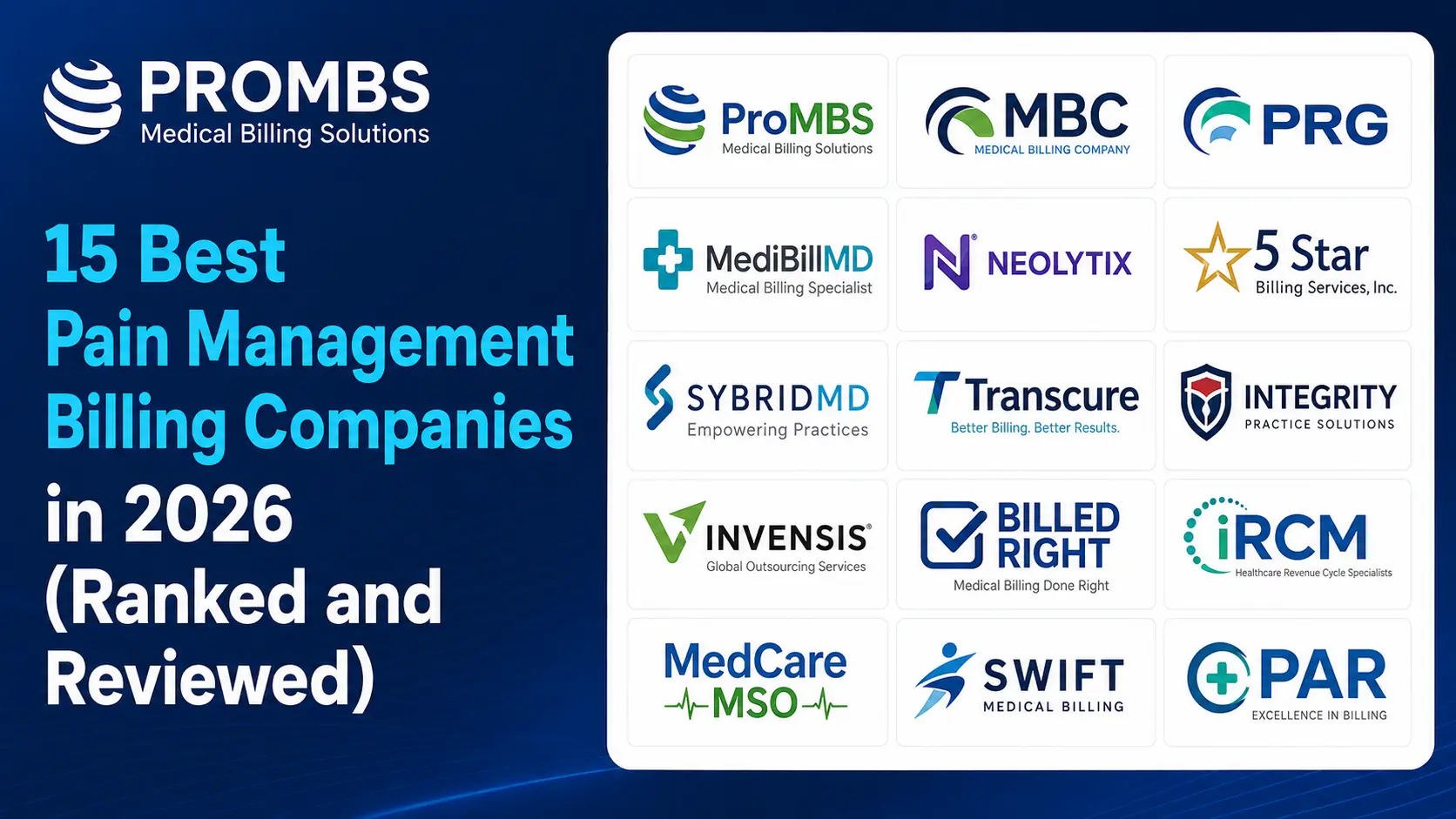
This guide walks through the 15 best pain management billing companies operating today. It covers what each one actually does well, where they tend to fall short, and how to evaluate them against your own practice instead of a generic checklist. We built this list by looking at real service depth, specialty focus, denial handling, and the questions practice administrators actually ask before signing a contract, not by ranking on price alone.
Tired of chasing denied claims and shrinking collections?
ProMBS builds dedicated pain management billing workflows around prior authorization tracking, interventional coding accuracy, and faster reimbursement. Talk to a ProMBS billing specialist today and get a free review of your last 90 days of claims.
Get a Free Claims ReviewWhat to Look for in a Pain Management Billing Company
Before jumping into the list, it helps to know what actually separates a strong pain management billing partner from a company that simply says the words "pain management" on their website. Four things matter more than anything else.
Interventional coding depth. Your billing team should be fluent in injection coding, neurostimulator implants, radiofrequency procedures, and the bundling rules that come with fluoroscopic guidance. If they cannot explain the difference between a therapeutic and diagnostic injection without pausing, that is a warning sign.
Prior authorization infrastructure. This is where most denials in pain management actually start. Our guide to what a prior authorization actually involves is a good starting point if your team is still treating it as paperwork instead of a tracked workflow with deadlines and escalation.
Denial rate specific to pain management CPT codes. Ask for this number directly. A general specialty average tells you almost nothing about how they handle your actual procedure mix. If you want a broader framework for judging this, our piece on preventing insurance claim denials covers the strategies worth asking any vendor about.
Compliance with drug testing and controlled substance documentation. Presumptive and definitive urine drug testing has its own set of billing rules. Payers are increasingly strict about medical necessity documentation for these claims, and our breakdown of HIPAA compliance in pain management billing explains what clinics need to have in place before a payer starts asking questions.
1. ProMBS
ProMBS tops this list because it was built around one idea: pain management billing is not a side service. It is a specialty that deserves its own dedicated workflow, not procedures folded into a generic orthopedic or general medicine billing process.
The team focuses specifically on injections, neurostimulator trials and implants, radiofrequency ablation, and chronic pain management codes.
What sets ProMBS apart is how prior authorization is handled. Instead of treating it as paperwork that gets submitted and forgotten, the team tracks every authorization against payer-specific timelines and follows up before a scheduled procedure turns into a denied claim. Our look at the prior authorization bottlenecks that slow down pain management clinics shows exactly why this proactive approach matters so much for this specialty.
Coders working pain management accounts are trained specifically on modifier compliance for bilateral and multi-level procedures, a common source of underpayment when handled by generalists.
ProMBS also brings a level of transparency that a lot of larger billing companies skip. Practices get real reporting on denial trends by CPT code and payer, not a vague monthly summary. Combined with credentialing support and clean claim scrubbing before submission, this makes ProMBS a strong fit for interventional pain practices of any size, from solo physicians to multi-location groups that need consistent performance across every site.
You can read more about how proper credentialing feeds directly into clean claims in this credentialing to claims workflow breakdown. If you are evaluating billing partners against real numbers instead of marketing claims, ProMBS is worth putting at the top of your shortlist.
2. Medical Billers and Coders (MBC)
MBC operates one of the more established pain management divisions in the industry, with certified coders who specialize in interventional procedures and chronic pain codes.
Their strength lies in scale. MBC works with practices ranging from small independent clinics to larger, multi-site pain groups, and their coding team stays current with yearly CMS updates that affect neuromodulation and RTM billing.
The tradeoff is that a company this large sometimes feels less personal. Smaller practices may find themselves working through account managers rather than getting direct access to a dedicated coding lead.
3. Physicians Revenue Group (PRG)
PRG has spent over two decades working specifically with pain clinics, and it shows in how they structure their revenue cycle process. Insurance verification happens before the patient ever sits in the waiting room, which cuts down significantly on eligibility-related denials.
Their denial follow-up process focuses on root cause analysis rather than just resubmitting claims, which tends to reduce repeat denials over time. Larger pain groups with high patient volume tend to get the most value from PRG's infrastructure.
4. MediBillMD
MediBillMD positions itself as a more hands-on, boutique alternative to the larger billing firms. Their pain management team works closely with practice administrators and adjusts quickly to state-specific payer rules, which smaller clinics tend to appreciate.
Because the company is relatively newer compared to some names on this list, practices should ask directly about their track record with high-complexity interventional claims before committing to a long-term contract.
5. Neolytix
Neolytix brings a broader healthcare consulting background into its billing services. Practices working with them often get support that goes beyond pure claims processing, including credentialing and practice operations guidance.
For pain management specifically, this can be valuable for newer practices still building out their payer contracts and workflows. That said, the pain-specific coding depth may not run quite as deep as billing companies that focus exclusively on interventional specialties.
6. 5 Star Billing Services
5 Star has built a reputation for personalized service across several specialties, including pain management. Their team handles eligibility verification, coding, and collections with a focus on keeping communication direct between the practice and the biller.
This works well for solo practitioners and smaller group practices that want a single point of contact rather than a tiered support system.
Not sure your current billing team is catching every denial pattern?
ProMBS reviews your denial data at no cost and shows you exactly where revenue is slipping through. Request your free billing audit and see the gaps for yourself.
Request Your Free Billing Audit7. SybridMD
SybridMD has served pain management practices for well over a decade, with particular attention to nerve block coding and chronic therapy claims. Every code goes through a secondary review before submission, which helps catch errors before they turn into denials.
Their willingness to offer a trial period before a full commitment makes them approachable for practices that are hesitant to sign a long-term contract without seeing results first.
8. Transcure
Transcure combines billing services with broader healthcare IT support, which appeals to practices that also want help with EHR integration and patient engagement tools alongside their billing.
Their certified coders handle pain management claims as part of a wider specialty roster. The technology stack is strong, but practices with highly complex interventional volume should confirm the depth of pain-specific coding expertise during the vetting process.
9. Integrity Practice Solutions
With a large staff and a multi-state footprint, Integrity Practice Solutions handles high patient volume well, particularly for pain practices with locations across several states.
Their scale helps with consistency, though practices should ask how work gets distributed among coders to make sure pain management claims are not being handled by generalists rotating across multiple specialties.
10. Invensis
Invensis leans heavily on technology and automation to reduce manual errors in the billing process, from eligibility checks through claims submission. Practices that value dashboards and real-time visibility into claim status tend to do well here.
As with several companies on this list, pain management is one specialty among many they serve, so it is worth confirming their specific experience with interventional procedure coding before signing.
11. Billed Right
Billed Right has built a long track record working with pain management clinics, with services covering prior authorization, appeals, and revenue recovery for older, aged claims.
Their experience with denial appeals in particular makes them a reasonable option for practices sitting on a backlog of unresolved claims that need aggressive follow-up.
12. iRCM
Based in New York, iRCM serves a wide range of pain management practice types, including interventional, orthopedic, and psychological pain management.
Their percentage-based fee structure ties their compensation directly to what they collect, which naturally incentivizes thorough follow-up. Real-time dashboards give practices visibility into claims and revenue trends without waiting for a monthly report.
13. MedCare MSO
MedCare MSO uses its own proprietary practice management software, which some practices find convenient if they want billing and reporting under one system rather than juggling multiple platforms.
Their pain management experience covers the core interventional procedures, though practices evaluating them should compare their reported denial rates directly against the more specialty-focused companies on this list.
14. Swift Medical Billing
Swift positions itself as a technology-first billing company, with automated coding checks and denial prevention built into their process.
For pain management practices that want a modern, data-driven partner and are comfortable with a newer company in the space, Swift is worth a look, particularly for clinics that prioritize transparency and fast communication over decades of legacy experience.
15. PAR (Pain and Anesthesia Revenue Specialists)
Closing out the list, PAR focuses exclusively on anesthesia and pain management billing, which is a narrower lane than most companies here. That focus translates into coders who deal with nothing but interventional and anesthesia-related codes day in and day out.
Practices located in regions PAR already serves tend to benefit most, since their infrastructure is built around the payer relationships common in those markets.
Quick Comparison at a Glance
| Company | Best For | Standout Strength |
|---|---|---|
| ProMBS | Practices of any size wanting dedicated pain management workflows | Prior authorization tracking and modifier accuracy |
| MBC | Larger, multi-site pain groups | Scale and yearly CMS code updates |
| PRG | High patient volume clinics | Root cause denial analysis |
| MediBillMD | Smaller, newer practices | Direct, hands-on communication |
| Neolytix | Newer practices building operations | Broader consulting support |
| 5 Star Billing | Solo practitioners | Single point of contact |
| SybridMD | Practices wanting a trial first | Secondary code review |
| Transcure | Practices wanting IT plus billing | EHR integration |
| Integrity Practice Solutions | Multi-state pain groups | High volume handling |
| Invensis | Data-driven practices | Automation and dashboards |
| Billed Right | Practices with aged claims | Denial appeals experience |
| iRCM | Practices wanting performance-based pricing | Percentage-based fee model |
| MedCare MSO | Practices wanting an all-in-one system | Proprietary software |
| Swift Medical Billing | Tech-forward smaller practices | Automated denial prevention |
| PAR | Anesthesia and pain-only practices | Narrow, deep specialization |
Why Pain Management Billing Is Different From Every Other Specialty
It helps to understand why this specialty needs dedicated expertise in the first place. Interventional procedures carry higher reimbursement value than a typical office visit, which means payers scrutinize them more closely.
A single spinal cord stimulator trial can involve multiple CPT codes, device tracking, and a follow-up permanent implant claim weeks later that has to tie back correctly to the trial documentation.
On top of that, drug testing compliance adds another layer most general billers are not trained to handle. Presumptive and definitive testing require separate documentation of medical necessity, and payers have tightened their review of these claims significantly in recent years. Our breakdown of audit risk in pain management billing compliance covers this in more depth if you want to understand where practices most often get flagged.
Then there is prior authorization itself. Physicians across specialties report significant care delays tied to authorization requirements, and pain management sits near the top of that list because so many of its procedures require pre-approval.
A billing partner who treats authorization as a proactive workflow, tracking deadlines and following up before a scheduled procedure, protects both your revenue and your patients from unnecessary delays. Our strategies to cut prior authorization denials walk through exactly what that proactive workflow should look like in practice.
Common Mistakes Practices Make When Choosing a Billing Partner
A lot of practices choose a billing company based on price alone, then discover months later that the lower fee came with a higher denial rate that costs far more than the savings. Our look at where practices actually lose revenue in pain management billing shows how often this exact tradeoff plays out.
Others sign with a general medical billing company without asking a single question about pain-specific coding experience, assuming all billing work is essentially the same. It is not.
Another common mistake is skipping the transition plan. Switching billing companies mid-cycle without a clear handoff for open claims and pending authorizations can create a gap where nothing gets followed up for weeks. A good partner will walk you through exactly how they handle claims already in progress before you sign anything.
Finally, many practices never ask to see actual reporting samples before committing. If a company cannot show you what their denial and collection reports look like during the sales process, that is worth pausing on.
Questions to Ask Before You Sign
Before choosing any company from this list, bring these questions into your first conversation.
- What is your denial rate specifically for interventional pain management CPT codes, not your overall specialty average?
- How do you track prior authorization deadlines, and what does your escalation process look like when an approval is delayed?
- Do your coders separate presumptive and definitive drug testing correctly on every claim?
- What does onboarding and the transition of existing claims actually look like in the first 30 days?
- How often will we receive detailed reporting, and can we see a sample before signing?
The answers to these five questions will tell you more about a company's actual capability than any pitch deck. If a company hesitates on any of them, treat that as useful information in itself.
Practices that want a deeper understanding of how strong revenue cycle habits are measured can also look at our guide to revenue cycle KPIs worth tracking to know what numbers to compare across vendors.
Ready to stop losing revenue to preventable denials?
ProMBS specializes in interventional pain management billing, from prior authorization tracking to clean claim submission. Schedule your free consultation with ProMBS and start collecting what your practice actually earns.
Schedule Your Free ConsultationFrequently Asked Questions
How much do pain management billing companies typically charge?
Most companies price their services as a percentage of collections rather than a flat fee, since claim volume and procedure complexity vary so much from one practice to another. Expect pricing conversations to be custom-quoted rather than published as a fixed rate.
Is it worth outsourcing billing for a small, single-provider pain clinic?
Yes, in most cases. Interventional coding and prior authorization tracking require specialized knowledge that is hard for a small in-house team to maintain alongside everything else running a clinic. Even solo practices tend to see fewer denials and faster payment cycles after outsourcing to a specialized partner.
How long does it take to switch billing companies without disrupting cash flow?
A well-managed transition typically takes 30 to 60 days, during which the new company should be actively working both new claims and any open items from the previous vendor. Ask any company on this list for their specific transition timeline before signing.
What denial rate should a pain management practice consider acceptable?
Industry-wide, interventional pain practices tend to see denial rates in the mid-teens to low twenties as a percentage. Anything approaching single digits reflects a genuinely strong billing operation, and that gap is worth asking every vendor about directly.
Final Thoughts
Choosing a pain management billing company is not a decision to rush through based on a sales call and a pricing sheet. The right partner protects revenue you are already earning but losing to preventable denials, documentation gaps, and prior authorization delays.
Every company on this list brings something different to the table. The practices that come out ahead are the ones that ask direct questions, compare real denial rates instead of marketing language, and choose a partner who treats pain management as a specialty, not a side note.
If you are ready to see what a dedicated pain management billing workflow actually looks like, ProMBS's guide to pain management billing and coding strategies is a good place to start that conversation.