

Dermatology Billing Risks 2026: Leader’s Guide to Revenue Safety

Quick Answer To Efficient Dermatology Billing Dermatology billing is the specialized medical coding process of translating skin-related procedures, such as biopsies, excisions, and Mohs surgery, into standardized CPT and ICD-10 codes for insurance reimbursement. Due to the high-volume nature of the specialty, it requires strict documentation of lesion size, anatomical location, and pathological type. Key Requirements for Successful Dermatology […]
Lumbar Spondylosis ICD 10: Clinical Classification and Diagnostic Precision
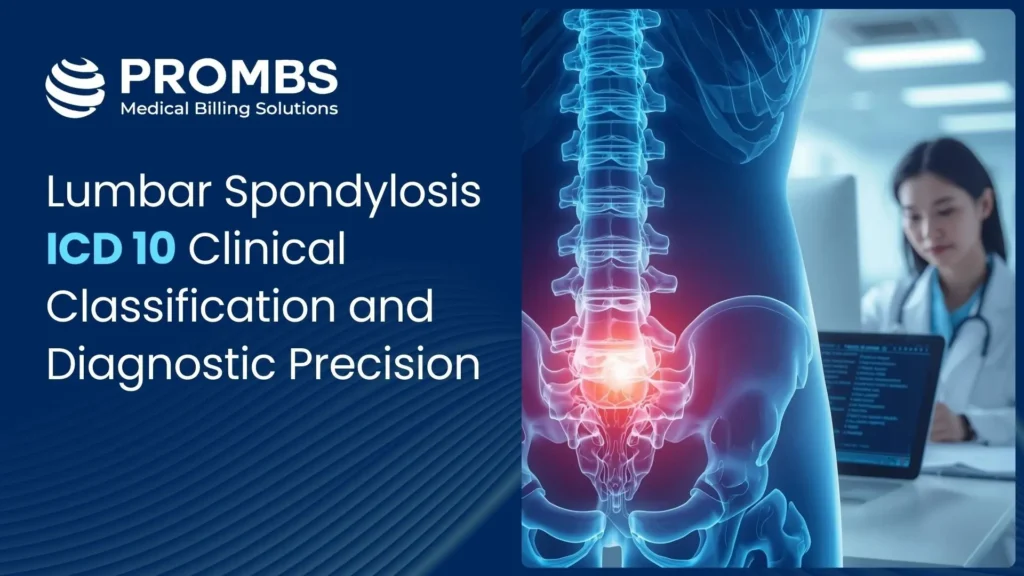
💡 If you are searching for the Lumbar Spondylosis ICD 10 code, the most accurate clinical designation for axial low back pain without complications is M47.816. However, the ICD-10-CM hierarchy requires specificity regarding neurological involvement. For cases involving radiculopathy, use M47.26, and for those with myelopathy, use M47.16. Accurate documentation of Lumbar Spondylosis ICD 10 is essential for high-acuity billing and ensuring clinical E-E-A-T (Experience, Expertise, Authoritativeness, and Trustworthiness). […]
Top 12 Denial Codes You Must Know In Medical Billing

Introduction Why did a claim get reduced despite correct documentation? The answer sits inside Denial Codes. These standardized X12 signals act as intelligence markers. High-performing organizations treat them as a roadmap for revenue protection rather than administrative noise. Automated adjudication has changed the game. AI claim scoring now evaluates eligibility, authorization, documentation, and pricing before payment. Because of this […]
Hyperuricemia ICD 10 (E79.0): The 2026 Billing Guide

When you see a lab report with high uric acid, do you immediately reach for your coding manual? Not so fast. Hyperuricemia ICD 10 coding requires more than just an elevated lab value; in the world of medical billing, E79.0 represents a specific metabolic state that is only billable when the provider links that finding to an active clinical management plan. Why does ICD 10 […]
UTI ICD 10 Guide: Symptoms, Billing & Main Codes
Urinary tract infections confuse many beginners, especially when coding enters the picture. You may ask, what does UTI ICD 10 really mean in daily medical work? This guide explains UTIs, codes, symptoms, and billing using plain, simple language. You will learn how codes affect payment, documentation, and claim approval. You will see how one wrong code can stop a […]
Pre Op Clearance ICD 10: The 2026 Expert Coding Guide

Preoperative clearance (often called pre-op clearance) is a clinical evaluation performed before a planned surgical or procedural intervention to determine whether a patient is medically stable and optimized for anesthesia and surgery. Pre Op Clearance ICD 10 coding is the backbone of surgical preparation. In the fast-moving world of 2026 healthcare, getting the Pre Op Clearance ICD 10 […]
Acute Bronchitis ICD 10: The Ultimate 2026 Coding Guide

According to the World Health Organization International Classification of Diseases, acute bronchitis is defined as: An acute inflammation of the bronchial tubes (large and medium-sized airways) characterized by the recent onset of cough, with or without sputum production, typically caused by viral infection and lasting less than three weeks. In the world of medical billing, Acute […]
Hyperbilirubinemia ICD 10: Essential 2026 Billing Tips

Hyperbilirubinemia (often manifesting as jaundice) is defined as a yellow discoloration of body tissues resulting from the accumulation of excess bilirubin in the bloodstream. It occurs when bilirubin production exceeds the liver’s ability to metabolize and excrete it. Normal serum bilirubin levels are typically less than 1 mg/dL, and visible jaundice usually appears when levels […]
Leukopenia ICD 10: The 2026 Expert Guide to Clean Claims
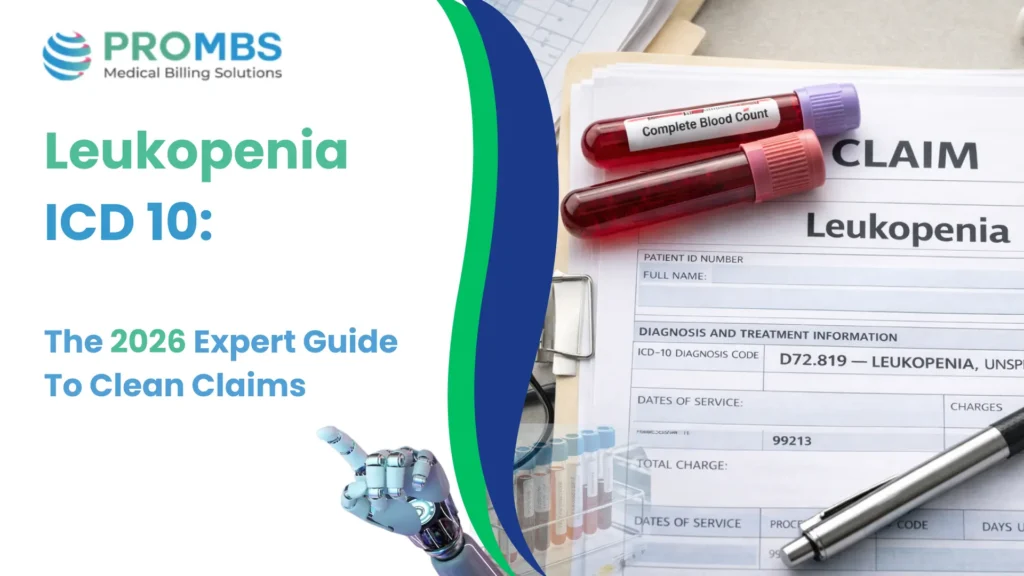
Have you ever seen a claim get rejected simply because a lab value didn’t match the written diagnosis? It happens more often than you think. Leukopenia ICD 10 coding is a frequent stumbling block for even seasoned medical coders. At its simplest, leukopenia means a patient has a Low White Blood Cell (WBC) count. While […]