

High Deductible Medical Billing: How to Calculate Patient Costs and Improve Collections

Medical practices can provide appropriate healthcare services, submit accurate insurance claims, and receive a payment of $0 from the patient’s insurer without the claim being denied. For providers treating patients enrolled in high-deductible health plans, this situation is increasingly important because insurance coverage does not necessarily mean the insurance company will make an immediate payment. […]
Therapy Billing Denials: Common PT, OT & SLP Claim Errors and How to Fix Them

Physical therapy, occupational therapy, and speech-language pathology practices depend on consistent insurance reimbursement to support ongoing patient care. However, therapy claims are particularly vulnerable to billing discrepancies because treatment often involves recurring appointments, time-based procedures, multiple CPT codes, and documentation requirements that change as patients progress through their treatment plans. A physical therapist may accurately […]
Infusion Billing Reimbursement: CPT Codes, Payment Rules, and How to Prevent Revenue Loss

Infusion therapy presents a unique reimbursement challenge for healthcare providers because a single patient encounter may involve several separately identifiable services, medications, and billing requirements. A patient might receive an intravenous drug, additional supportive medication, medically necessary hydration, and continuous clinical monitoring during the same treatment session. However, not every component automatically qualifies for separate […]
Claim Appeal Success Rate: Which Medical Denials Actually Get Reversed?

A medical practice receives dozens of insurance denials every month. Some claims are rejected because of incorrect information, others involve medical necessity or authorization disputes, and a few appear to have been denied despite meeting the insurer’s published coverage requirements. The billing team begins reviewing the accounts, but an important question emerges: which denials are […]
Patient vs. Insurance A/R in Medical Billing: Key Differences, Aging, and Collection Strategies
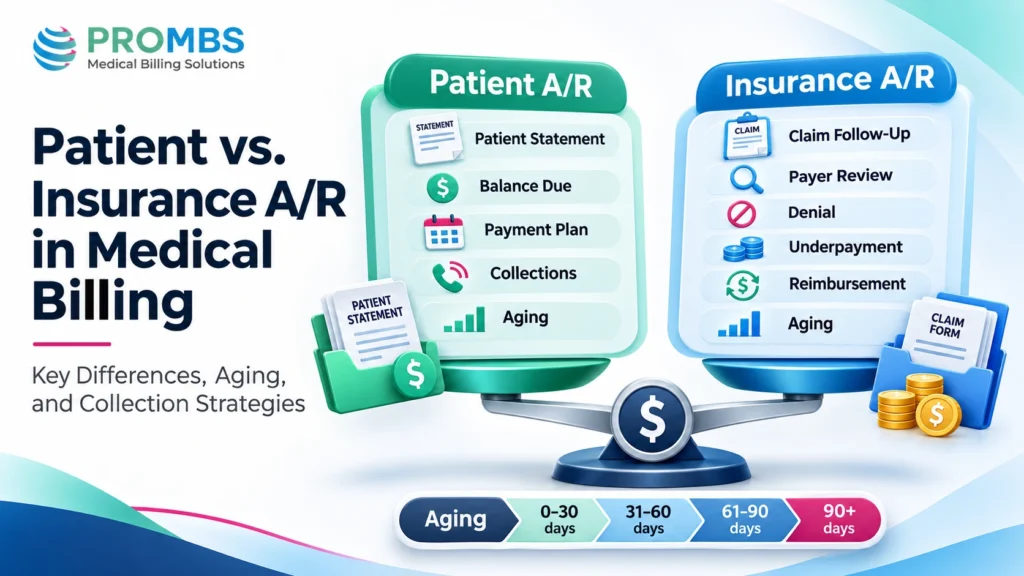
A medical practice provides services, submits insurance claims, and waits for reimbursement. Some claims are paid promptly, while others remain outstanding because of payer processing delays, denials, or unresolved billing issues. Meanwhile, additional balances may become payable by patients through deductibles, copayments, coinsurance, and other legitimate out-of-pocket responsibilities. Although both categories represent money the practice […]
CO-151 Denial Code: Meaning, Frequency Limits, and How to Fix It

A medical practice provides several medically necessary services to a patient, documents the treatment, and submits the corresponding insurance claims. However, when the payer processes the claims, one or more services are denied or reduced with adjustment code CO-151. The physician may have considered every service clinically appropriate. The patient may have had active insurance, […]
OA-23 Denial Code: Meaning, Secondary Payer Adjustments, and How to Fix It
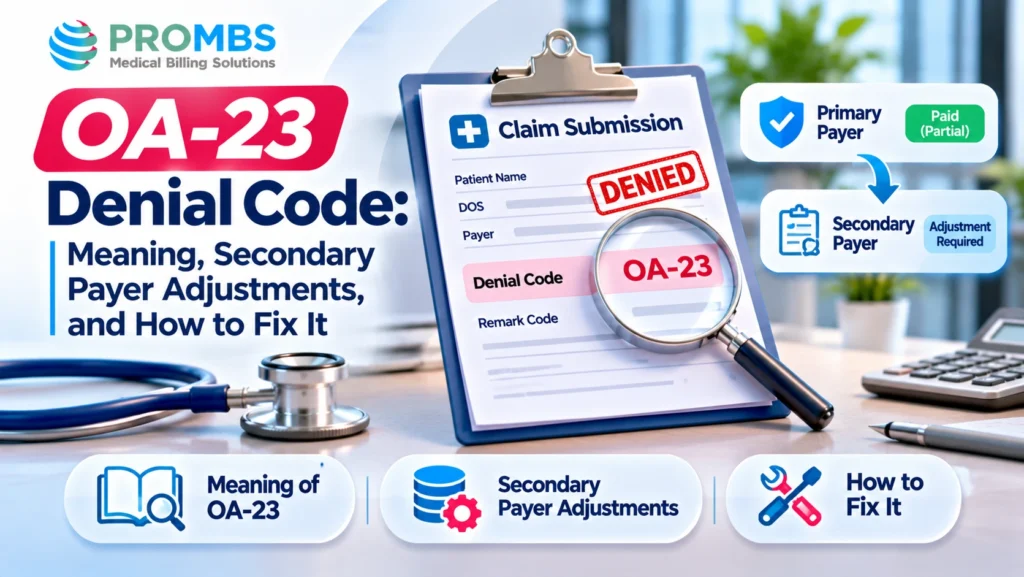
A medical practice submits a claim to secondary insurance after the primary payer has processed its portion. The primary payment is recorded, the contractual adjustment has been posted, and the remaining balance is awaiting secondary adjudication. When the secondary payer’s Electronic Remittance Advice (ERA) arrives, the billing team notices a large adjustment labeled OA-23. The […]
CO-16 Denial Code: Meaning, Common Causes, Remark Codes, and How to Fix It

A medical practice submits a claim for services that were properly documented, accurately coded, and provided to an insured patient. The billing team expects the payer to process the claim, but the electronic remittance returns an adjustment identified as CO-16. Payment remains unresolved, and the accounts receivable balance continues aging. The clinical service may have […]
10 Reasons Short-Term Disability Can Be Denied and How to Appeal

Receiving a short-term disability denial can create financial uncertainty at a time when an employee is already dealing with an illness, injury, surgery, or another medical condition that affects the ability to work. Many people assume that a physician’s diagnosis or recommendation to take time off automatically establishes eligibility for disability benefits. Unfortunately, that is […]